
Motorcycle Rider Fatigue: Make a Rest-and-Route Plan Before Concentration Drops
Motorcycle rider fatigue safety tips for planning sleep, breaks, hydration, weather margins, route exits, and an earlier stop when focus fades.
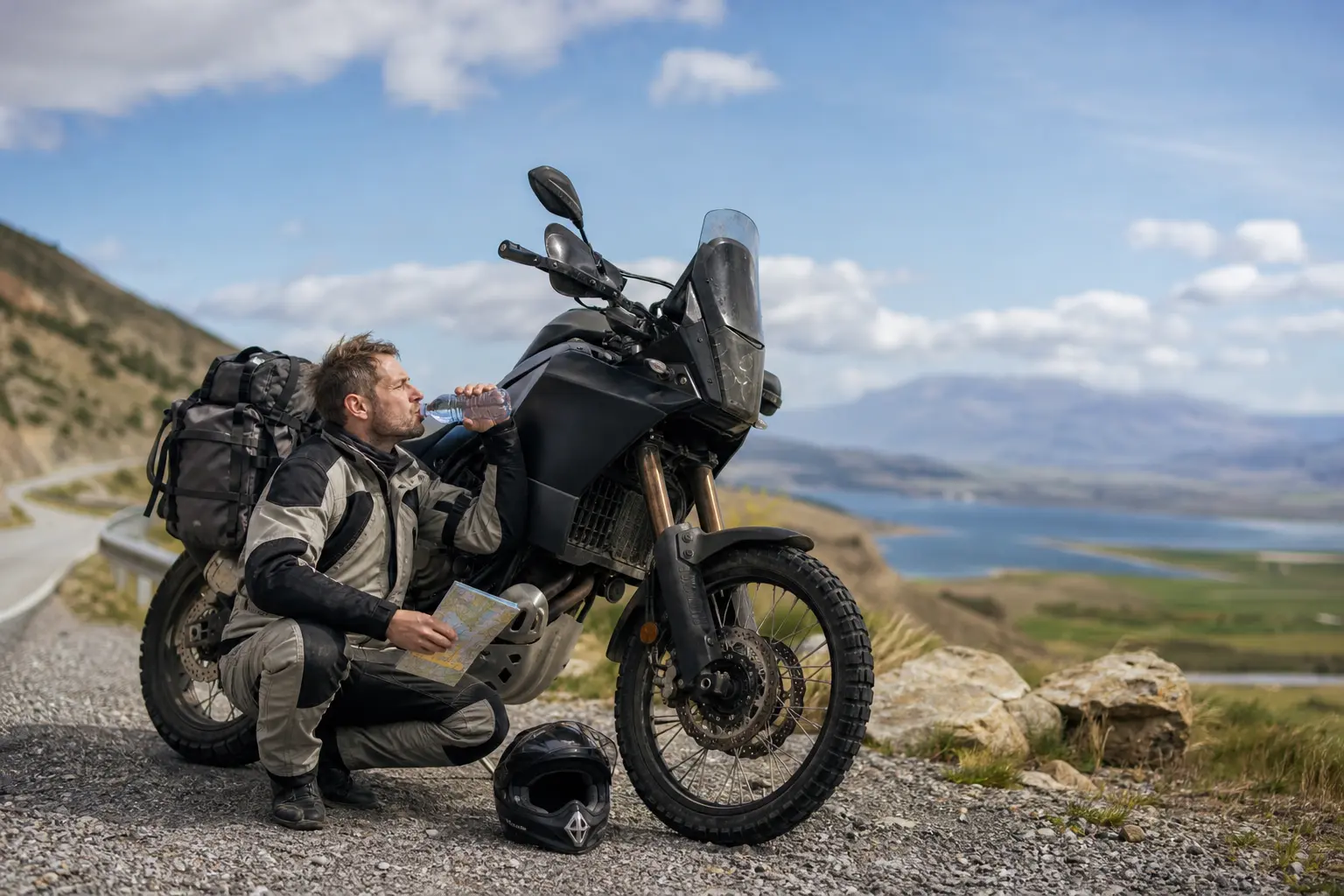
Fact-checked against cited official documentation
Reviewed against Fact-checked against accessible Motorcycle Safety Foundation guidance on fatigue, sleep, weather exposure, stops, hydration, rider comfort, group planning, and travel preparation..
Last updated October 9, 2026
Motorcycle rider fatigue safety tips matter most before a rider feels obviously worn out. On a motorcycle, the issue is not simply whether you can stay seated for another hour. The more useful question is whether you still have the attention, comfort, patience, and judgment needed to handle an ordinary surprise without rushing.
A delayed turn signal from another vehicle, a changing curve, a sudden gust, a closed fuel stop, or an unfamiliar junction can all require a quick, calm response. Fatigue narrows the margin available for that response. It may show up as irritation, stiff posture, missed route cues, a reluctance to stop, or a growing desire to “just get there.” None of those signs needs to be dramatic to matter.
The Motorcycle Safety Foundation (MSF) treats fatigue as a riding-control concern. Its operator manual advises riders not to continue while tired, identifies wind, cold, and rain as conditions that can hasten fatigue, and recommends frequent opportunities to get off the motorcycle on longer rides. MSF also frames a roughly six-hour day as a limit that experienced riders often avoid exceeding—not as a target for every rider or trip. See the official sources listed below for the supporting guidance.
This is not an endurance formula. It does not claim that a particular distance, drink, break interval, or accessory will make every rider safe. Instead, it provides a conservative rest-and-route system: make the hard decisions while fresh, identify places where the route can become easier, and give yourself explicit permission to finish early.
Motorcycle Rider Fatigue Safety Tips: Plan for Workload, Not Just Distance
Mileage is simple to measure, but it is a poor standalone measure of how demanding a ride will be. Two routes of equal distance can place very different demands on a rider. A familiar highway in mild weather may require less concentration than a shorter day of city traffic, construction zones, crosswinds, damp pavement, complicated navigation, and a late arrival.
Treat a route as a sequence of workloads rather than a number on a screen. Each segment may add a different kind of demand:
- Traffic workload: checking mirrors, reading gaps, anticipating intersections, and responding to lane changes.
- Exposure workload: holding posture against wind, managing rain, maintaining warmth, or coping with heat.
- Road-reading workload: judging curves, surface changes, sightlines, traffic queues, and available escape space.
- Navigation workload: identifying turns, watching for services, handling closures, and adapting to missed turns.
- Social workload: trying to stay with a group, managing a passenger’s comfort, or feeling accountable to an arrival schedule.
A fatigue-aware itinerary does not stack all of those demands into the final portion of the day. If the route includes a technical road, a busy metropolitan approach, or an area where weather could make travel more difficult, consider putting that segment earlier—after a proper stop rather than after hours of transit.
| Route condition | Why it may become tiring | A conservative planning response |
|---|---|---|
| Dense urban traffic | Repeated decisions, changing gaps, lane activity, and intersections | Allow extra time and schedule a pause after the city rather than treating it as a quick connector. |
| Extended freeway travel | Wind pressure, noise, fixed posture, and reduced engagement | Pick known rest locations in advance instead of waiting for discomfort or a near-empty tank. |
| Cold, rain, or steady wind | More physical strain, reduced comfort, and greater attention demands | Reduce optional mileage, keep a shorter route available, and retain daylight margin. |
| Unfamiliar curves or rural roads | Higher need for scanning, road reading, and navigation | Ride them when fresher, avoid a rushed finish, and make the route simpler if conditions change. |
| Passenger or added luggage | More responsibility and possible changes in comfort or handling | Follow the exact motorcycle owner’s manual for approved use and loading, then simplify the day. |
| Group travel | Pace pressure and hesitation to ask for stops | Agree in advance that a break, split, shortcut, or early finish is an ordinary safety choice. |
Ask one question while building the route: Which section will demand the most from me at the point when I am likely to be least fresh?
If the answer is “the last hour,” revise the plan. A difficult mountain section near dusk, an unfamiliar city arrival after rain, or a long final stretch with limited services can turn a manageable day into a pressured one. Shift the hard segment earlier, remove an optional loop, identify an overnight alternative, or choose an easier approach to the destination.
MSF’s published guidance supports that approach: plan the day with time for breaks and account for conditions such as poor weather, fatigue, and unexpected disruptions. The goal is not to prove toughness by completing the original route. The goal is to preserve enough decision-making room to ride responsibly.
Motorcycle Rider Fatigue Safety Tips: Build Your Personal Risk Stack
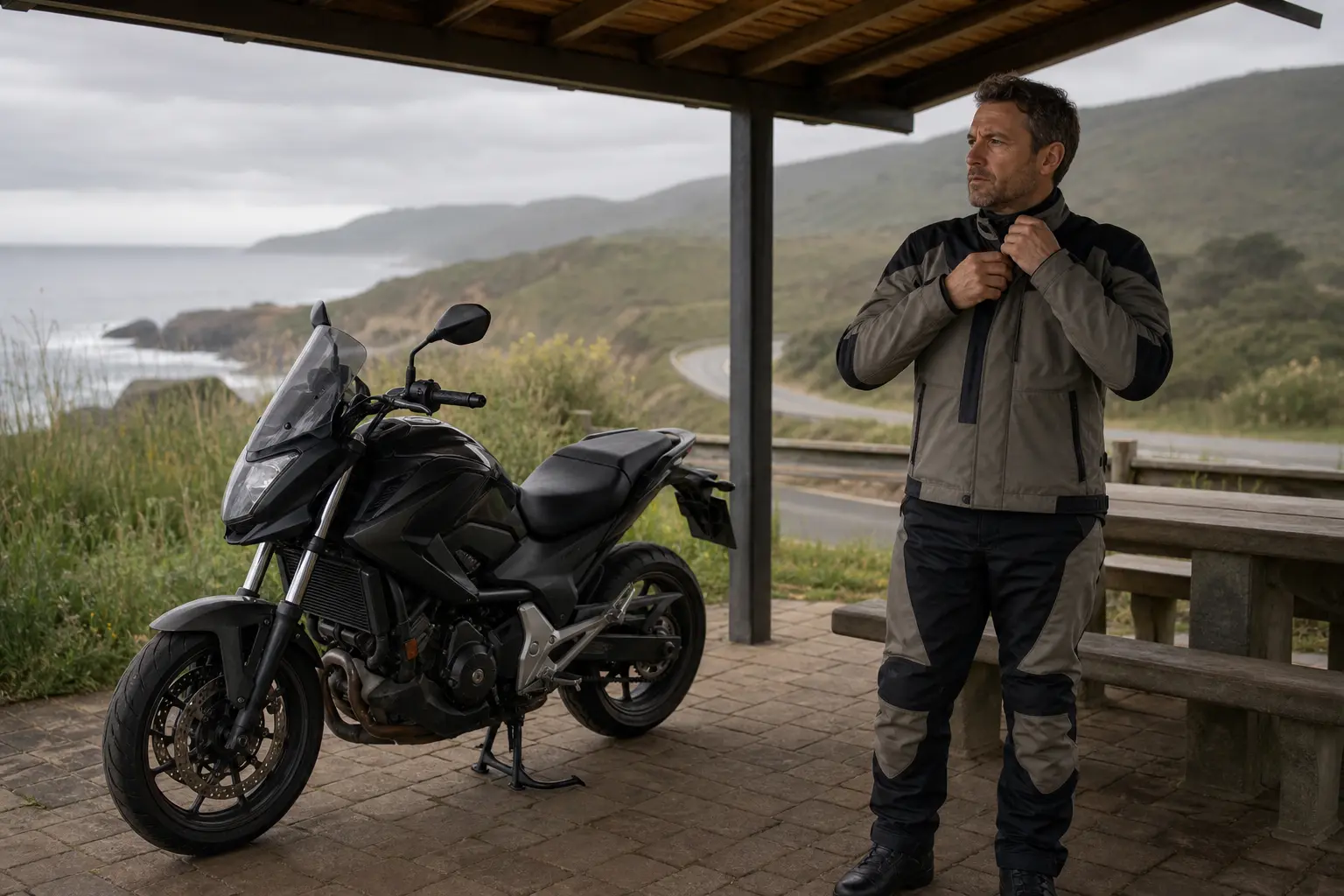
Fatigue usually arrives through accumulation. A rider may handle one inconvenience well, but several modest stressors can combine into a day that no longer fits their capacity. Think of this as a risk stack.
The risk stack is not a medical diagnosis, and it is not a reason to cancel every ride that feels less than perfect. It is a planning tool. The more items that stack up, the more conservative the route, timing, pace, and stop plan should become.
Start with sleep, not determination
Sleep affects the ride before the motorcycle moves. If you spent the evening packing, working late, watching weather, resolving a household problem, or attempting a last-minute bike task, that lost rest should change the next day’s plan.
A very early departure can sound efficient, yet it may combine reduced sleep with darkness, lower temperatures, wildlife exposure, unfamiliar roads, and pressure to recover time later. In that situation, a later start, a shorter destination, a simpler road choice, or a rest day may be the more disciplined decision.
MSF travel guidance identifies sleep before and during a trip as important to both physical and mental stamina. The practical takeaway is straightforward: do not make the first day an attempt to recover from the preparation required to start it.
Plan packing and motorcycle checks early enough that a late-discovered concern does not force an exhausted decision. If there is an unresolved mechanical, tire, control, lighting, or cargo issue, use the owner’s manual as the first authority for your exact motorcycle and consider postponing the ride or arranging qualified help. A long trip is not the time to guess about a condition concern.
Treat weather exposure as a workload multiplier
Wind, rain, and cold affect more than comfort. They can require more effort to maintain relaxed posture, complicate vision management, make stops less appealing, and consume attention that would otherwise be available for traffic and the road ahead. The MSF operator manual specifically warns that these elements can make riders tire quickly.
Heat can lead to a different mistake: continuing because the next air-conditioned stop, shaded hotel, or home garage feels close enough to reach. But discomfort can make riders impatient and less willing to reconsider a route. Build stops where you can safely park, remove or add a familiar layer, drink water, check your condition, and decide whether the remaining route still makes sense.
Use equipment that you already know works for you. A new jacket, gloves, seat pad, luggage layout, helmet communication setup, or navigation mount may be useful eventually, but it can add distraction on a demanding trip. If it rubs, fogs, restricts head movement, shifts in the wind, or interferes with a natural control position, it has become part of the risk stack.
Notice posture, noise, and discomfort before they become the whole ride
You do not need to be in obvious pain to lose effectiveness. Tight shoulders, numb fingers, a sore back, cramped hips, a persistent pressure point, or a noisy helmet environment can make ordinary riding tasks feel more effortful. When that happens, riders may devote too much attention to physical discomfort and too little to the changing environment.
MSF advises riders on longer trips to use comfortable protective gear, maintain useful posture, and change seating position when the motorcycle allows. Its guidance also notes that hearing protection can reduce fatigue associated with sustained wind and engine noise, while riders must still follow applicable local requirements.
Start with basic fit rather than improvisation. Your motorcycle should allow you to reach and operate its controls naturally. Gear should let you move and look where needed. Any adjustment to ergonomics, luggage, passenger setup, or accessories should be evaluated against the instructions for your specific motorcycle—not assumptions based on another model or another rider’s preferences.
Use a familiar pre-ride routine as well. The Motorcycle Maintenance Guide is a useful companion for organizing ownership tasks, but your motorcycle’s owner’s manual remains the primary reference for model-specific operating, inspection, cargo, passenger, and maintenance information.
Food, water, and caffeine are supports—not substitutes
There is no universal eating or drinking schedule that fits every rider, climate, health condition, or ride intensity. Rather than chasing a single number, make water and sensible food accessible at planned stops. Do not wait until you are irritable, uncomfortable, or hurried to realize that the stop plan was too thin.
MSF travel guidance recommends water, healthful snacks, and lighter meals during longer rides. It also cautions against treating caffeine and sugar-heavy choices as the answer to an afternoon decline in energy. The operator manual separately warns that artificial stimulants can be followed by a sharp decline in energy or concentration.
Coffee may be part of a rider’s normal routine. It is not, however, a replacement for sleep, a real break, dry and warm gear, an easier route, or an overnight stop. If the only way to complete the final segment is to rely on a stimulant, the day has become too ambitious.
Motorcycle Rider Fatigue Safety Tips: Make a Rest-and-Route Plan Before Departure
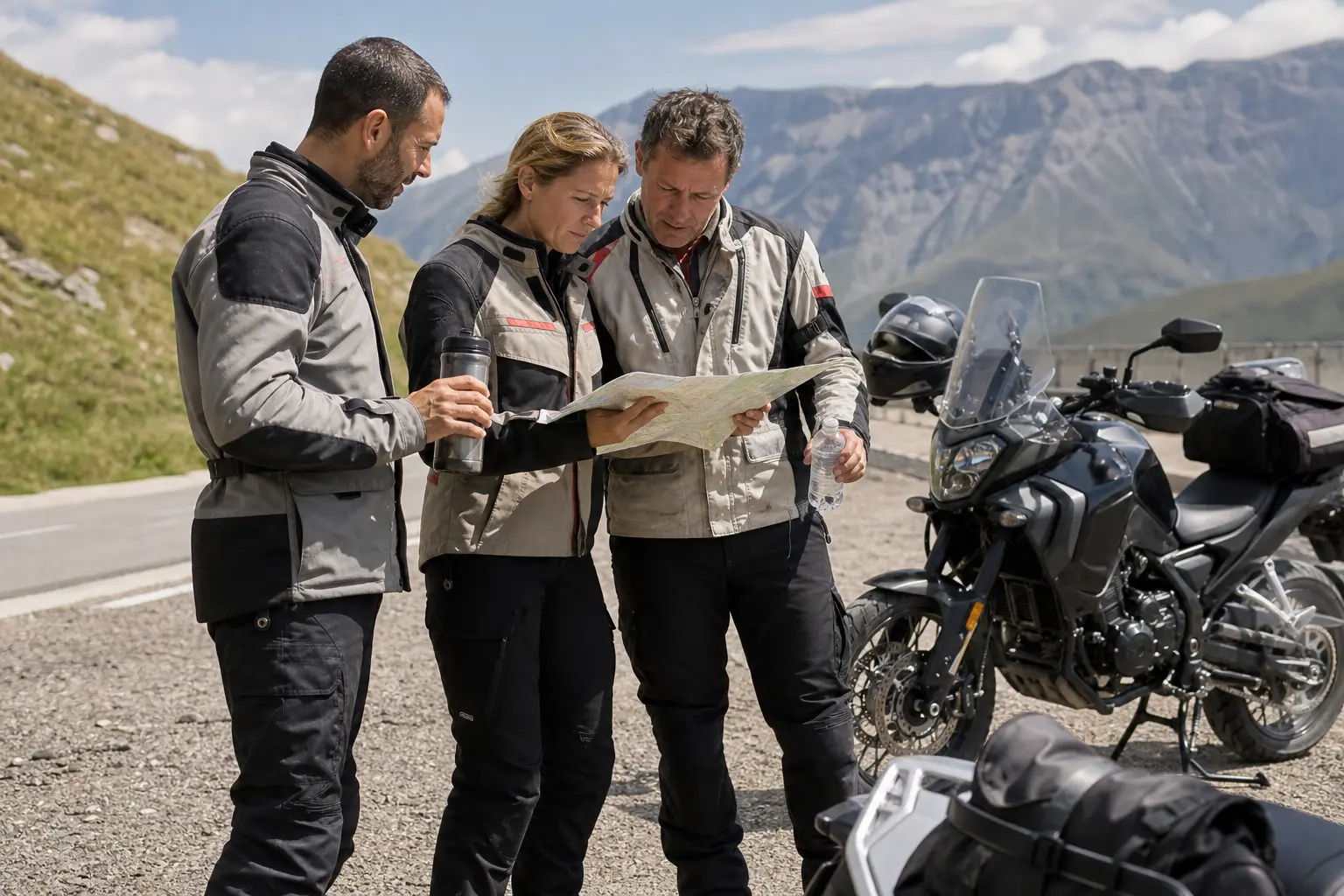
A useful fatigue plan is brief enough to remember at a fuel stop. You do not need a complex spreadsheet or a rigid mileage quota. You need decisions that are easier to make before tiredness and schedule pressure appear.
Before leaving, answer these five questions:
- What are the demanding parts of this route?
- Where will I take intentional pauses, rather than stopping only when fuel forces the issue?
- What weather, traffic, or timing change would make the original route unsuitable?
- Which shortcut, town, or overnight option can I use if I need to reduce the day?
- Who needs an updated arrival plan if I stop early or separate from the group?
Put challenging segments where they belong
Begin with the route’s difficult parts, not an optimistic average speed. Mark city exits, probable congestion, exposed bridges or plains, construction zones, scarce-service areas, complex junctions, and the destination approach. Then consider when you expect to reach them.
If a scenic road is the highlight of the day, do not automatically save it for the point when your concentration is lowest. If a busy city cannot be avoided, leave enough time to arrive without treating every minor delay as a problem. If rain or wind is possible, identify a less exposed alternative before leaving home.
The final segment should be intentionally ordinary. It should have time for a missed turn, roadwork, a slow fuel stop, a weather change, or an unexpected rest break. A schedule that only works when nothing changes is not a plan with safety margin; it is a source of pressure.
Give each stop a job
Not every stop needs to be long, but each should have a purpose.
Function stops cover fuel, restroom access, water, a quick luggage observation, and a chance to notice an emerging comfort issue. Even on a short stop, step away from the motorcycle rather than treating the break as a payment transaction.
Recovery stops are longer by design. Park, walk a little, eat or drink if appropriate, assess layers and vision, and temporarily stop thinking about the arrival clock. Their purpose is to interrupt the automatic habit of continuing because the motorcycle can continue.
Decision stops occur before a commitment: an optional scenic loop, a weather-exposed pass, a remote stretch, a complex evening arrival, or a long segment without convenient services. At a decision stop, ask whether the rider and route still match. If they do not, use the planned alternative while parked and unhurried.
MSF’s official materials offer two compatible prompts for longer rides: one source suggests a brief break about every hour, while the operator manual says to stop and get off the motorcycle at least every two hours. Treat those as planning anchors, not as permission to ignore an earlier need to stop. Poor sleep, cold, rain, wind, difficult roads, discomfort, or a stressful group pace can justify a pause sooner.
Preselect exits before you need one
A destination is not a complete route plan. For a long or demanding ride, identify a genuine Plan B before departure:
- a shortcut that removes the least important portion of the route;
- a town, service area, or rest location where you can reassess in a safe setting;
- an overnight option before the original destination; and
- a simple way to notify a trusted contact or riding companions that the plan has changed.
This is not pessimism. It removes the temptation to negotiate with fatigue while moving. Instead of asking, “How can I force the original route to work?” you can ask, “Which prepared option better fits my condition now?”
For solo travel, tell a trusted person the broad plan and send an update if you change it. For group travel, agree that dividing the group, stopping longer, using a shortcut, or ending a day early is an acceptable result—not a failure by the rider who raises the concern.
Remove group pressure before the first mile
Group rides can produce fatigue pressure without anyone deliberately creating it. A rider may worry about delaying others, missing a fuel stop, becoming separated, or seeming less skilled. That can make someone stay silent when an early update would be most useful.
At the rider meeting, discuss the general route, planned fuel and rest points, regroup locations, communication method, and what will happen if a rider needs to slow down or leave the route. MSF also recommends discussing route, fuel and rest stops, and signals before a group ride.
The fastest or most experienced rider should not define the day for everyone else. When conditions become more demanding, reduce the pace and simplify the plan. If riders have substantially different comfort levels, splitting into smaller groups can be preferable to making someone chase a pace that no longer feels reasonable.
Motorcycle Rider Fatigue Safety Tips Checklist: Go, Pause, Shorten, or Stop
Use this checklist before departure, at planned stops, and anytime continuing starts to feel like an obligation. It is not a medical screening tool. Its purpose is to make rider readiness visible before fatigue turns into a vague belief that you are “probably okay.”
Before departure
- I have had enough rest to expect reliable attention and judgment today.
- I am not trying to offset poor sleep with caffeine, sugar, or determination.
- I will not ride after alcohol, drugs, or any other source of impairment.
- I have considered temperature, wind, rain, heat, daylight, and forecast changes when choosing the route.
- My protective gear is familiar, comfortable, and suitable for the expected conditions.
- My eye protection is clean, secure, and appropriate for the light conditions I expect to encounter.
- I reviewed owner’s-manual guidance that applies to today’s passenger, cargo, tire, or operating situation.
- I completed an appropriate pre-ride check and will not ignore an unresolved motorcycle concern.
- I know my first stop, recovery stop, decision stop, shortcut, and overnight fallback.
- A trusted person knows my general plan if I am riding alone.
At every planned stop
- I get off the motorcycle and allow enough time to notice how I feel.
- I drink water and consider whether I need food, a layer change, or more recovery time.
- I notice tension, pain, numbness, fogging, reduced vision, or a distracting gear problem.
- I reassess the next segment for weather, traffic, road difficulty, daylight, and available services.
- I can continue without needing to hurry to preserve the original arrival time.
- If I am with others, I state plainly if I need more time, a slower pace, or a different route.
Shorten the route or stop for the day when
- You keep missing ordinary route cues or feel repeatedly surprised by normal traffic changes.
- You have little recall of the most recent miles because you have been operating on autopilot.
- Your riding feels progressively impatient, abrupt, tense, or detached from the conditions around you.
- Wind, rain, cold, heat, noise, pain, or gear discomfort is consuming meaningful attention.
- You want to skip a planned stop or increase speed merely to make up time.
- A passenger, group expectation, or arrival commitment is pushing you past your personal margin.
- You are considering a stimulant as the reason you can continue instead of taking real recovery time or ending the ride.
Motorcycle Rider Fatigue Safety Tips: Read Early Concentration Warnings
Fatigue can be difficult to assess because it can reduce the self-awareness needed to judge it well. Rather than waiting until exhaustion is unmistakable, look for changes in your normal habits.
Early warnings can include delaying a lane change because it feels like too much work, looking only at the vehicle directly ahead instead of scanning farther, becoming unusually annoyed by ordinary traffic, forgetting an intended stop, or resisting a simple route change because it feels inconvenient.
Another warning is a shrinking willingness to make small corrections. You may realize that the weather is changing, your hands are cold, the group pace is uncomfortable, or the destination approach will be harder than expected—but keep moving because changing the plan seems like more effort than continuing. That is a good reason to use a safe, parked decision stop.
Try this short self-check at a suitable stop:
- Can I describe what the next segment will demand from me?
- Do I feel composed enough to handle a closure, wrong turn, confusing junction, or traffic conflict without rushing?
- Are my vision, posture, comfort, and concentration adequate for the next section?
- Am I continuing because the route still fits, or because I feel committed to the original timetable?
An uncertain answer is useful information. Take longer to recover, choose the easier route, or stop for the day. Do not try to manufacture alertness by increasing pace, following too closely, making unnecessary maneuvers, or treating urgency as concentration. Those choices add workload; they do not restore capacity.
If unusual tiredness is persistent, linked to illness, related to medication, or accompanied by a new health concern, take a more conservative approach and seek appropriate professional guidance. A roadside stop is not the place to diagnose a health issue or decide that it can be ignored.
Motorcycle Rider Fatigue Safety Tips: Protect the Final Hour
The closing portion of a long day deserves special protection. By then, several small pressures often converge: reduced energy, fading daylight, a changed forecast, unfamiliar streets, hunger, lodging check-in, meeting plans, or the desire to be home.
Design the last segment to be simple and forgiving. Leave a time buffer. Avoid making a technical road the only way to reach lodging when an easier route exists. Identify fuel before the destination rather than depending on a late search. Choose an arrival plan that remains workable after a missed turn or an extra rest stop.
When the ride begins to feel harder than expected, use this order:
- Stop somewhere safe before making a route decision.
- Address immediate comfort and visibility needs with familiar equipment.
- Reduce the complexity of the route ahead.
- Take the prepared shortcut or overnight option if it better fits the rider’s condition.
- Update the people expecting you.
- Continue only if both the rider and the route are appropriate again.
Stopping early is often easiest when you still have enough reserve to park calmly, communicate clearly, and make a deliberate choice. Waiting until you are completely depleted removes those advantages.
How Vojo Helps
Use Vojo to turn this advice into a repeatable trip-planning workflow. Before a longer ride, open the Motorcycle Ride App and create three planned checkpoints: an early comfort check, a mid-route recovery stop, and a decision stop before the most exposed, unfamiliar, or demanding part of the route. At each checkpoint, record a short note such as “wind stronger than expected,” “added a layer,” “hands tense,” “took the direct route,” or “stopping overnight.” After several rides, review those notes alongside the route to identify the combinations of weather, road type, timing, and segment length that reduce your concentration. That gives you a personal planning baseline that is more useful than mileage alone.
Download Vojo on the App Store
FAQ
How often should a motorcyclist stop to manage fatigue?
No interval guarantees alertness for every rider. MSF guidance provides conservative prompts for longer travel: a short break roughly every hour is suggested in one MSF article, while the MSF operator manual says riders should stop and get off the motorcycle at least every two hours. Stop sooner whenever your concentration, comfort, weather exposure, or route difficulty calls for it.
Is six hours of motorcycle riding safe for everyone?
No. The MSF operator manual describes about six hours as a distance experienced riders seldom try to exceed in a day. It is not a universal limit and should not be treated as a goal. Poor rest, weather, traffic, unfamiliar roads, cargo, passengers, physical discomfort, and personal experience can make a much shorter day the wiser choice.
Can coffee or an energy drink solve rider fatigue?
No. A caffeinated drink may temporarily change how awake you feel, but it cannot replace sleep, real rest, hydration, food, suitable gear, or a less demanding route. If continuing depends on a stimulant, change the plan instead of treating it as a solution.
What should I do if I realize I am too tired while already riding?
Find a safe place to park, get off the motorcycle, and reassess both your condition and the next segment. Use a shortcut, extend the break, contact your group or a trusted person, or choose the overnight option if it better fits the situation. Do not try to recover the schedule by riding faster or skipping planned stops.
How should a group respond when one rider needs more breaks?
Agree before departure that a request for a rest, slower pace, route change, or early finish is normal. Discuss the route, rest and fuel locations, regroup points, and communication method at the rider meeting. Adjust before the rider feels pressured to chase the group or defend a reasonable safety decision.
Does a comfortable motorcycle setup eliminate fatigue risk?
No. Good fit, familiar gear, appropriate loading, and a realistic itinerary can reduce unnecessary effort, but they do not replace sleep or make severe conditions harmless. Treat comfort improvements as support for a conservative plan, not as permission to extend a ride beyond your available attention and judgment margin.
Quick answers
Frequently asked questions
How often should a motorcyclist stop to manage fatigue?
There is no break interval that guarantees alertness. MSF guidance suggests brief hourly pauses on longer trips, while its operator manual advises getting off the motorcycle at least every two hours. Stop earlier whenever fatigue signs or conditions call for it.
Is six hours of motorcycle riding safe for everyone?
No. MSF presents about six hours as a point experienced riders often avoid exceeding, not a universal target. Rest, weather, traffic, route complexity, cargo, passengers, and individual condition can make a shorter day the safer option.
Can coffee or an energy drink solve rider fatigue?
No. Stimulants cannot replace sleep, meaningful rest, hydration, food, comfortable gear, or a simpler route. If continued riding depends on a stimulant, pause or change the plan.
What should I do if I realize I am too tired while riding?
Park in a safe place, get off the motorcycle, reassess your condition and the route ahead, then take a longer break, use a shortcut, or stop overnight as needed. Do not increase pace or skip stops to recover time.
How should a group respond when one rider needs more breaks?
Make that possibility normal before departure. Discuss the route, planned stops, regroup points, and communications, then accept a slower pace, route change, split, or early finish without making a rider chase.