
Motorcycle Passenger Readiness: Controls, Communication, and Load Changes Before Departure
Use this motorcycle passenger readiness checklist to brief controls and signals, verify the approved load configuration, and create safer margins before departure.
Fact-checked against cited official documentation
Reviewed against Fact-checked against MSF motorcycle, scooter, and operator guidance covering passenger preparation, communication, cargo security, balance, and load-related riding considerations..
Last updated November 7, 2026
A motorcycle passenger ride is not simply a solo ride with another person added behind the rider. It is a different operating situation: the motorcycle carries more weight, the rider manages another person’s movement, and both people need a shared plan before the engine starts.
That plan begins with the motorcycle, not with confidence or enthusiasm. The manufacturer’s owner’s manual is the first authority on whether the motorcycle is approved to carry a passenger, what seating and footrests are required, what load restrictions apply, and whether the manufacturer gives guidance for the loaded condition. A passenger seat-shaped surface, a luggage rack, or an accessory grab strap is not proof that a particular configuration is approved.
The Motorcycle Safety Foundation treats passengers, load distribution, balance, cargo security, and communication as matters to consider before riding. Its motorcycle riding tips and scooter riding tips support a deliberate approach: prepare the motorcycle, brief the passenger, and leave more room for changing conditions. The model-specific manual still takes priority whenever its instructions differ or provide more detail.
This guide concentrates on the parts of passenger readiness that are easiest to rush: control access, passenger behavior, simple signals, and the effect of a changed load. It is not a substitute for training, the owner’s manual, or a normal pre-ride inspection. If the configuration cannot be verified, either person is uncomfortable, or the motorcycle develops an unexplained concern, postpone the trip.
Motorcycle Passenger Readiness Starts With an Approved Configuration
Before discussing turns or communication signals, establish whether this motorcycle is ready to carry a passenger at all. Start with the manufacturer documentation and inspect the actual motorcycle in front of you. The decision is not about whether a passenger can physically fit; it is about whether the machine, its equipment, and its current load are suitable.
Confirm that the passenger position is intended for use. A proper position gives the passenger a secure seat, intended footrests, and an appropriate means of holding on. The passenger must be able to remain seated in a stable posture and keep both feet on the intended rests while the motorcycle is moving. If a passenger cannot reach those rests reliably, do not improvise with a loose cushion, temporary platform, or an unsecured accessory.
The overall load also deserves a manufacturer-first check. The relevant weight is broader than the passenger’s body weight. It can include the rider, both riders’ protective gear, luggage, installed accessories, and carried items. A motorcycle that is acceptable with one rider and a light bag may not be acceptable with a passenger and fully loaded luggage. Do not estimate a limit from a similar model or assume that a large motorcycle automatically has capacity to spare.
Use this decision table before moving on to the passenger briefing.
| Readiness question | What to verify | Conservative decision if uncertain |
|---|---|---|
| Is two-up use approved? | Owner’s manual, approved passenger seat, and intended footrests | Do not carry a passenger until the configuration is confirmed. |
| Is the combined load permitted? | Manufacturer load information covering people, gear, accessories, and cargo | Remove load or choose another transport option rather than guessing. |
| Can the passenger sit securely? | Stable posture, reachable footrests, usable handholds or approved holding position | Cancel or change plans; do not create makeshift supports. |
| Is cargo compatible with the passenger area? | Seat access, foot placement, handhold access, and secure mounting | Repack or remove cargo that compromises the passenger position. |
| Has the motorcycle been checked in its loaded state? | Manual-directed checks plus normal tires, controls, lights, and cargo review | Resolve the concern before departure. |
The added mass may change how the motorcycle feels while stopped and underway. That is a reason to prepare, not a reason to invent specifications. Check the owner’s manual or manufacturer label for applicable tire-pressure information and any load-related instructions. Do not treat the maximum number molded on a tire sidewall, a forum post, or another motorcycle’s setting as the correct answer for your motorcycle.
The same restraint applies to suspension-related settings or accessory choices. Some motorcycles may have manufacturer instructions for carrying a passenger; others may not. Follow the documentation that belongs to the motorcycle. If you do not understand the instruction or cannot make a safe determination, obtain qualified help rather than treating the first ride as a test session.
For the routine condition side of this preparation, use the Motorcycle Maintenance Guide alongside—not in place of—the owner’s manual. A passenger ride is a sensible time to be especially attentive to tires, lights, controls, stands, visible leaks, and anything that could become more consequential with greater load.
How Passenger Load Changes Controls, Balance, and Space
The passenger changes the rider’s operating environment before the motorcycle even leaves the parking area. The motorcycle may require more attention during mounting, starts, stops, slow turns, backing, and parking. The rider also has less freedom to make abrupt corrections because a sudden input can surprise the passenger and prompt an unhelpful movement.
The most useful response is not to predict exactly how every motorcycle will react. It is to build margin into the ride. Expect a different feel, begin with a low-demand route, and keep the first miles calm enough to detect a problem without pressure from traffic or a tight schedule.
At low speed, balance is often the first issue. A passenger shifting while the motorcycle is being steadied can change the rider’s ability to hold it upright. A rider who tries to manage luggage, adjust gloves, check a phone, and supervise mounting at the same time creates unnecessary distractions. Set everything else first. Then give the passenger a clear invitation to mount only when the rider is seated, ready, and focused on stabilizing the motorcycle.
Control access is equally important. A passenger’s arms, loose clothing, dangling straps, bag, or body position must not limit the rider’s use of the throttle, levers, shifter, brake pedal, steering, or foot position. This is not merely a comfort check. The rider needs full and repeatable movement at every control before joining traffic.
Look at clearance from a passenger perspective too. Feet and clothing should remain clear of hot surfaces and moving areas. Cargo must not crowd the passenger’s footrests, force the feet into an awkward location, or turn a secure handhold into an inaccessible one. If an item occupies the passenger space, the solution is not to ask the passenger to sit around it.
Extra load can also affect how much planning is needed for stopping. Build a larger following gap, reduce the need for last-second decisions, and slow earlier for turns, intersections, and traffic changes. The point is not to ride timidly. It is to make smoothness possible. A passenger ride benefits from gradual acceleration, measured braking, deliberate lane changes, and a route that does not demand frequent emergency-style reactions.
Parking should be planned with the same care. Before entering a crowded fuel stop, sloped driveway, gravel turnout, or tight parking bay, consider where the rider can stabilize the motorcycle and where the passenger can wait safely. A poor place to dismount can turn an ordinary stop into a balance problem. If the surface or space feels unsuitable, choose another location.
Passenger Communication Before Departure: Make It Simple
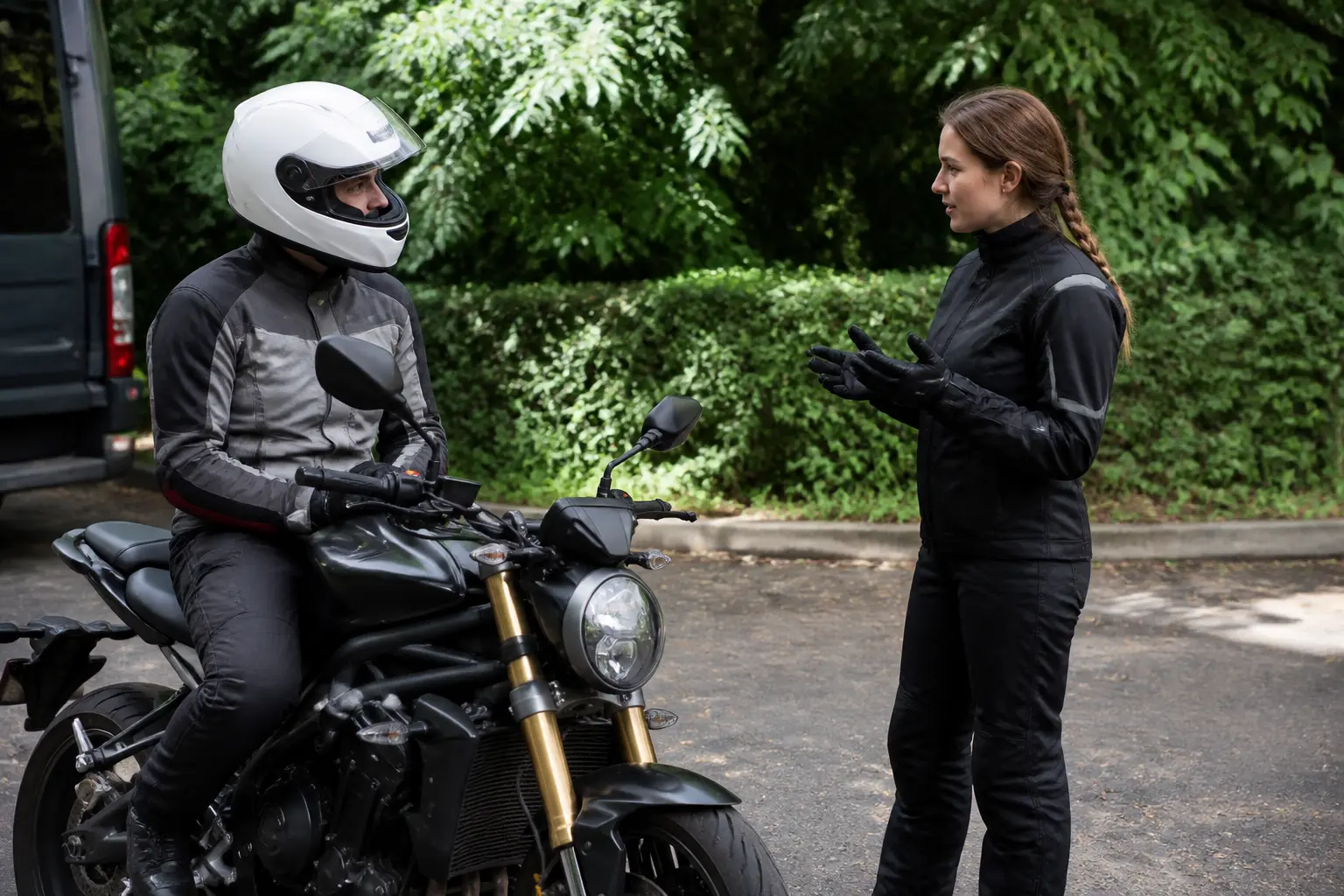
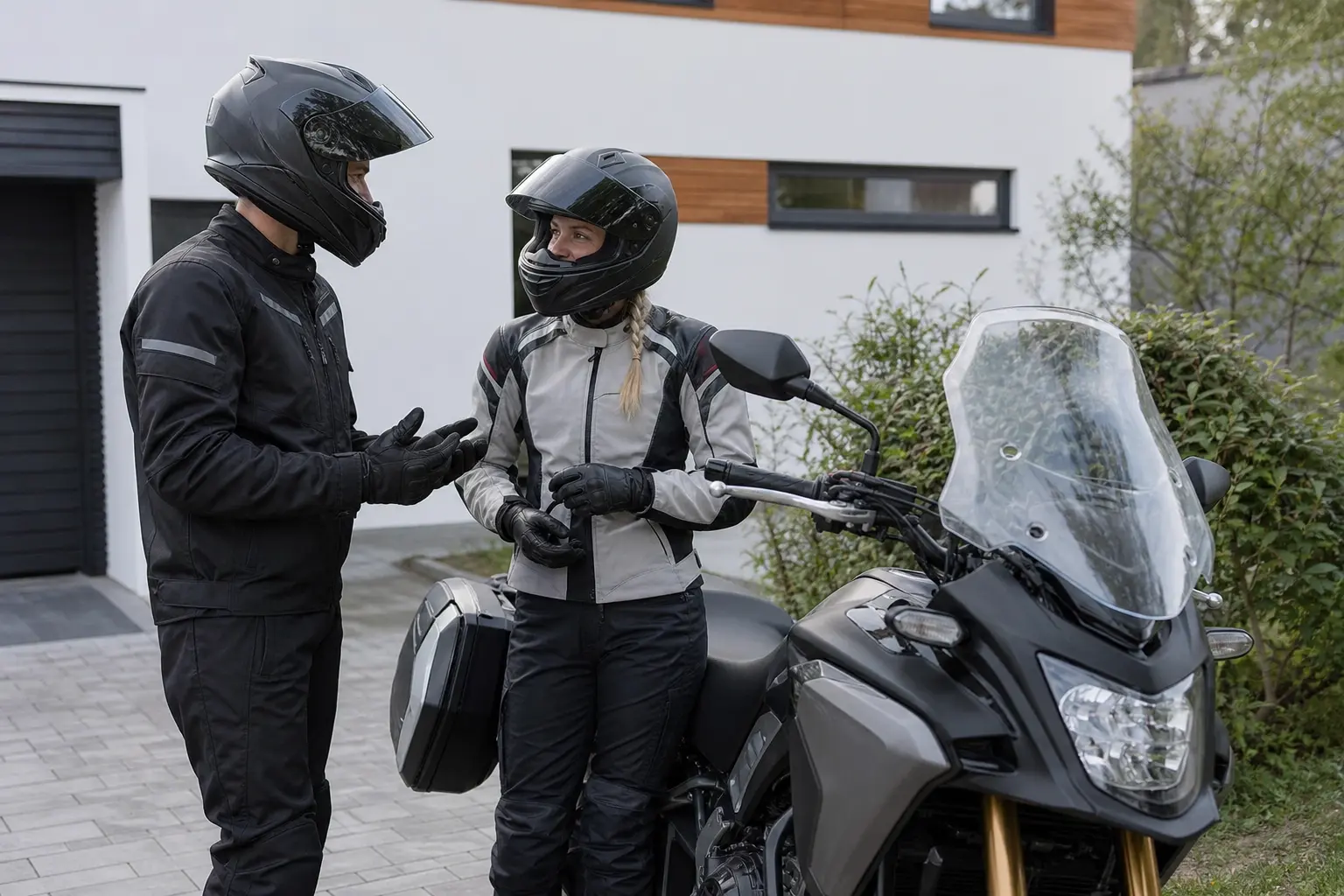
Communication works best when it is agreed while both people are standing beside a parked motorcycle. Do not depend on a lengthy explanation shouted through helmets after the engine starts. The passenger should know what the rider expects, how to get attention, and what will happen if a break is needed.
A useful briefing has a small number of memorable instructions. Describe them in plain language, demonstrate what matters, and ask the passenger to repeat the plan back. That last step exposes misunderstandings before they become movement at speed.
Start with mounting and dismounting. The passenger waits for the rider’s specific signal before getting on or off. The rider, in turn, should not give that signal until the motorcycle is stable and the rider is prepared. Agree on the side from which the passenger will approach where practical, and explain that unexpected movement around a stopped motorcycle can affect balance.
Next, cover passenger posture. The passenger should keep both feet on the intended footrests once underway, sit in a centered position, and avoid sudden shifts. In turns, the passenger should remain relaxed and move naturally with the motorcycle and rider rather than trying to oppose the lean. Deliberately leaning away to “keep the bike up,” making dramatic body movements, or repeatedly turning around can make the motorcycle harder to manage.
Explain how the passenger should hold on. The exact arrangement depends on the motorcycle’s approved design and the manual’s instructions. What matters is a stable contact point that does not restrict the rider’s arms, pull unexpectedly at the controls, or change during braking. A passenger should not grip the rider’s wrists, touch the handlebar area, or use the rider’s arms as leverage.
Also discuss what counts as an urgent concern. A loose helmet, impaired vision, pain, cold, nausea, a loose item, or fear is information the rider needs. The passenger should never try to solve a concern by moving the rider’s arms, grabbing near the controls, blocking vision, or abruptly leaning away from a perceived hazard. The safer choice is to use the agreed signal so the rider can reduce demand and find a safe place to stop.
The Motorcycle Operator Manual frames passenger preparation as part of responsible motorcycle operation. Treat the briefing as a normal element of departure, not as an awkward formality. A calm, clear conversation is easier than correcting a misunderstanding once traffic, wind, and noise are involved.
Choose Communication Signals That Do Not Create Distraction
A passenger does not need a complex vocabulary of taps, squeezes, and gestures. In fact, an elaborate system can be harder to remember and easier to misread. Choose a small set of signals, practice them while parked, and agree on what the rider will do after receiving each one.
For many pairs, two messages are enough: “I need your attention” and “please stop when safe.” The first can be a deliberate, pre-agreed contact signal that the rider can recognize without guessing. The second should mean the rider will smoothly reduce speed, select a safe stopping place, and check in. If the passenger can speak safely through an intercom or at a stop, that can add clarity, but technology should not replace a basic fallback plan.
Avoid signals that resemble a routine grip adjustment, an involuntary movement, or panic. A sudden squeeze may happen naturally under braking. A tap may be missed through thick gear. If the chosen signal cannot be recognized consistently while parked, simplify it rather than hoping it will work at speed.
A communication plan should include stops, not just emergencies. Agree that the passenger can request a pause without needing to justify it. Establish that the rider will not debate the request while moving or dismiss it because the destination is near. A planned stop is also the right place to resolve comfort, helmet, clothing, luggage, or position issues.
The rider has a role after receiving any signal: respond predictably. Do not turn immediately, brake sharply, or attempt to conduct a conversation while negotiating traffic. First create space, then slow smoothly, then stop where conditions allow. This keeps the passenger’s request from becoming a new source of instability.
A Controlled Passenger Mounting and Dismounting Plan
Passenger mounting and dismounting are moments when the motorcycle is vulnerable to a sudden balance change. Treat them as controlled transitions rather than casual movements between errands.
Before the passenger mounts, the rider should have the motorcycle positioned on a suitable surface and be ready to hold it stable. The rider should not be adjusting mirrors, searching for a glove, rearranging cargo, or trying to answer a phone at the same time. The passenger waits for the agreed signal, uses the intended equipment, and moves smoothly rather than jumping or changing direction halfway through.
Once the passenger is seated, pause before moving. Confirm that the passenger’s feet are on the intended rests, gear is secured, clothing and straps are clear, and luggage has not shifted. This is a useful moment to ask whether the passenger feels stable and can hear or understand the communication plan.
Dismounting needs the same discipline. The passenger should remain seated until the motorcycle has stopped, the rider has stabilized it, and the rider gives the agreed instruction. Stepping down early, especially on a slope or uneven surface, can pull the motorcycle off balance. If the parking surface is loose, narrow, or awkward, find a better position before asking the passenger to get off.
Neither person should feel compelled to save a developing tip-over through strength or a sudden grab. If the sequence becomes unstable, stop, reset, and assess the situation. A calm restart is preferable to forcing the motorcycle through an awkward movement.
Motorcycle Passenger Readiness Checklist: Controls, Communication, and Load Changes
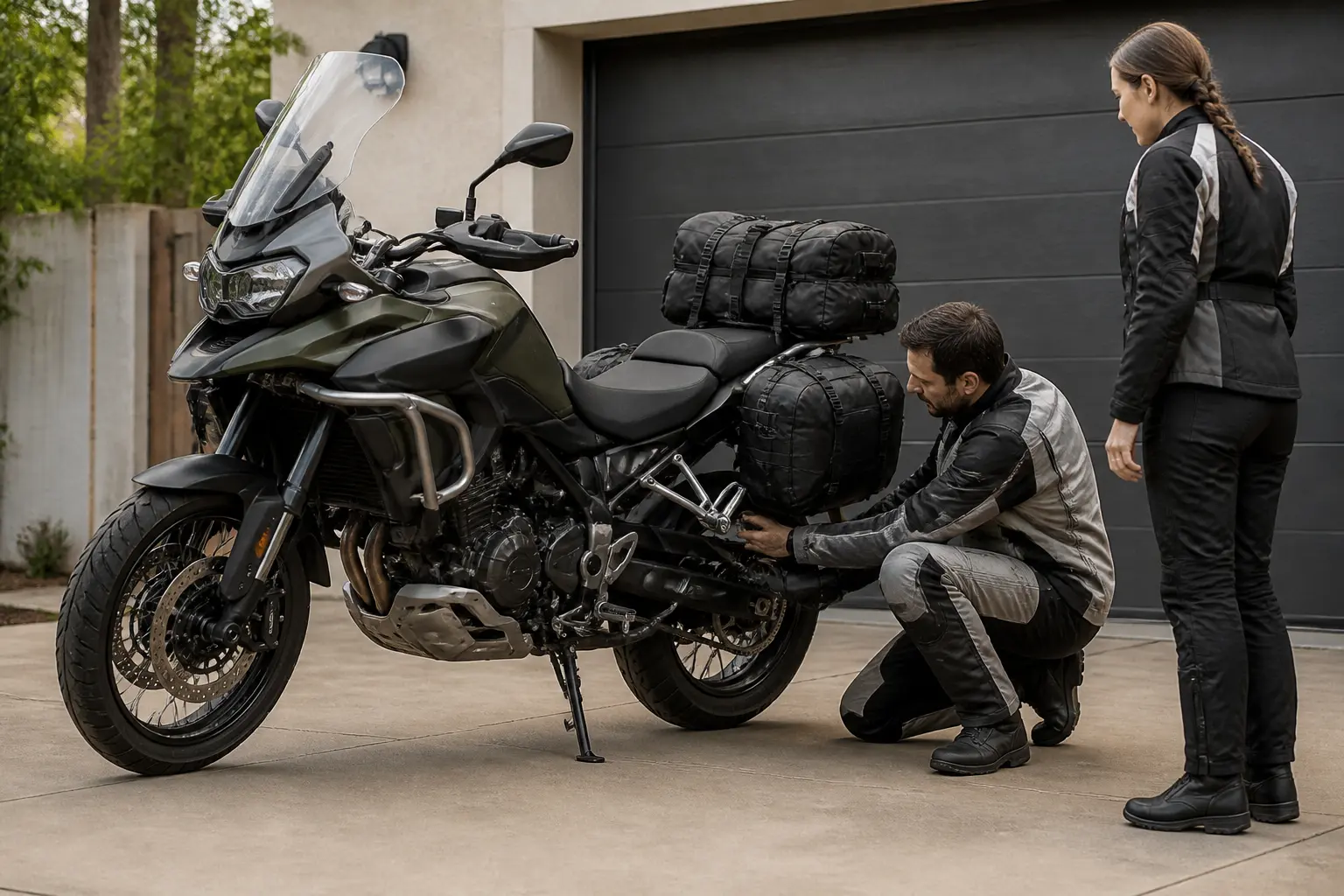
Use this checklist as a go/no-go screen immediately before departure. A checked box is not permission to ignore an obvious concern. Any uncertain answer is a reason to pause, consult manufacturer information, reconfigure the load, or choose another plan.
Before the passenger mounts
- The owner’s manual confirms that this motorcycle and its current equipment are approved for passenger use.
- The combined rider, passenger, protective gear, cargo, and accessory load has been checked against applicable manufacturer information.
- The passenger seat, footrests, and handhold arrangement are intended for use and unobstructed.
- The passenger can sit securely and place both feet on the intended footrests.
- Tire-pressure and other load-related checks have been reviewed using the motorcycle’s official documentation.
- Cargo is balanced, restrained, and clear of the passenger area, controls, wheels, drive components, suspension, and hot surfaces.
- The normal pre-ride review finds no concern with tires, brakes, controls, lights, stands, warning indicators, or visible leaks.
Before the motorcycle moves
- Rider and passenger agree on mounting and dismounting signals.
- The passenger knows to wait for permission before mounting or getting off.
- The passenger understands where to hold on and how to avoid restricting the rider’s arms or controls.
- The passenger knows to remain relaxed, centered, and aligned with the rider through turns.
- Both people have practiced the attention and stop-request signal while parked.
- The passenger knows to report discomfort, a loose item, impaired vision, or any urgent concern.
- The rider can operate every control freely with the passenger seated.
- The first route is familiar, low in complexity, and has reasonable opportunities to stop.
Ride With More Margin, Then Stop to Reassess
The first portion of a passenger ride should be intentionally uneventful. Select a route with manageable traffic, good visibility, and places to pull over. Avoid making a first or newly configured passenger trip into a fast highway run, a demanding mountain road, a long night ride, or a schedule-driven commute.
Use smooth throttle, braking, and steering inputs. Look farther ahead, leave greater following space, and start slowing earlier. Give yourself time to identify a safe lane position or a place to stop. The passenger should never be asked to compensate for a rushed decision made by the rider.
A short stop after the initial stretch is valuable. Check that the passenger remains comfortable, cargo has not moved, clothing is still secure, and the motorcycle feels normal. This is also when a passenger may mention an issue they did not want to raise while moving. Listening early may prevent discomfort from turning into fatigue, distraction, or unpredictable shifting.
Stop and reassess immediately if the rider notices unusual instability, unexpected contact, a loose strap, a warning indicator, a changed control feel, or anything interfering with normal operation. Stop if the passenger cannot remain stable, cannot keep feet where intended, repeatedly shifts because of discomfort, or signals distress. Do not attempt to “ride it out” because the destination is close.
Weather and route conditions can change a previously acceptable plan. Rain, wind, darkness, cold, loose surfaces, poor visibility, and dense traffic all increase the workload of carrying a passenger. The conservative choice is to delay, shorten, or cancel the ride when conditions remove the margin needed for two people to coordinate safely.
How Vojo Helps
Create a dedicated passenger-readiness entry in Vojo before the ride: record the confirmed load configuration, note that tire-pressure information and passenger equipment were checked against the owner’s manual, and save the agreed attention and stop signals in the ride notes. After a short first ride, add a follow-up note about passenger comfort, luggage security, and any item that needs inspection before the next two-up trip.
Use the Motorcycle Maintenance Tracker to schedule that follow-up review and keep passenger-load checks attached to the motorcycle’s service history rather than relying on memory. Download Vojo on the App Store.
Quick answers
Frequently asked questions
How can I tell whether my motorcycle is ready for a passenger?
Begin with the owner’s manual. Confirm approved passenger seating and footrests, applicable load limits, and any manufacturer instructions for the loaded condition. Then make sure the passenger can sit securely, cargo does not interfere with that position, and the motorcycle passes its normal pre-ride review.
What should a rider explain to a motorcycle passenger before departure?
Cover when to mount and dismount, where to place feet, how to hold on, how to remain relaxed through turns, and how to ask for a stop. The passenger should also know not to interfere with the rider’s arms or controls and to report discomfort or loose gear promptly.
Should a passenger lean in motorcycle turns?
The passenger should stay relaxed and move naturally with the rider and motorcycle rather than trying to counterbalance a turn or making exaggerated body movements. A clear briefing and an easy initial route help both people settle into the changed feel.
Does adding a passenger mean changing tire pressure?
Some motorcycles provide manufacturer instructions for different load conditions, while others may not. Check the owner’s manual or official information for that motorcycle. Do not use another model’s recommendation or the tire sidewall maximum as a substitute.
What should I do if the motorcycle feels different or unstable with a passenger?
Reduce demand smoothly, find a safe place to stop, and inspect the passenger position, cargo security, clearance, and applicable manufacturer load information. Do not continue with a passenger if the cause is uncertain or a control, tire, warning, or handling concern remains.
Why should the first passenger route be short and simple?
A familiar, low-complexity route gives rider and passenger an opportunity to confirm comfort, communication, load security, and normal motorcycle behavior without the pressure of demanding traffic, distance, or a fixed schedule.