
First Motorcycle Ride With a Passenger: A Conservative Readiness Checklist
Use this motorcycle passenger safety checklist to confirm rider readiness, approved seating, load limits, briefing, route, and ride margins before leaving.
Fact-checked against cited official documentation
Reviewed against Fact-checked against MSF passenger-riding guidance and Motorcycle Operator Manual, plus NHTSA’s official motorcycle safety page for passenger position, footrests, pre-ride checks, and protective equipment context..
Last updated September 23, 2026
A first ride with a passenger is not simply a normal ride with another person aboard. It changes the motorcycle’s load, response, stopping plan, and the consequences of small surprises. Treat it as a separate riding skill—and make the first outing deliberately easy.
Start with the motorcycle manufacturer’s owner’s manual. Confirm that your specific motorcycle is intended to carry a passenger, then follow its stated limits and any instructions for carrying people or cargo. Do not assume that an added seat, accessory pad, or improvised foot placement makes a motorcycle passenger-ready. MSF likewise advises using a motorcycle designed for a passenger, checking the owner’s manual, and staying within its weight limits. 1
Before You Invite a Passenger
The rider should already be comfortable with the motorcycle alone in ordinary traffic. A passenger adds weight and can move independently, so starts, stops, cornering, passing, wind, and low-speed balance all deserve more margin than usual. 1
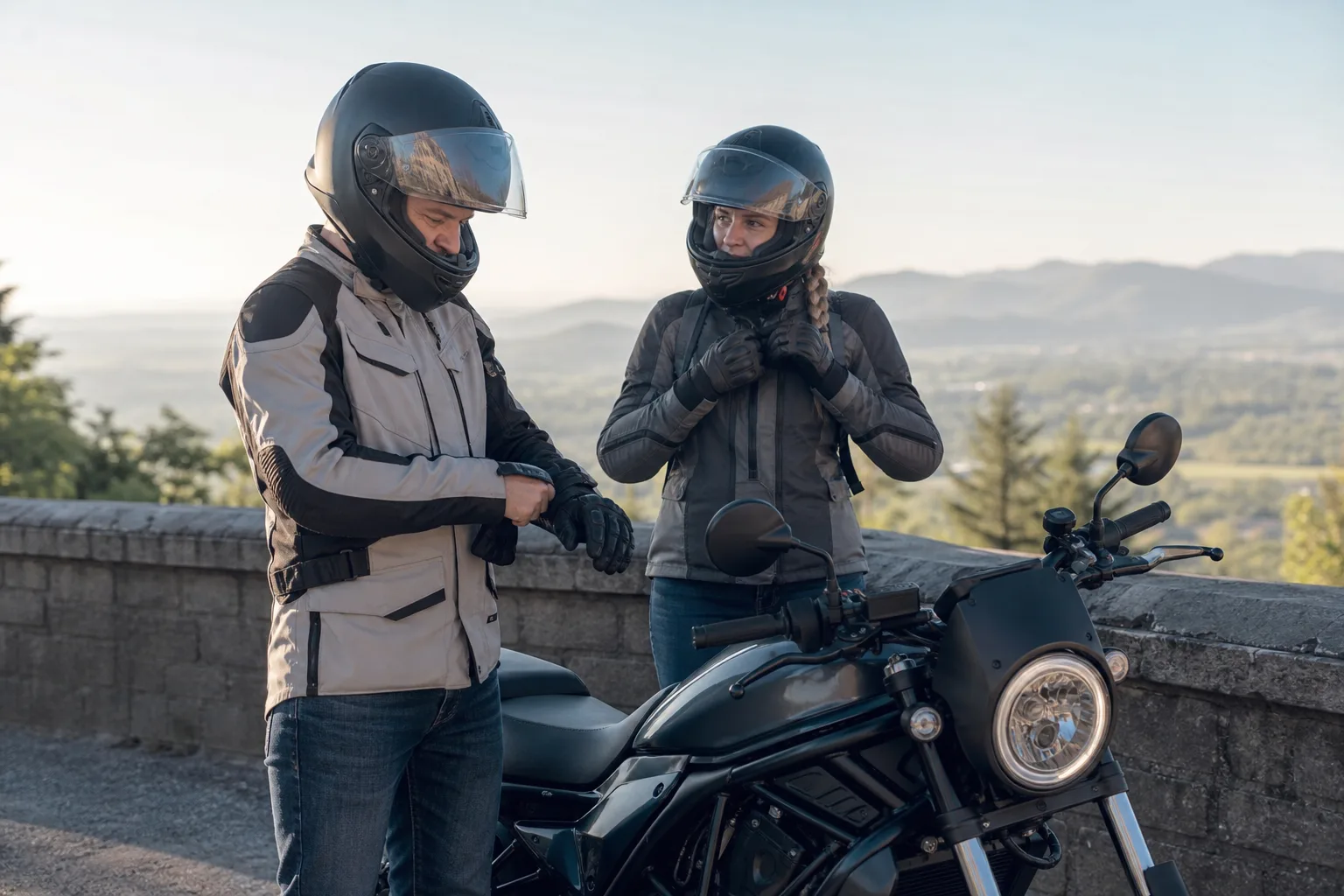
Choose a passenger only if they can reliably follow the briefing, wear appropriate protective gear, and reach the designated passenger footrests. NHTSA advises that a passenger sit directly behind the rider, as far forward as practical, and keep both feet on the footrests, including when stopped. 2
| Readiness area | Conservative standard for a first ride | If the answer is no |
|---|---|---|
| Motorcycle approval | Owner’s manual supports passenger use; proper passenger seat and footrests are present | Do not carry a passenger |
| Load and setup | Combined people, gear, and cargo stay within the manual’s limit; required loaded settings are confirmed | Pause and consult the manual or a qualified dealer |
| Rider skill | You can make smooth starts, controlled stops, and unhurried turns solo | Practice solo first |
| Passenger fit | Passenger reaches the footrests and can stay stable without improvised positions | Choose another plan |
| Gear | Both people have helmets and protective riding gear suited to the conditions | Delay the ride |
| Ride conditions | Dry, familiar, low-stress route with a simple exit option | Shorten, delay, or cancel |
A pre-ride check remains important, but passenger carrying adds a manual-first question: are the tire-pressure and suspension instructions different when the motorcycle is loaded? Follow the values and directions for your model rather than borrowing settings from another bike or rider. NHTSA also recommends checking essentials such as tires, brakes, lighting, fluid levels, and leaks before a ride. 2
For a broader routine before a ride or service decision, use the Motorcycle Maintenance Guide.
The Passenger Briefing: Short, Specific, Two-Way
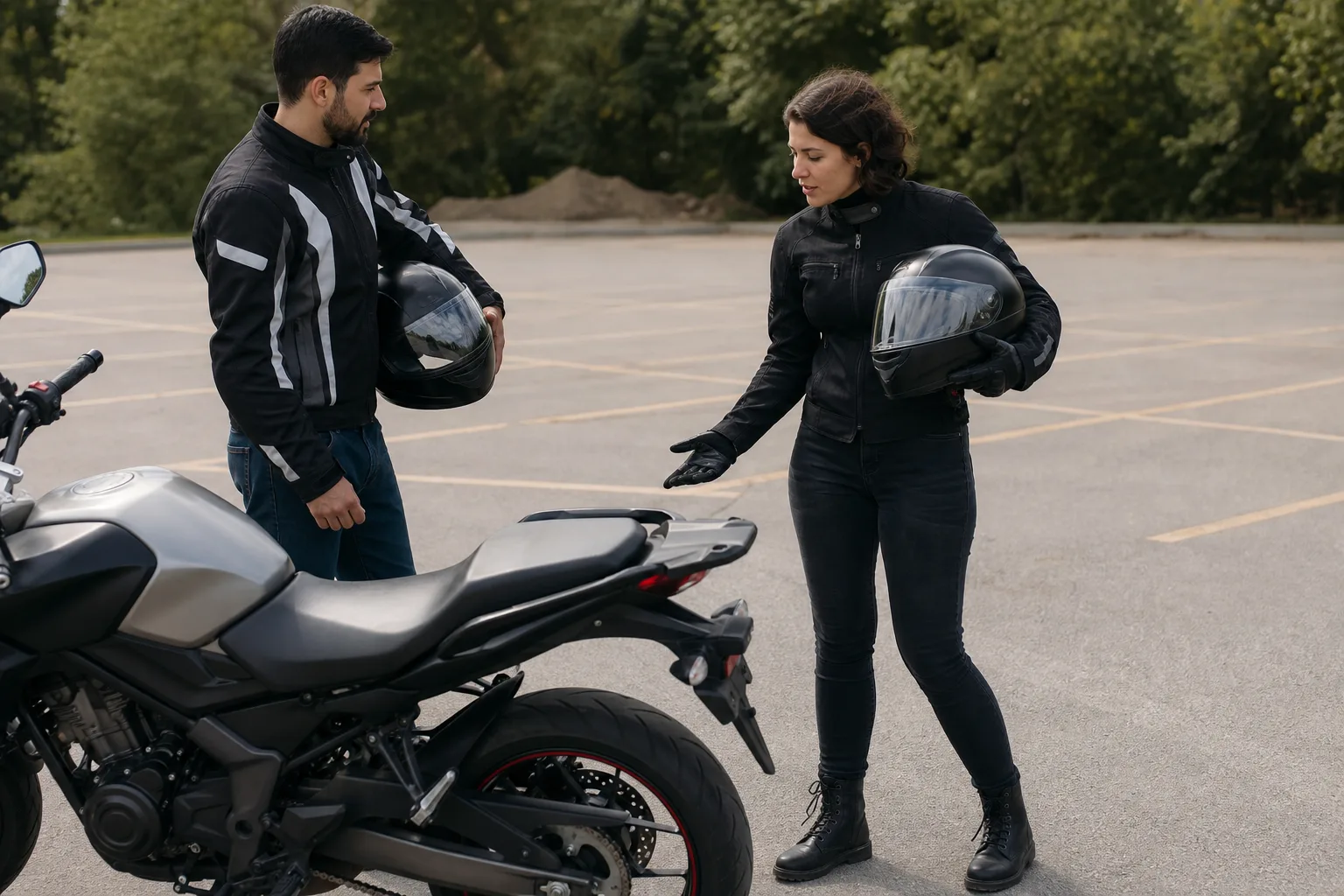
Give the briefing before the engine starts and before either person is rushed. The passenger should be able to repeat the key points back. Agreement matters more than a long lecture.
Explain these basics:
- Mount and dismount only on your signal. Stabilize the motorcycle first; do not let a passenger get off until you say it is safe. 2
- Sit close and centered. The passenger stays directly behind the rider rather than shifting around for a view.
- Keep both feet on the passenger footrests. This includes stops. Keep feet and legs away from the muffler and other hot or moving parts. 2
- Hold the rider’s waist or hips, or use intended passenger hand-holds. Do not grab controls, luggage, or unsecured items. 1
- Move smoothly. Avoid sudden turns, reaching, or repositioning while the bike is moving.
- Follow the motorcycle through turns. Look through the turn over the rider’s shoulder and avoid trying to remain upright against the motorcycle’s lean. 1
- Use a simple communication plan. For example: one tap means “please stop when safe”; repeated taps mean “stop as soon as safely possible.” Confirm that a passenger concern always overrides the itinerary.
The goal is calm coordination, not rigid choreography. If your passenger appears tense, confused, cold, or uncomfortable, stop somewhere safe and reassess.
Choose a Ride That Lets You Learn Slowly
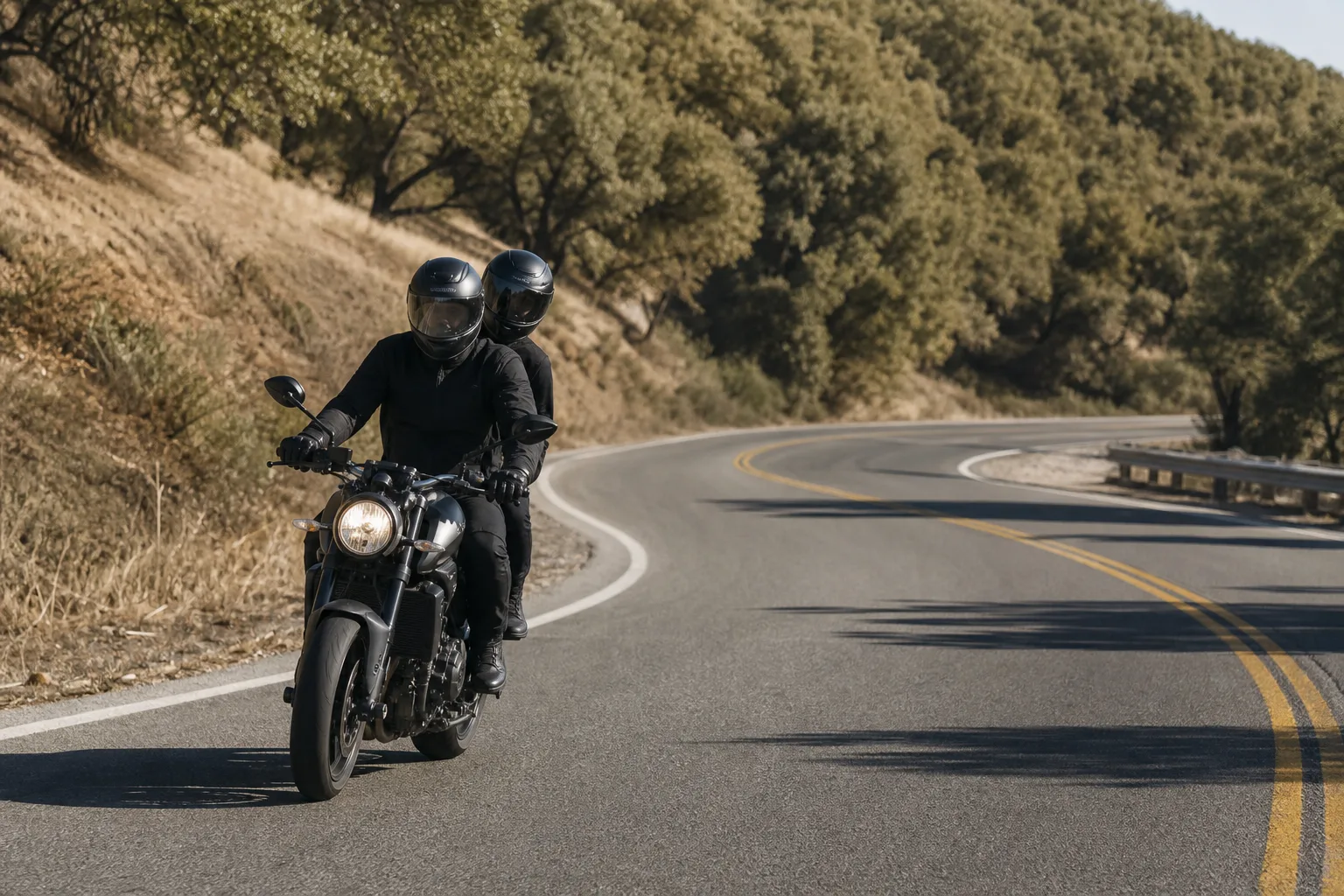
For the first outing, favor a short loop close to home on dry, familiar roads. Skip dense traffic, high-speed roads, strong wind, steep descents, complicated parking, and group-ride pressure. Build in easy places to pull over.
Ride more conservatively than you would solo. The added load may call for smoother clutch and throttle use from a stop, earlier braking, more following space, more time for passing, and extra care in turns. Wind effects and available cornering clearance can also change with a passenger. 1
Avoid treating a successful first mile as proof that every situation is now comfortable. Instead, make the ride a low-demand evaluation: Were starts smooth? Did the passenger stay settled? Were stops predictable? Did the route leave adequate space? If not, end the experiment early and practice in a controlled, low-risk setting before trying a longer ride. MSF recommends practicing low-speed control and braking with a passenger in an open, low-risk area. 1
Motorcycle Passenger Safety Checklist
Use this checklist immediately before the first two-up ride:
- Owner’s manual confirms this motorcycle may carry a passenger.
- A dedicated passenger seat and usable passenger footrests are fitted.
- Passenger can reach and keep both feet on the footrests.
- Combined passenger, rider, gear, and cargo remain within the manufacturer’s stated limit.
- Any manufacturer instructions for loaded tire pressure or suspension have been checked.
- Tires, brakes, lights, signals, fluid levels, and the area beneath the motorcycle have been checked for obvious concerns.
- Rider is rested, sober, comfortable on this motorcycle, and willing to keep the ride short.
- Passenger has a properly fitted helmet and protective riding clothing.
- Passenger knows when to mount and dismount, where to hold on, and how to signal a concern.
- Route is familiar, dry if possible, and avoids unnecessary speed, wind exposure, and complex traffic.
- There is no schedule pressure to continue if either person wants to stop.
A single unchecked item does not always mean something is mechanically wrong. It can still be a sound reason to postpone. The safest first passenger ride is the one you can comfortably decline or shorten.
Debrief the Ride Before Planning the Next One
The first passenger ride should produce information, not pressure to progress. After parking, ask the passenger what felt predictable, what surprised them, and whether any movement, braking, wind, heat, noise, or seating issue made them uncomfortable. Compare that feedback with your own observations while the route is still fresh.
Record the motorcycle’s load setup, tire-pressure setting, suspension adjustment if applicable, luggage, route conditions, duration, and any reason you shortened the ride. A clear note helps you distinguish a passenger communication issue from a motorcycle setup or rider-workload concern.
| Debrief question | Why it matters | Possible next decision |
|---|---|---|
| Did mounting and dismounting feel coordinated? | Unexpected movement can destabilize a stopped motorcycle | Rehearse the agreed signal while parked |
| Was the passenger secure during starts, stops, and turns? | Movement may indicate unclear briefing or unsuitable seating | Repeat a shorter controlled ride or seek training |
| Did controls, handling, or braking feel different? | Added load changes the rider’s available margin | Recheck the manual’s load and adjustment guidance |
| Did either person feel rushed or fatigued? | Workload can rise before either person says “stop” | Choose a shorter route and more breaks next time |
Do not solve discomfort by telling the passenger to tolerate it. Pain, heat exposure, poor reach to footrests, loose equipment, contact with hot or moving parts, or an insecure seating position are reasons to stop and correct the plan.
For the next ride, change one thing at a time: route length, traffic complexity, speed environment, or duration. Keeping the other variables stable makes it easier to understand whether the change improved the experience. If rider control, passenger position, or motorcycle setup remains uncertain, choose supervised instruction before adding complexity.
Agree on a stop signal that either person can use without debate. The passenger should know that reporting discomfort, loose equipment, heat, fatigue, or fear is useful safety information—not a failure. End the ride while there is still a comfortable margin to park and reassess.
How Vojo Helps
Before the ride, create a “first passenger ride” entry in the Vojo motorcycle maintenance tracker. Add the manual’s passenger/load reminders as notes, log the pre-ride inspection, and set a follow-up reminder to record how the motorcycle and passenger felt after the short test loop. That creates a repeatable decision record instead of relying on memory the next time you ride two-up.
Quick answers
Frequently asked questions
Can every motorcycle carry a passenger?
No. Confirm passenger approval in the owner’s manual for your specific motorcycle. A suitable arrangement includes intended passenger accommodation, and the combined load must remain within the manufacturer’s stated limits.
Does a passenger need to keep both feet on the footrests at stops?
Yes. NHTSA advises passengers to keep both feet on the footrests at all times, including when the motorcycle is stopped. This avoids unstable, unexpected movement around the motorcycle.
Should I adjust tire pressure or suspension before riding two-up?
Check the owner’s manual first. Some motorcycles provide loaded-use instructions for tire pressure and suspension; use only the guidance applicable to your model and load.
What should a passenger do in corners?
They should stay settled, avoid sudden movements, and follow the motorcycle’s direction of travel rather than resisting its lean. MSF advises looking over the operator’s shoulder in the direction of the corner.
Where should we practice before a first passenger ride?
Choose a controlled, low-risk space such as an open parking area, where you can assess smooth starts, low-speed control, and braking before attempting a traffic route.