
Motorcycle Tire Pressure: Why “Cold” Readings and Loaded Settings Matter
Learn why motorcycle tire pressure must be checked cold, how passenger and cargo loads change the manual’s settings, and what to confirm before a ride.
Fact-checked against cited official documentation
Reviewed against NHTSA pre-ride and cargo guidance, MSF T-CLOCS cold-pressure/load checklist, and Honda GL1800 owner-manual guidance on cold versus warm readings..
Last updated September 23, 2026
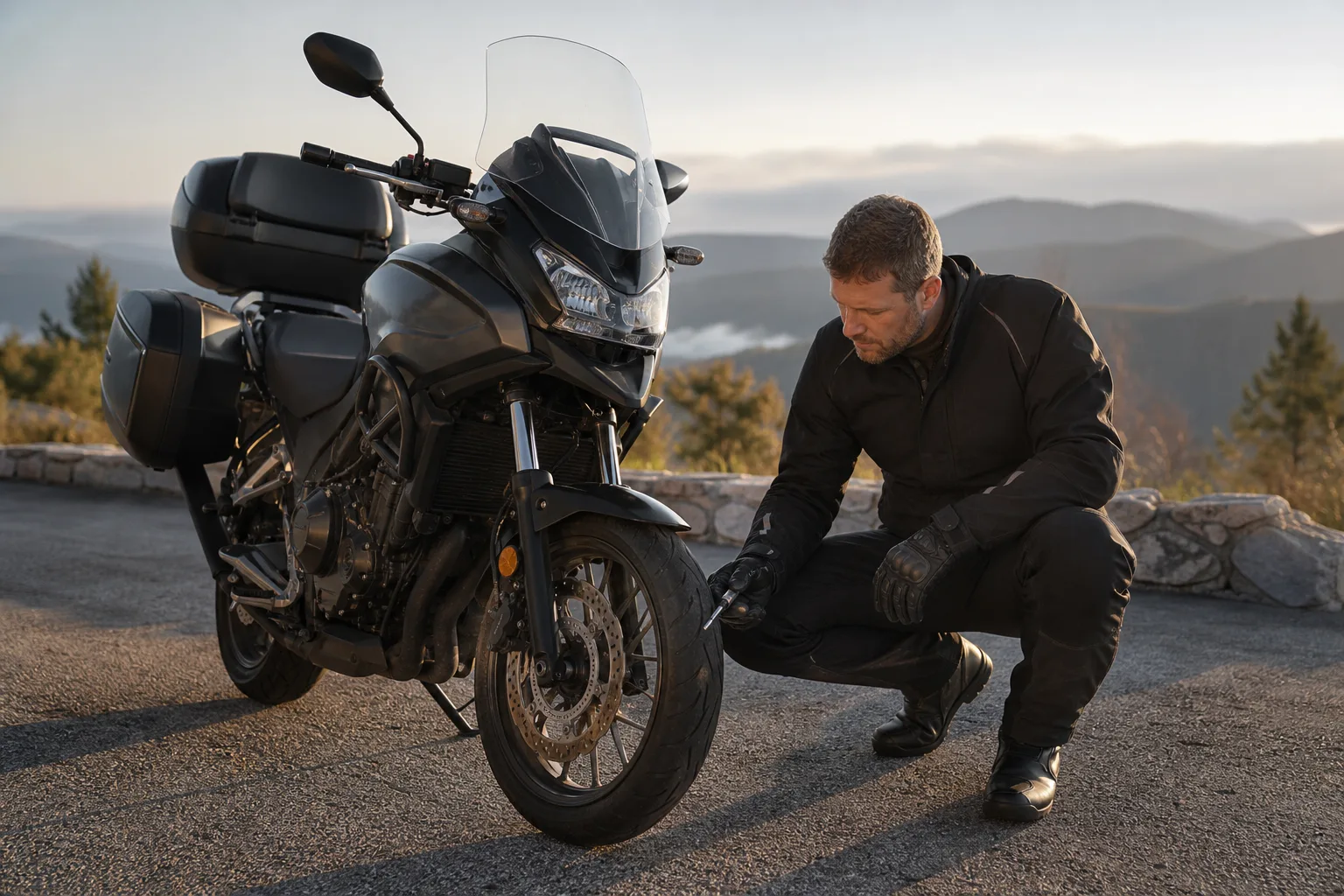
Motorcycle tire pressure cold vs hot loaded is not a question answered by chasing a number on a warm gauge. Start with the cold-pressure specification for your exact motorcycle, then use the owner’s manual when a passenger, cargo, or a particular riding plan changes the load condition.
NHTSA advises checking tire pressure and tread depth before every ride. It also says riders carrying cargo should secure and balance it, then adjust suspension and tire pressure for the extra weight. (nhtsa.gov)
Start With the Motorcycle’s Cold-Pressure Specification
“Cold” is the reference condition used for the pressure listed by the motorcycle manufacturer. It is not simply a tire that feels cool to the touch after a stop.
A Honda GL1800 owner’s manual provides a clear example: it defines cold tires as tires on a motorcycle parked for at least three hours. The same manual warns that readings rise after riding, even for only a few miles. (cdn.powersports.honda.com)
Your bike may define the condition or publish its pressure information differently, so use its owner’s manual and applicable vehicle information label as the authority. Do not copy pressures from another motorcycle, a riding group, or an online setup chart.
| Situation | What to use as the decision point | Safer response |
|---|---|---|
| Motorcycle has been parked long enough to meet its manual’s cold condition | The specified cold pressure for the intended load | Measure with a gauge and set pressure only according to the manual. |
| You have already ridden | The warm reading is an observation, not a replacement specification | Do not try to force it back to the cold number while the tire is warm. |
| Passenger or cargo is planned | The manual’s loaded-use instructions and load limits | Confirm the approved pressure and any related suspension guidance before departure. |
| Pressure seems low or the tire looks abnormal | The motorcycle should not be treated as ready for normal riding | Pause, inspect visually, and follow manufacturer guidance or seek qualified help as appropriate. |
Why a Hot Reading Is Not a New Target
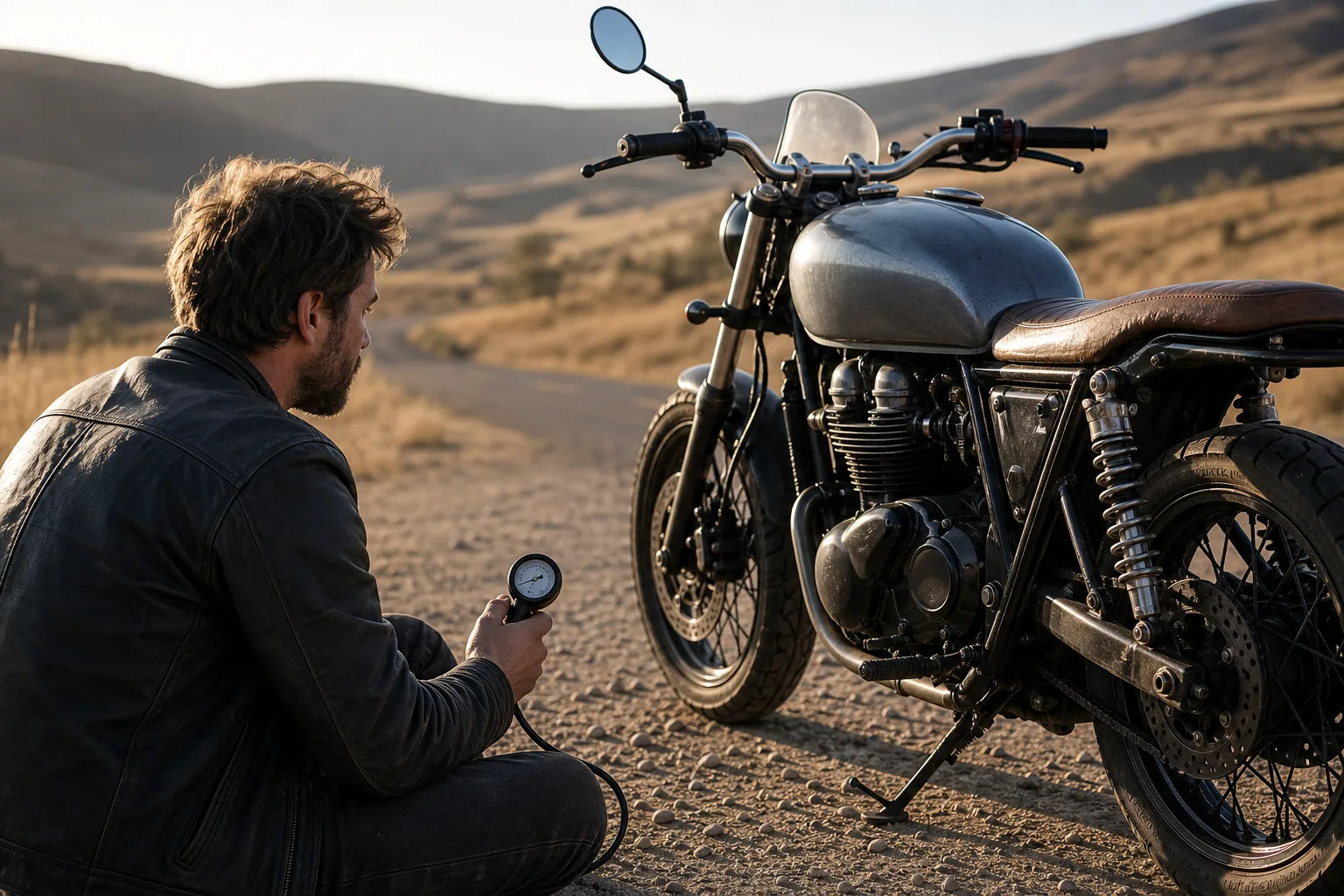
Air pressure readings normally change after riding because the tire is no longer at the manufacturer’s cold reference condition. That does not create a universal “hot target” to tune toward.
Honda specifically cautions that releasing air from warm tires until the gauge matches the recommended cold number leaves the tires underinflated once they cool. (cdn.powersports.honda.com)
That gives riders a simple rule: use a warm reading to notice a condition or decide that a later cold check is needed—not to overwrite the manufacturer’s cold setting. If you are unsure whether a reading is meaningful, let the motorcycle return to the cold condition defined in its documentation and check again.
Passenger, Cargo, and Surface Plans
A loaded bike is not the same operating condition as a solo, lightly equipped bike. The passenger, luggage, and accessories can change the load the tires carry, and cargo also needs to be secure and balanced.
The Motorcycle Safety Foundation’s T-CLOCS checklist directs riders to check tire pressure when cold and adjust it to the load. NHTSA likewise calls for tire-pressure and suspension adjustments when carrying cargo. (msf-usa.org)
Use that guidance in a manufacturer-first order:
- Read the load section of your owner’s manual. Confirm passenger and cargo limits, along with any specified tire-pressure setting.
- Pack before setting pressure. A pressure choice for an empty motorcycle may not be the appropriate manual-listed setting once luggage is mounted.
- Check the whole tire and wheel area. MSF includes tread, wear, weathering, seating, bulges, and embedded objects in its tire inspection items. (msf-usa.org)
- Treat terrain-specific advice as model-specific. If your manual gives a permitted setup for a particular surface or use case, follow it. If it does not, do not improvise a pressure change from generic internet advice.
For a broader routine covering fluids, controls, lights, tires, and records, see the Motorcycle Maintenance Guide.
A Cold-Pressure and Load Checklist
Use this checklist before a ride where pressure or load may have changed.
- Identify the motorcycle’s correct owner’s manual and the applicable tire-pressure information.
- Decide whether this ride is solo, with a passenger, or with cargo.
- Confirm that cargo is within the motorcycle’s stated limits, secured, and balanced.
- Wait until the tires meet the manual’s definition of cold before using the cold-pressure specification.
- Measure both tires with a suitable gauge.
- Set pressure only to the manufacturer’s specified value for the intended load condition.
- Look for visible tire or wheel concerns, including damage, abnormal wear, bulges, or embedded objects.
- If a warm tire reads differently than expected, do not bleed it down to the cold specification; recheck when cold.
- If a warning indicator is present or a tire appears damaged or low, stop treating the motorcycle as routine-ready and follow the manual’s directions.
Build a Repeatable Pressure Record
Use the same reliable gauge, the same cold-check conditions, and the same units whenever practical. Record front and rear values separately with the date, load plan, and the specification source. A sequence makes slow loss or inconsistent readings easier to notice than isolated numbers.
If gauges disagree, do not average them and assume the result is accurate. Compare with a known reference or ask a qualified tire service to verify the equipment. Replace damaged valve caps and inspect valves as directed, but do not treat the cap as a repair for leakage.
| Record item | Why it matters | Follow-up trigger |
|---|---|---|
| Cold front and rear pressure | Creates a comparable baseline | Repeated loss or an unexplained difference |
| Passenger, luggage, and accessories | Connects the reading to the actual load | Load exceeds limits or requires a different setting |
| Ambient and storage condition | Explains why a later cold reading may differ | Large change without a clear environmental reason |
| Tire and wheel observations | Keeps pressure in the broader inspection | Damage, unusual wear, valve concern, vibration |
Respond to Repeated Pressure Loss
Adding air before every ride without finding the cause is not a maintenance plan. If a tire repeatedly falls below its specified cold setting, inspect for visible damage and arrange professional assessment. A puncture, valve, wheel, installation, or tire-condition issue may need attention even when the motorcycle still feels normal.
After tire or wheel service, save the work performed and establish a new cold baseline. Recheck as recommended by the service provider or manufacturer. Do not use a hot roadside reading to overwrite the documented cold target.
Keep the specification source with the record. If the manual provides different settings for load or speed conditions, note which one applied instead of saving one number as a universal target.
How Vojo Helps
Create a recurring pre-ride tire check in the Motorcycle Maintenance Tracker, then log the date, cold front and rear readings, selected load condition, and any tire observations. Before a passenger or luggage trip, review the last entry alongside the owner’s manual so the motorcycle is prepared for the actual plan rather than a remembered solo setting.
Download Vojo on the App Store
FAQ
Should I set motorcycle tire pressure while the tires are hot?
No. Use the cold-pressure condition and setting specified for your motorcycle. Honda warns that reducing a warm tire to match its cold recommendation can leave it underinflated after cooling. (cdn.powersports.honda.com)
What does “cold” mean for motorcycle tire pressure?
Follow your own manual’s definition. For example, Honda’s GL1800 manual defines cold as being parked for at least three hours; this is an example of why a quick stop after riding does not necessarily qualify. (cdn.powersports.honda.com)
Do I need a different tire-pressure setting with a passenger or luggage?
Possibly. The right setting is the one the motorcycle manufacturer specifies for the intended load. MSF says to adjust cold tire pressure to load, and NHTSA calls for tire-pressure adjustments when carrying cargo. (msf-usa.org)
Can I use another rider’s pressure recommendation?
No. Another rider’s motorcycle, tires, load, and manufacturer instructions may differ from yours. Use the documentation for your motorcycle and its approved load condition.
What else should I inspect while checking pressure?
Include visible tire condition. MSF lists tread, wear, weathering, proper seating, bulges, and embedded objects among the items to inspect. (msf-usa.org)
Related Posts
Quick answers
Frequently asked questions
Should I set motorcycle tire pressure while the tires are hot?
No. Use the cold-pressure condition and value specified for your motorcycle. A Honda owner’s manual warns that bleeding a warm tire down to its cold recommendation can leave it underinflated after it cools.
What does “cold” mean for motorcycle tire pressure?
Use your owner’s manual’s definition. One Honda manual defines cold as a motorcycle parked for at least three hours, illustrating why a brief stop after riding is not the same condition.
Do I need a different tire-pressure setting with a passenger or luggage?
Possibly. Check the owner’s manual for the approved loaded-use setting and load limits. MSF and NHTSA both direct riders to account for load when checking or adjusting tire pressure.
Can I use another rider’s pressure recommendation?
No. Pressure recommendations are specific to the motorcycle, approved tires, and intended load condition. Use the documentation for your motorcycle.
What else should I inspect while checking pressure?
Inspect for visible concerns such as tread wear, weathering, improper seating, bulges, and embedded objects, as included in MSF’s pre-ride checklist.