
Long Motorcycle Rides and Fatigue: Build a Stop Plan Before Focus Drops
Plan motorcycle long-ride fatigue rest breaks before focus fades, with route triggers, stop choices, weather margins, hydration, and a no-pressure return plan.

Fact-checked against cited official documentation
Reviewed against Fact-checked against three Motorcycle Safety Foundation sources covering fatigue, frequent and regular stops, hydration, sleep, weather, personal limits, and avoiding impaired riding..
Last updated November 13, 2026
Long motorcycle rides are often planned as a distance problem: calculate the route, estimate fuel, reserve a room, and leave early. That is useful, but it misses a variable that changes throughout the day: the rider.
Wind, heat, cold, rain, posture, traffic, noise, and continuous concentration can make the same road feel very different after several hours. Fatigue does not need to feel dramatic before it affects the quality of your decisions. A rider may still feel capable while scanning less effectively, entering corners with less margin, or delaying a stop because the next town is supposedly close.
A better approach is to create a motorcycle long-ride fatigue rest break plan before departure. The plan should answer four questions in advance:
- Where will you stop before you feel worn down?
- What signs mean the next planned stop is too far away?
- Where can you safely leave the traffic stream and recover?
- What will you do if sleepiness, weather, discomfort, or reduced focus does not improve?
The Motorcycle Safety Foundation’s operator guidance treats riding as tiring and recommends frequent breaks. It also identifies weather and sustained riding as factors that can reduce control. Its extended-trip safety guidance adds sleep, regular stops, hydration, food choices, posture changes, and avoiding alcohol. Those recommendations are most useful when converted into route decisions rather than left as general advice.
This guide focuses on route design and decision triggers. It is not a promise that a particular number of miles or hours is safe for every rider. Your motorcycle, experience, health, gear, traffic, road type, and weather all change the workload. The manufacturer’s owner’s manual remains the first reference for the motorcycle, its load limits, equipment, and operating requirements.
Why a Long Ride Needs Planned Stops
A stop plan is not an admission that you are unfit to tour. It is a way to avoid making your most important decision at the point when fatigue has already reduced your judgment.
Motorcycling asks you to combine balance, speed control, observation, lane positioning, hazard anticipation, and smooth control inputs. Even on a straight highway, the rider is continuously monitoring vehicles, road surfaces, signs, mirrors, wind, and changing space. A long, repetitive stretch can be mentally demanding precisely because it offers few natural pauses.
Fatigue also tends to arrive gradually. Early signs may look like ordinary trip friction:
- You stop noticing scenery or route details.
- You miss a turn or need extra time to interpret a sign.
- Your shoulders, hands, hips, or lower back become tense.
- You begin following the vehicle ahead more closely than intended.
- You feel impatient with traffic or reluctant to make another stop.
- Your attention keeps drifting toward arrival time.
- A familiar control action feels less deliberate.
None of these signs should be treated as a challenge to overcome. They are reasons to reduce the task. The safest response is to create space, leave the traffic stream when it is safe, and reassess while stationary.
The MSF’s broader rider guidance emphasizes not riding when tired or impaired and managing risk with space, time, escape paths, and personal limits. A planned break protects all four. It gives you time, restores space from traffic, and provides a chance to decide whether continuing is within your current limit.
Build the Route Around Recovery, Not Just Range
Fuel range is measurable, so it often dominates trip planning. Recovery is less precise, but it deserves equal attention. A route that technically fits the motorcycle’s range may still be a poor route if it offers no suitable place to stop before the rider’s concentration fades.
Before departure, inspect the route at a planning level. You do not need to identify every parking space. Instead, look for practical opportunities where you can get completely away from moving traffic, secure the motorcycle on an appropriate surface, and take a real pause.
Useful planning categories include:
| Planning question | What to look for | Why it matters |
|---|---|---|
| Where can I leave the traffic stream? | Rest areas, service stops, fuel locations, or other lawful stopping places | A shoulder or narrow pull-off may not provide enough separation or stability |
| What happens after a demanding section? | A stop soon after mountain roads, heavy traffic, strong wind, or urban congestion | Workload can remain high even when distance covered is modest |
| Where are the route gaps? | Long stretches with few services, shade, shelter, or reliable communications | A planned earlier stop may be wiser before entering the gap |
| What is the weather exposure? | Heat, cold, rain, wind, or rapidly changing conditions | Weather can increase effort and reduce control quality |
| What is my exit plan? | A safe place to stop, turn back, delay, or arrange another way home | Continuing should not be the only option |
| What is the fuel plan? | Manufacturer guidance and known lawful fuel opportunities | Fuel planning should support, not replace, rider recovery planning |
Avoid treating a map icon as proof that a stop is suitable. A location may be crowded, closed, reached from a difficult turn, or have a surface that makes parking awkward. If the stop matters to your plan, confirm it as reasonably as possible before leaving and keep an alternative in mind.
Also plan the first stop. Riders often assume they will stop only when something feels wrong. That makes the first break easy to postpone. A deliberate early pause lets you check posture, hydration, gear, route progress, and mental sharpness before fatigue becomes the decision-maker.
The exact timing should remain flexible. A stop plan is a set of opportunities and triggers, not a license to ride until a clock says you have earned a break. If your body, concentration, or conditions deteriorate sooner, stop sooner.
Choose Decision Triggers Before You Ride
A route plan becomes useful when it includes decisions that can be made without debate. Write them down, place them in your navigation notes, or agree on them with your riding partner before starting.
Trigger 1: Focus changes
If you miss a turn, lose track of the route, find yourself staring without processing, or notice repeated attention lapses, treat that as a stop trigger. Do not wait for a close call. Pull into a suitable location when safe and reassess away from traffic.
Trigger 2: Your body is fighting the motorcycle
Pain, numbness, cramping, stiffness, or a posture you keep trying to escape can distract you from the road. A break may allow you to adjust clothing, reposition luggage if appropriate, drink water, eat, or simply move. Do not make changes that conflict with the motorcycle manufacturer’s instructions or load requirements.
If discomfort persists, worsens, or affects control, the correct decision may be to end the riding day rather than search for a better position while moving.
Trigger 3: The weather changes the workload
Rain, cold, heat, glare, strong wind, or reduced visibility can turn an easy route into a demanding one. Weather is not just a comfort issue; the MSF identifies it as a factor that can reduce control. Create a larger margin when conditions change. That can mean stopping early, waiting, changing the route, or ending the ride.
Do not use a scheduled stop as a reason to continue into conditions you can no longer manage comfortably. The next safe decision point may be closer than the one you originally selected.
Trigger 4: You start bargaining with the plan
Thoughts such as “I will stop after the next town,” “I am almost there,” or “I can make up time later” often indicate that the plan needs to become more conservative. A route does not reward you for reaching a planned stop in a degraded state.
Set a simple rule: when you begin negotiating against a reasonable break, take the break or choose the nearest suitable stopping opportunity.
Trigger 5: You are too sleepy to trust yourself
Sleepiness is not a condition to manage with willpower. Do not ride when tired. Stop in a safe location and make a real decision: sleep, arrange transportation, find lodging, wait for conditions to improve, or end the trip. Caffeine, loud music, colder air, or opening a visor should not be treated as a substitute for sleep.
Trigger 6: A companion’s condition changes
In a group, any rider can call for a stop without having to justify the request while moving. A slower rider should not feel pressure to maintain a pace that exceeds their comfort or ability. Agree before departure that a fatigue stop is a normal safety decision, not a failure.
What Makes a Break a Real Recovery Stop?
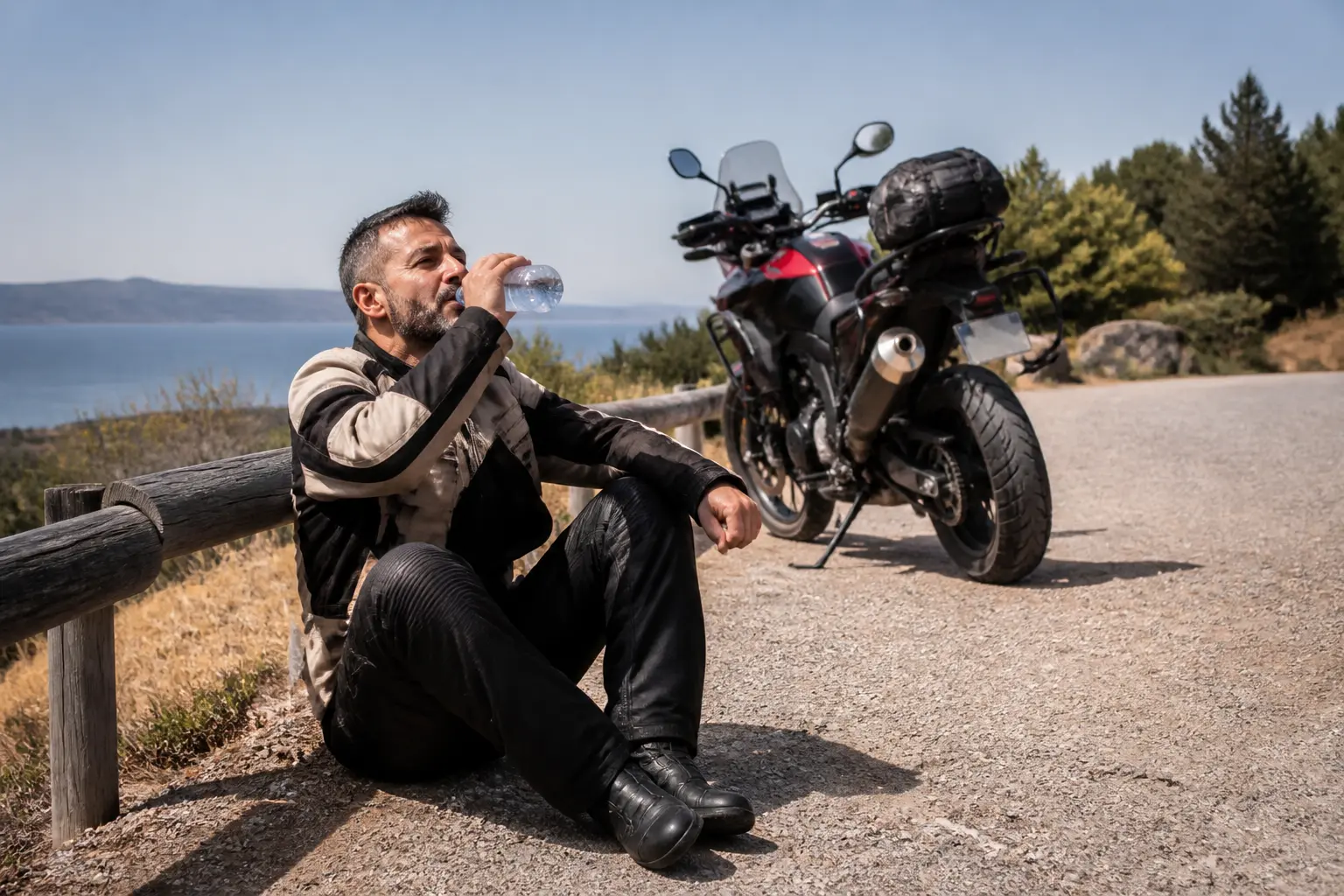
A fuel-only pause is not always a recovery stop. Refueling may be necessary, but it can also become a rushed sequence of standing, paying, checking the map, and rejoining traffic without allowing your attention to reset.
A useful break has three stages.
First, separate from the riding task. Stop completely in a lawful, stable location away from moving traffic. Put the motorcycle in the condition specified by the manufacturer for parking. Do not begin route review while still managing traffic or balancing the motorcycle.
Second, check the rider. Ask yourself whether you are alert, comfortable enough to control the motorcycle, hydrated, fed, and mentally willing to continue. Change posture and walk if the location permits. Inspect your gear for discomfort or weather problems. A break should reduce workload, not add a hurried list of tasks.
Third, decide rather than automatically restart. If you feel restored and conditions remain acceptable, continue with a shorter planning horizon. If you still feel tired, distracted, uncomfortable, or uncertain, extend the stop or end the riding day. Your original schedule is not evidence that continuing is safe.
Food and drink choices should support alertness rather than create another problem. The MSF recommends hydration and sensible food choices during extended trips. Keep water accessible without reaching for it while moving, and plan stops where you can drink and eat without rushing. Alcohol has no place in the riding plan; the MSF advises avoiding it on extended motorcycle trips, and riders should never ride impaired.
A break also offers a chance to check route assumptions. Is the next section more exposed, more technical, busier, or less serviced than expected? Has the weather moved? Has daylight changed? If the answer increases the workload, add margin instead of trying to preserve the original arrival time.
Give Yourself a Conservative Return-to-Ride Test
After a stop, do not judge readiness solely by whether you feel better than you did five minutes earlier. Compare your condition with the task ahead.
Before restarting, ask:
- Can I describe the next section of route without rushing to remember it?
- Am I alert enough to identify changing traffic, road surfaces, and escape options?
- Has the weather or visibility made the next section more demanding?
- Is my posture and equipment arrangement acceptable for the next leg?
- If I became more tired in the next hour, where would I safely stop?
- Am I continuing because I am ready, or because I feel committed to the itinerary?
If the answers are unclear, take more time or stop for the day. The objective is not to prove that a break worked. The objective is to make a sound decision with enough margin.
When you do continue, make the next leg deliberately manageable. Use the next planned stop as a decision point, not a finish line. Avoid immediately trying to recover lost time. A rushed restart can erase the benefit of the break.
Plan for Route Changes and Missed Stops
A robust plan assumes that a selected stop may fail. It may be closed, full, inaccessible, unsafe for your motorcycle, or too close to a difficult merge. You may also pass it because traffic conditions make the turn inappropriate.
Create a hierarchy before the ride:
- Preferred stop: a known location with separation from traffic and reasonable room to park.
- Backup stop: another lawful location before the route gap or demanding section.
- Emergency decision: the nearest safe opportunity to stop, even if it changes the schedule.
- End-of-day option: lodging, pickup, a delayed departure, or another way to avoid riding while tired.
Navigation should support this hierarchy, not control it. If the device announces a turn at the wrong moment, do not make a sudden maneuver to protect the route. Continue safely, then reroute while stopped. If you miss a stop, do not let the missed waypoint become a reason to keep riding beyond your limit.
Before leaving, tell someone your broad route and expected arrival window when practical. This is not a substitute for personal judgment or emergency services, but it can make a delayed plan easier to communicate. Keep the itinerary flexible enough that a safe stop does not look like a failure.
Group Rides Need a Shared Fatigue Rule
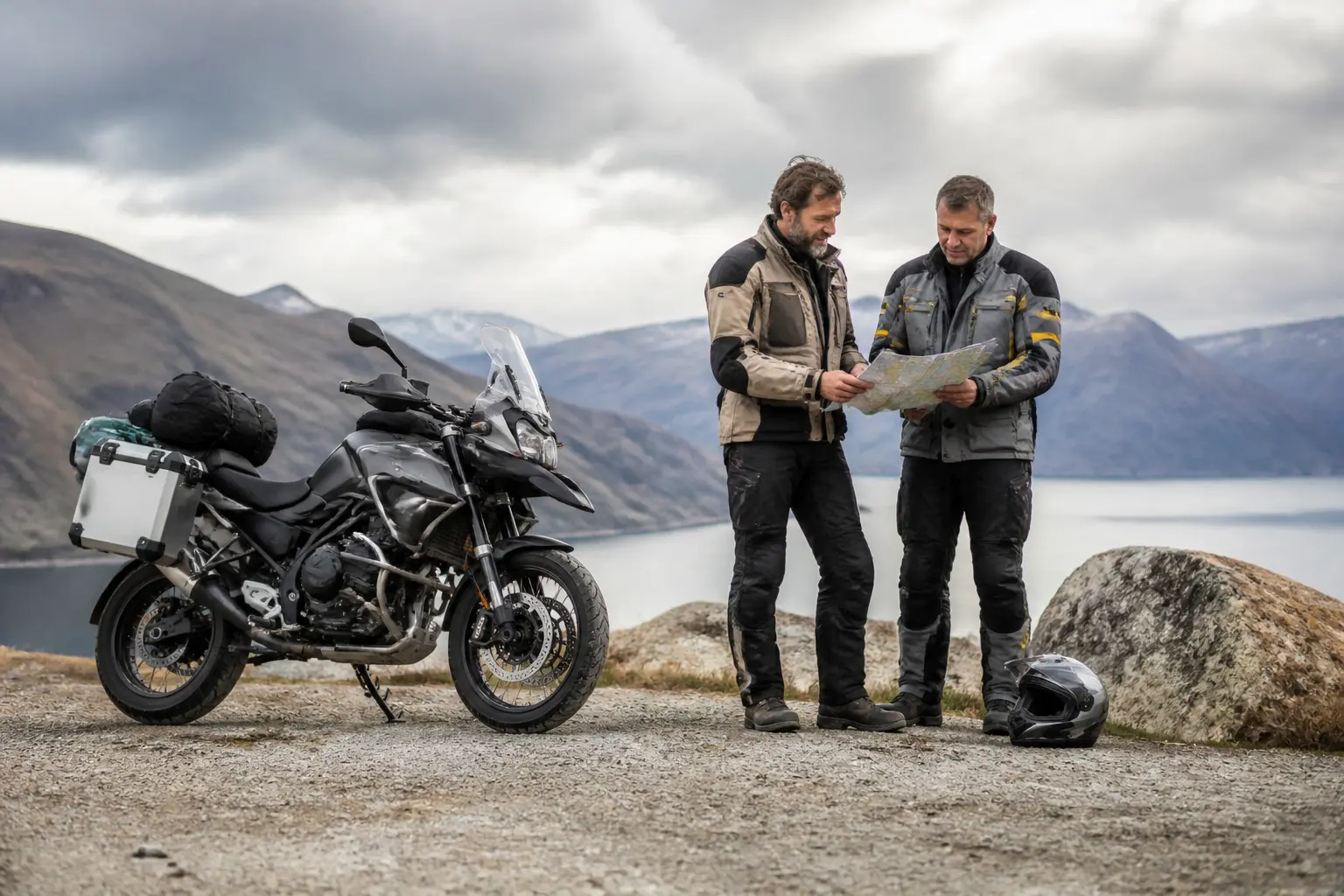
A group can hide fatigue. Riders may stay in formation because they do not want to create a delay, or a newer rider may chase a pace that feels comfortable to someone else. A stop plan should therefore be agreed before the engines start.
Decide who can call a stop, how the group will communicate, and where the group will regroup if it becomes separated. Set a no-pressure expectation: nobody should ride faster, longer, or in worse conditions simply to avoid inconveniencing others.
The lead rider should avoid treating the planned stop as the only acceptable stopping place. The sweep rider and every participant need permission to report a problem. If communication equipment fails, the group should already know the fallback behavior, such as continuing to an agreed safe regroup location rather than searching for one another while moving.
A group stop is also not automatically restorative. Keep the conversation useful and avoid turning every pause into a rushed social break followed by pressure to depart. Check the quiet rider as well as the talkative one. Fatigue can make someone less likely to volunteer that they need more time.
Motorcycle Long-Ride Fatigue Checklist
Use this checklist before departure and again at each major stop. Adapt it to the motorcycle manufacturer’s instructions, your route, and your personal needs.
Before departure
- I slept adequately and am not starting tired or impaired.
- I reviewed the owner’s manual for relevant operating, load, and equipment guidance.
- I identified a first stop before the route begins.
- I marked backup stops before long gaps or demanding sections.
- I know where I can safely leave traffic and park without rushing.
- I checked the forecast and identified a weather decision point.
- I planned water, food, clothing, and shelter around actual stops.
- I have a route-change and end-the-day option.
- My riding companions know that anyone can call a fatigue stop.
- I have shared my broad itinerary with someone when appropriate.
At every stop
- I am fully separated from moving traffic before checking the route.
- I assessed alertness, posture, discomfort, hydration, and food needs.
- I checked whether weather or traffic increased the next leg’s workload.
- I identified the next stop and its backup.
- I decided whether to continue, wait, reroute, find lodging, or end the ride.
- I will not restart merely to protect the original schedule.
Stop immediately and reassess if
- My focus is drifting or I am missing route information.
- I feel sleepy, impaired, or unable to trust my judgment.
- Pain, numbness, or stiffness is affecting control.
- Weather or visibility is beyond my comfort and ability.
- I am riding under pressure from a schedule or group pace.
- I am repeatedly postponing a reasonable break.
For broader preparation, use the Motorcycle Maintenance Guide to keep maintenance planning separate from rider-readiness decisions. A well-prepared motorcycle does not remove the need for a rested, attentive rider.
How Vojo Helps
Vojo can turn this plan into a repeatable pre-ride workflow instead of leaving it in scattered notes. Create a trip record with the route, preferred stop, backup stop, weather decision point, and end-the-day option. At each stop, add a short entry recording how you felt, whether conditions changed, and whether the next leg was shortened or rerouted.
For example, use the Motorcycle Ride App to save the planned legs and stop points before departure. After the ride, review the route alongside your notes: if you repeatedly needed an earlier break after a particular type of road or weather exposure, make that a trigger for the next trip. This creates a practical feedback loop without pretending that one rider’s timing is a universal safety rule.
Quick answers
Frequently asked questions
How often should I take breaks on a long motorcycle ride?
There is no universal safe interval for every rider or route. Plan frequent opportunities before departure, then stop earlier whenever focus, posture, weather, discomfort, or alertness changes. The Motorcycle Safety Foundation recommends frequent breaks and regular stops during extended riding.
Should I keep riding if I am almost at my planned stop but feel tired?
No. A planned stop is not a target that justifies riding beyond your current limit. Choose the nearest suitable place to leave traffic safely, or end the ride if you are sleepy or impaired.
Is a fuel stop enough to recover from motorcycle fatigue?
Not always. Refueling can be a rushed task. A recovery stop should also give you time to assess alertness, posture, hydration, food, gear, weather, and whether continuing is still appropriate.
What should I do if I become sleepy while riding?
Stop safely and do not rely on willpower, cold air, loud music, or stimulants as a substitute for sleep. Sleep, arrange transportation, find lodging, wait, or end the ride. Do not ride when tired or impaired.
How should groups handle a rider who needs an unscheduled break?
Agree before departure that any rider can call a stop without pressure or criticism. Use safe regroup points and do not make a slower rider chase the group. If the rider remains fatigued, change the plan or end that rider’s day.
Does a motorcycle in good mechanical condition make a long ride safer?
Mechanical preparation is important, but it does not compensate for rider fatigue, poor weather decisions, or an overly demanding itinerary. Follow the manufacturer’s guidance for the motorcycle and plan rider recovery separately.