
Motorcycle Rider Training Options: Basic Course, Skills Lab, or Advanced Refresher?
Compare a motorcycle basic course, Rider Skills Lab, and advanced refresher by experience, skill gaps, feedback needs, and the kind of practice you want.
Fact-checked against cited official documentation
Reviewed against MSF Basic RiderCourse, Rider Skills Lab, and 360 Motorcycle Rider Training pages for course focus, rider fit, and training-path descriptions..
Last updated November 8, 2026
Choosing motorcycle training is not always a question of finding the most advanced-sounding option. The better question is: what kind of practice will address the riding problem you can actually describe?
A rider who is still building fundamental control may need the structure of a basic course. An experienced rider who wants to work on one recurring weakness may benefit more from a focused skills lab. Someone returning after time away, or someone who wants a broader review, may need a refresher-style course rather than a single exercise.
The Motorcycle Safety Foundation’s official descriptions provide a useful distinction. Its Basic RiderCourse combines classroom learning with on-motorcycle training and includes foundational control exercises. Its Rider Skills Lab is aimed at experienced riders who want to select focused exercises. Its broader training overview presents several paths, including an Advanced RiderCourse, skill practice, Rider Skills Lab, and adventure-focused instruction.
This guide uses those distinctions to help you choose a starting point without treating one option as universally superior. Course names, availability, prerequisites, motorcycle requirements, and licensing details can vary by location, so confirm the current information with the training provider before registering.
The short answer
Choose a basic course when you are new to riding, are still establishing fundamental control, or want a structured restart after a long break. Choose a skills lab when you are an experienced rider who can identify a specific skill to refine and wants focused practice. Choose an advanced refresher or broader advanced course when your basic control is established but you want a more comprehensive review, additional challenge, or training that better matches your current riding goals.
That summary is only a starting point. The right decision depends on four questions:
- How much recent riding experience do you have?
- Can you name the skill or situation that needs work?
- Do you need instruction across several fundamentals, or practice in one area?
- Is your goal general confidence, a return to riding, or preparation for a particular type of riding?
If you cannot answer the second question, a broad course or instructor conversation may be more useful than choosing a narrow exercise by guesswork.
What the basic course is designed to do
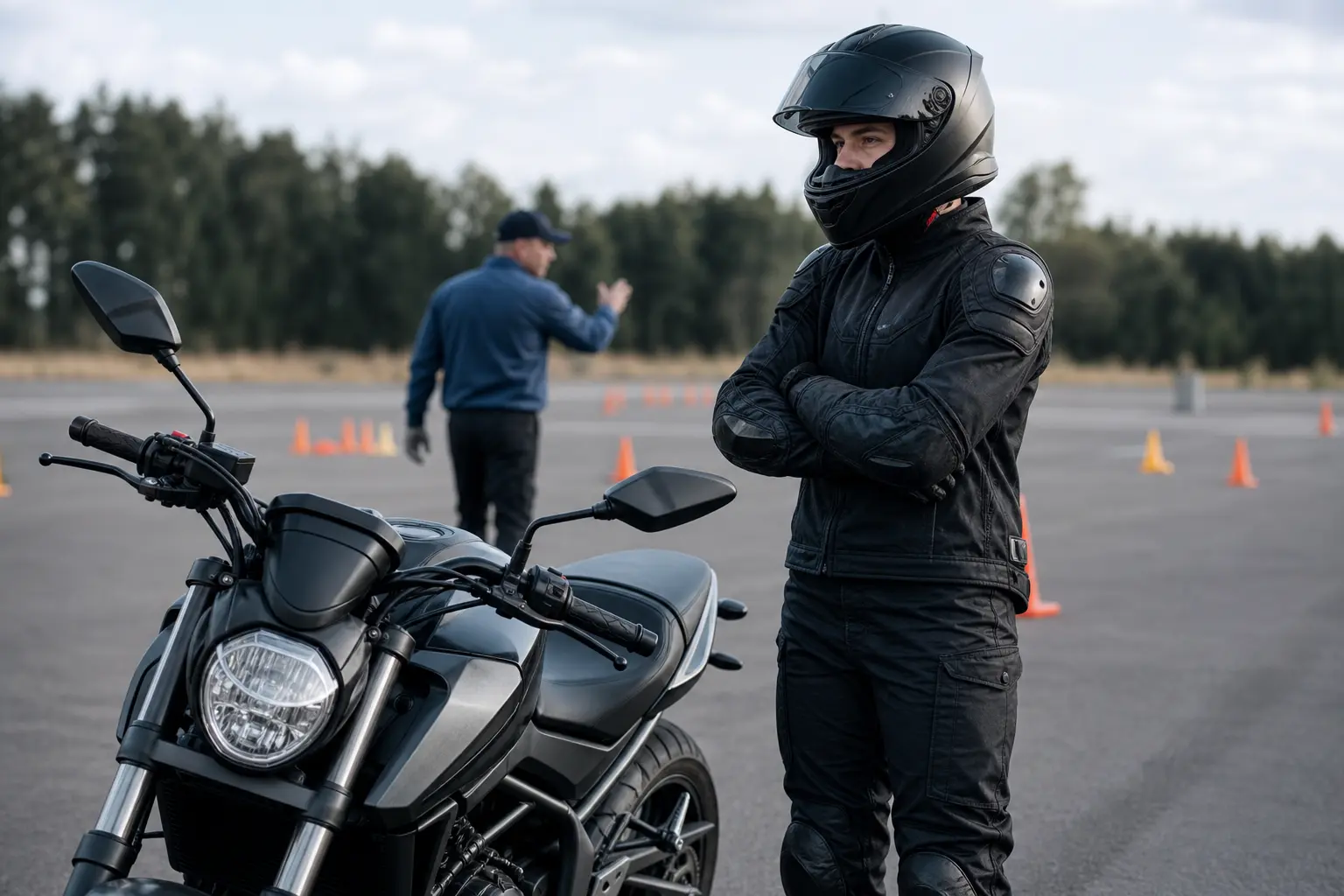
The Basic RiderCourse is the logical starting point for a rider who needs a foundation rather than a specialized tune-up. MSF describes classroom and on-motorcycle training covering core control, braking, cornering, U-turns, lane changes, and obstacle avoidance. That combination matters because a beginner often does not yet know which individual skill is causing difficulty.
For example, a rider who feels awkward during a slow turn may also be dealing with inconsistent visual focus, unfamiliar controls, hesitation, or difficulty coordinating several actions. A foundational course gives an instructor the opportunity to teach and observe a group of related basics instead of asking the rider to diagnose the problem alone.
A basic course may also make sense for an experienced rider in specific circumstances:
- You have not ridden for a long time and no longer feel fluent with basic controls.
- You have changed to a motorcycle that feels substantially different to you.
- You find yourself avoiding ordinary low-speed or traffic situations because your foundation feels unreliable.
- You want structured coaching instead of trying to rebuild habits alone.
- You are unsure whether your problem is braking, cornering, turning, or general coordination.
“Basic” does not mean irrelevant to every returning rider. It describes the course’s foundation, not a judgment about the rider. Repeating fundamentals can expose gaps that have been hidden by familiar roads, low traffic, or riding only in comfortable conditions.
Before booking, ask the provider whether the course is appropriate for your current experience, what motorcycle is permitted, what equipment is required, and whether any local completion or licensing rules apply. Those details are not safe to infer from a general course name.
What a Rider Skills Lab is designed to do
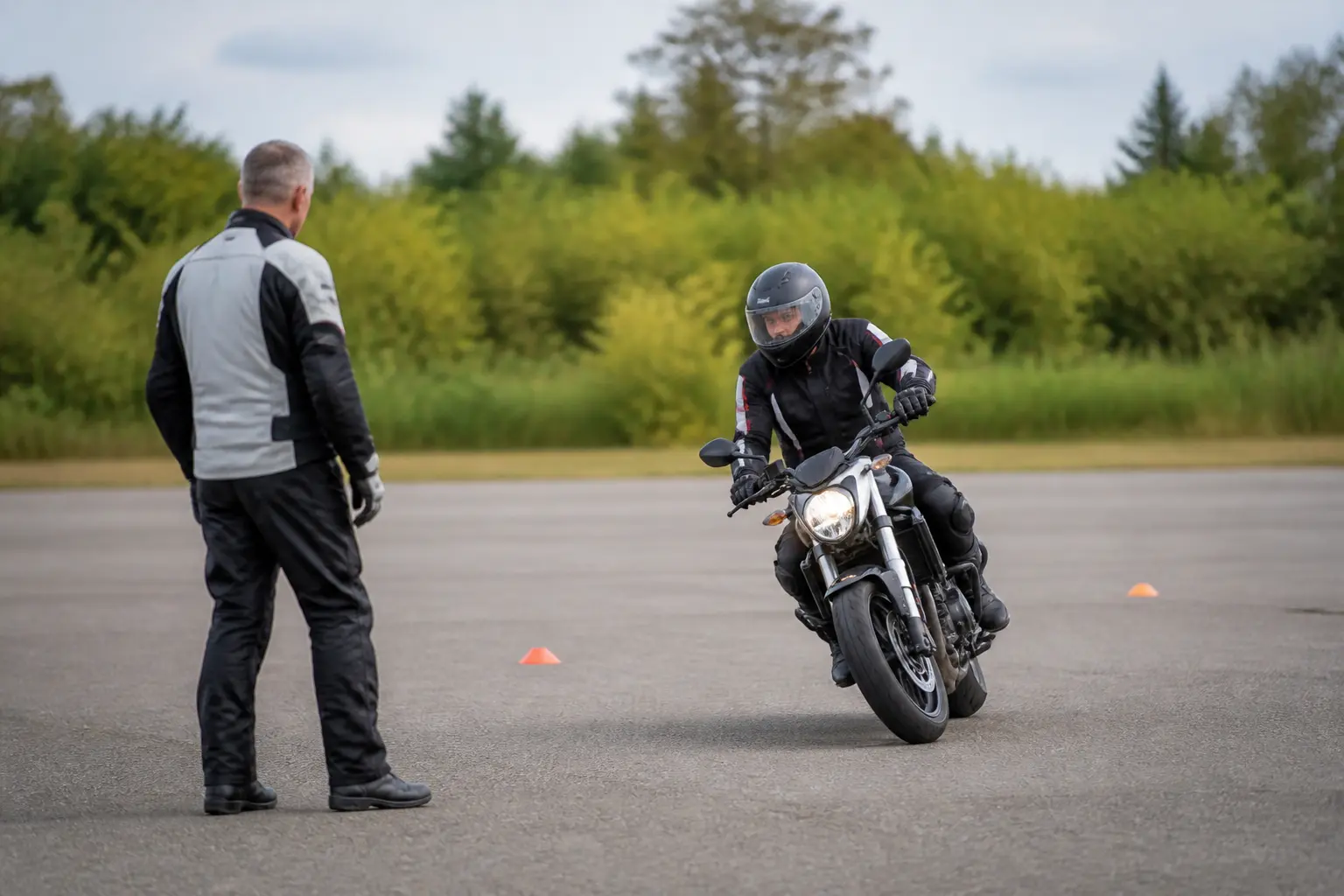
The Rider Skills Lab is better suited to an experienced rider who wants focused practice. MSF describes RSL as allowing experienced riders to select exercises involving areas such as braking, tight turns, cornering, and other skill refinement.
The important difference is diagnostic clarity. A skills lab works best when you can say something more precise than “I want to be better.” You might want to work on:
- Consistent stopping practice in a controlled setting.
- Low-speed turns that feel hesitant or inconsistent.
- Cornering confidence after a period of limited riding.
- A particular control transition that becomes awkward under pressure.
- Repeating a skill while receiving professional observation.
A focused session can be efficient because it reduces the number of variables. Instead of moving through a wide foundation, you can spend more attention on the exercise that matches your concern. It can also help you avoid a common self-coaching problem: repeating a movement without knowing whether it is improving.
However, the skills lab is not automatically the right choice simply because you have been riding for years. Experience and current proficiency are not identical. If you are rusty, uncomfortable with several basic controls, or unable to describe the weakness, a broader review may be a safer fit. Talk with the provider before selecting a focused lab if you are uncertain about the expected experience level.
Where an advanced refresher fits
An advanced refresher occupies the middle ground between rebuilding fundamentals and selecting one narrowly defined exercise. MSF’s broader training overview identifies multiple paths, including an Advanced RiderCourse, skill practice, Rider Skills Lab, and adventure-focused instruction. That range reinforces an important point: “advanced” should describe the training objective and rider fit, not simply a desire for a harder day.
An advanced refresher may suit a rider who:
- Has dependable basic control but wants a more comprehensive review.
- Has been riding regularly yet wants formal feedback on habits.
- Is preparing for a different riding environment or a new type of motorcycle use.
- Wants to connect several skills rather than isolate one exercise.
- Has outgrown a beginner format but is not looking for a single focused drill.
The word “advanced” should not encourage you to select a course beyond your current readiness. A course is useful when its pace and exercises create productive practice, not when the label makes the rider feel pressured to prove something. Ask what the course covers, how instructors assess fit, and what experience is expected.
Comparison table: which option matches your situation?
| Training option | Best starting point when | Typical focus from the official description | Choose another path when |
|---|---|---|---|
| Basic RiderCourse | You are new, returning after a long gap, or unsure which fundamentals need work | Classroom and on-motorcycle foundations, including control, braking, cornering, U-turns, lane changes, and obstacle avoidance | Your fundamentals are established and you want only one focused area |
| Rider Skills Lab | You are experienced and can identify a specific skill to refine | Selected exercises such as braking, tight turns, cornering, and other skill practice | You need broad foundational instruction or cannot identify the main gap |
| Advanced refresher or Advanced RiderCourse | You have basic control and want broader review or more developed practice | An advanced training path within a wider set of rider-training options | You are still rebuilding basic control or are choosing it only because it sounds more challenging |
| Adventure-focused instruction | Your goal includes adventure-oriented riding and the provider’s course matches that use | A training path identified in MSF’s broader rider-training overview | Your immediate need is ordinary foundational control or a narrow skill issue |
This table is a decision aid, not a promise that every provider offers identical content. Confirm the current syllabus and eligibility requirements directly with the provider.
A decision process that avoids overestimating your level
Start with recent riding, not total years
A rider may have ten years of ownership but very little recent practice. Conversely, someone with fewer years may have ridden consistently and received formal coaching. Count recent, relevant riding when deciding where to start.
Ask yourself:
- How recently did I ride?
- How often have I ridden in the last several months?
- Have I practiced at low speed, during braking, and through turns, or only traveled familiar routes?
- Do I feel relaxed because my skills are current, or because I avoid situations that test them?
If your answers reveal a broad loss of confidence, do not force yourself into a focused advanced session merely to avoid repeating basics.
Separate one weakness from several
A single recurring problem points toward a skills lab. Several related concerns point toward a broader course. For example, uncertainty in tight turns, braking, and lane changes may be a foundation issue rather than three unrelated problems.
Write down three situations that make you uncomfortable. Then classify each as primarily:
- Control and coordination.
- Braking or stopping practice.
- Low-speed maneuvering.
- Cornering.
- Traffic or observation decisions.
- General confidence after time away.
This list is not a substitute for an instructor’s assessment. It is a way to have a more useful registration conversation.
Decide whether you need explanation, observation, or repetition
Different riders need different forms of help. A basic course may be appropriate when you need concepts and demonstrations introduced in sequence. A skills lab may be useful when you understand the objective but need observation and repetition. An advanced refresher may help when you want several skills considered together.
Be honest about whether you tend to rush, freeze, repeat an unhelpful habit, or avoid practice after one uncomfortable attempt. Those patterns are reasons to value instruction and feedback, not reasons to choose the most difficult-looking course.
Match the course to the riding you actually plan to do
Your goal could be everyday street riding, a return to riding, longer trips, or adventure-oriented use. Choose training that reflects the situations you expect to encounter, while keeping foundational control as the priority.
If the course is connected to a particular motorcycle type or riding environment, verify that connection with the provider. Do not assume that experience on one motorcycle automatically transfers to every motorcycle or terrain.
Questions to ask before registering
A short call or message to the provider can prevent a poor fit. Ask:
- What experience level is expected?
- Is the course intended for new riders, returning riders, or experienced riders?
- What skills and exercises are covered?
- Can participants select or prioritize a skill in the lab format?
- What motorcycle and protective equipment are permitted or required?
- Are there prerequisites, local completion requirements, or eligibility conditions?
- What should a rider do if they are unsure whether their fundamentals are current?
- Is the training designed for a particular motorcycle type or riding environment?
Use the provider’s current answers rather than relying on a forum post, an old advertisement, or a friend’s memory. Course names can remain familiar while schedules, requirements, and formats change.
Preparing for any of the three options
Preparation should make the training day more productive, not turn into an attempt to pass a private test before arriving.
Review the provider’s requirements
Confirm registration details, arrival time, equipment, motorcycle expectations, weather policy, and any paperwork. Manufacturer guidance remains the first reference for your motorcycle’s operating limits, controls, recommended protective equipment, and condition checks. If the course provider gives a requirement that differs from your assumption, follow the current provider instructions.
You can also use Vojo’s Motorcycle Maintenance Guide to organize ordinary pre-ride maintenance questions, while keeping the owner’s manual and qualified service professionals as the authority for model-specific requirements.
Arrive rested and mentally available
Training requires attention. Avoid treating the course as something to squeeze into an exhausting schedule. If you are distracted, ill, impaired, or too fatigued to concentrate, contact the provider and make a safer plan.
Inspect without improvising repairs
Before riding, follow the motorcycle manufacturer’s owner documentation and the training provider’s inspection instructions. Check that the motorcycle is suitable for the session and that controls, tires, and other required equipment are in an acceptable condition according to those authorities. Do not use a training day to experiment with an unfamiliar modification or an uncertain repair.
Set one or two learning goals
A useful goal is observable and modest: “I want to understand which part of my low-speed turn becomes inconsistent,” or “I want instructor feedback on my braking practice.” Avoid goals such as “I must become fearless” or “I must keep up with everyone.” Those goals can create pressure instead of learning.
How to tell whether the course was a good fit
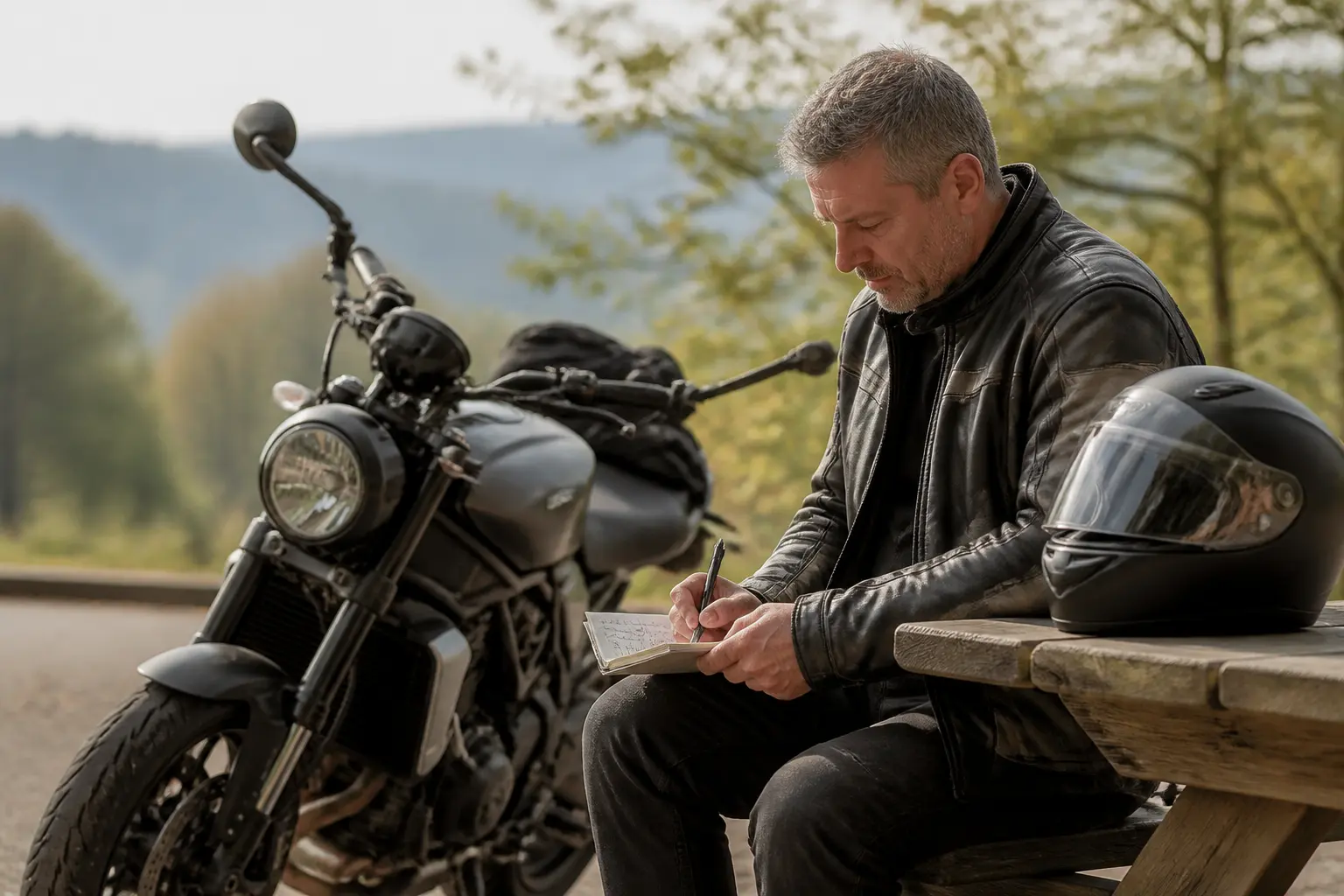
A successful training day does not necessarily produce dramatic confidence. Look for better information and more deliberate choices.
After the session, record:
- Which exercises felt familiar?
- Which exercise exposed a gap?
- What feedback did the instructor give?
- What can you practice responsibly on your own?
- What should remain an instructor-led topic?
- What conditions should you avoid until the skill is more consistent?
If the course revealed a broader foundation issue, take that information seriously rather than immediately escalating to a more difficult class. If it confirmed one narrow weakness, a future skills lab or carefully planned practice session may be appropriate.
Solo practice should remain conservative. Use a suitable legal location, follow local rules, inspect the motorcycle according to manufacturer guidance, and stop when attention or control deteriorates. Do not recreate advanced exercises on public roads or treat ordinary traffic as a practice course.
Common selection mistakes
Choosing by label alone
“Advanced” sounds attractive, but a course is not better merely because it is harder. Choose by fit, content, and feedback.
Using years of ownership as proof of readiness
Time owning a motorcycle does not tell you how current your skills are. Recent practice and honest self-assessment matter more.
Selecting a narrow lab without a defined question
A focused lab is most useful when you know what you want to refine. If every fundamental feels uncertain, start with broader guidance.
Treating confidence as the same as competence
Confidence can be useful, but it can also come from avoiding difficult situations. Look for repeatable control and thoughtful decisions, not just a feeling that the ride will probably be fine.
Ignoring the motorcycle itself
The motorcycle, controls, fit, condition, and intended use affect the training experience. Follow manufacturer documentation and ask the provider whether your motorcycle is suitable. Never assume a course format fits every model or configuration.
A conservative training decision checklist
- I have estimated my recent riding, not just my total years of experience.
- I can describe whether my concern is broad or limited to one skill.
- I have checked the provider’s current experience expectations.
- I have confirmed motorcycle and protective-equipment requirements.
- I have asked about prerequisites and local completion or licensing details.
- I have reviewed the motorcycle manufacturer’s relevant guidance.
- I have planned to arrive rested and able to concentrate.
- I have chosen a learning goal that does not depend on keeping up with others.
- I have a conservative plan for practice after the course.
- I know when to stop riding and seek further instruction instead of improvising.
How Vojo Helps
Use Vojo as a simple record between training decisions. Before registering, create a note in your motorcycle service history with the date, current motorcycle, recent riding frequency, and the three situations that feel least consistent. After the course, add the instructor’s general feedback, the skill you want to revisit, and a conservative follow-up date. That creates a practical progression from concern, to course choice, to next review without relying on memory.
Vojo can organize your notes and reminders, but it does not replace the course provider, your motorcycle manufacturer’s documentation, or qualified instruction. Download Vojo on the App Store.
FAQ
Is a basic motorcycle course only for new riders?
No. It is primarily a foundational option, but it can also suit a returning rider whose basic control is rusty or whose concerns span several areas. Ask the provider whether the current course matches your experience and goals.
Is a Rider Skills Lab better than a basic course?
Neither is universally better. A skills lab is designed for experienced riders seeking focused exercises, while the Basic RiderCourse provides broader foundational training. Choose based on the gap you need to address.
Should I take an advanced refresher after a long break from riding?
Not automatically. If several fundamentals feel uncertain, a basic or broader refresher format may be a better starting conversation. If your basic control is current and you want a comprehensive review, an advanced option may fit. Confirm the expected experience level with the provider.
Can I choose a specific skill at a Rider Skills Lab?
MSF describes RSL as allowing experienced riders to select focused exercises, including areas such as braking, tight turns, and cornering. Confirm the exact exercises and format available at your location before registering.
Does completing a course prove that I am ready for every riding situation?
No. Training can provide instruction and practice, but readiness remains situation-specific. Continue following manufacturer guidance, local rules, your provider’s recommendations, and your own limits. Build experience gradually rather than treating a course as permission to exceed your margin.
Where should I verify course requirements and motorcycle suitability?
Start with the current training provider and your motorcycle manufacturer’s owner documentation. The provider can explain experience expectations, equipment, prerequisites, and course format; the manufacturer is the authority for model-specific operating and maintenance guidance.
Quick answers
Frequently asked questions
Is a basic motorcycle course only for new riders?
No. It is primarily foundational, but it can also suit a returning rider whose basic control is rusty or whose concerns span several areas. Ask the provider whether the current course matches your experience and goals.
Is a Rider Skills Lab better than a basic course?
Neither is universally better. A skills lab is designed for experienced riders seeking focused exercises, while the Basic RiderCourse provides broader foundational training. Choose based on the gap you need to address.
Should I take an advanced refresher after a long break from riding?
Not automatically. If several fundamentals feel uncertain, a basic or broader refresher format may be a better starting conversation. If your basic control is current and you want a comprehensive review, an advanced option may fit.
Can I choose a specific skill at a Rider Skills Lab?
MSF describes RSL as allowing experienced riders to select focused exercises, including areas such as braking, tight turns, and cornering. Confirm the exact exercises and format available at your location before registering.
Does completing a course prove that I am ready for every riding situation?
No. Training provides instruction and practice, but readiness remains situation-specific. Continue following manufacturer guidance, local rules, your provider’s recommendations, and your own limits.
Where should I verify course requirements and motorcycle suitability?
Start with the current training provider and your motorcycle manufacturer’s owner documentation. The provider can explain experience expectations, equipment, prerequisites, and course format.