
Motorcycle Cornering Confidence: When a Skills Course Beats More Solo Practice
Decide when a motorcycle cornering skills course is better than solo practice by weighing feedback, recurring uncertainty, training conditions, and safety margins.
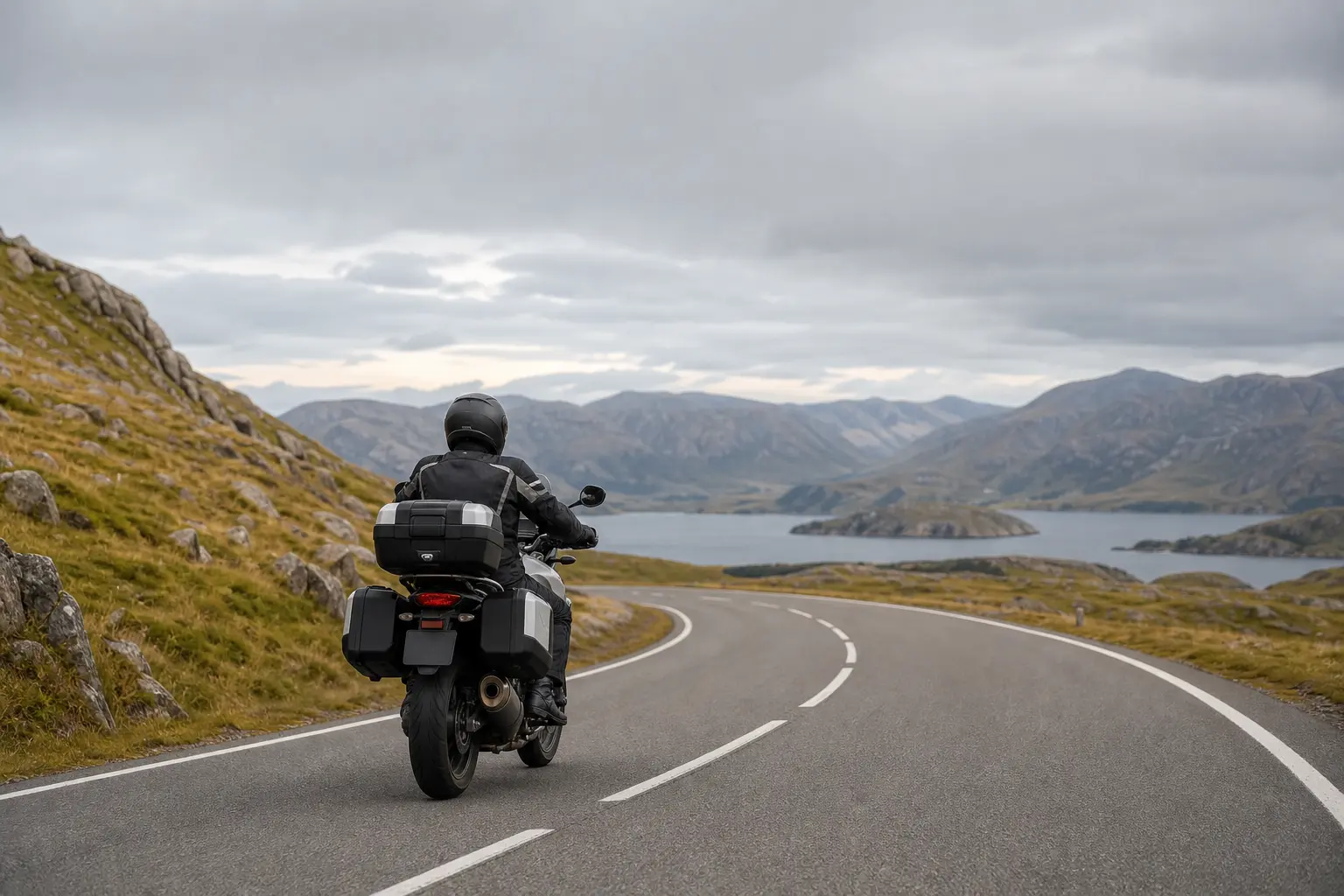
Fact-checked against cited official documentation
Reviewed against Fact-checked against MSF guidance on curve judgment, traction management, braking and turning considerations, rider gear, and riding within personal ability..
Last updated October 24, 2026
Cornering uncertainty is not always obvious. You may ride a route successfully but leave each bend wondering whether you entered with enough time, chose a sensible pace, or had a plan if the view changed. Repeating that ride may make the route familiar. It does not automatically make your decisions transferable to an unfamiliar curve, damp pavement, fatigue, traffic, or a restricted view.
That is why when a motorcycle cornering skills course is better than solo practice is a more useful question than whether you need to ride more often. The issue is not pride or a lack of commitment. It is whether the next improvement requires outside observation, a structured setting, or simply careful reinforcement of something you already understand.
A practical answer starts with restraint. A public road is not a place to discover the boundary of your control. Before treating discomfort as a rider-development project, put manufacturer guidance first: use your owner’s manual for model-specific controls, warnings, operating limits, and required inspections. If something about the motorcycle feels abnormal, resolve that concern through the manufacturer’s guidance and an appropriately qualified professional before attributing it to cornering technique.
The Motorcycle Safety Foundation describes training that addresses curve judgment, traction management, progressive braking, limited-space maneuvers, stopping in a curve, and obstacle avoidance. Those subjects show that cornering is not one isolated action. It is a sequence of noticing, choosing, controlling, and preserving options. The MSF Basic RiderCourse overview describes these learning areas.
This guide compares solo practice with formal training, identifies the situations where a course is likely to be the better choice, and offers a conservative way to decide what to do next.
When Is a Motorcycle Cornering Skills Course Better Than Solo Practice?
A motorcycle cornering skills course is usually the better option when the problem is unclear, persistent, or too complex to assess accurately alone. More repetitions help only when they reinforce a sound and understood decision. If every attempt starts from uncertainty, repetition can instead strengthen the same rushed pattern.
Formal instruction is a strong next step when any of these descriptions fit:
- You repeatedly feel surprised by bends, even on roads you know.
- You cannot identify whether your concern begins with visibility, planning, speed choice, attention, or response to a changing situation.
- You are considering using faster pace, more demanding roads, or traffic exposure to force improvement.
- A long break, a prior scare, an injury, or a drop in confidence has changed how you approach curves.
- You are adapting to a motorcycle that feels materially different in fit, balance, weight, or control response.
- The concern involves several things at once, such as hidden exits, changing surface conditions, braking decisions, and traffic.
- You have received conflicting advice and need a qualified person to observe rather than another opinion online.
The central advantage of a course is feedback. A rider can accurately report, “I became tense halfway through the turn,” yet still be unable to see what set that reaction in motion. An instructor may be able to help separate the earlier decision from the later feeling, making the next learning objective smaller and more useful.
Choose training before further solo work when your current plan depends on public-road pressure. Blind bends, uneven surfaces, intersecting traffic, weather, and unpredictable drivers do not create a controlled lesson. They add consequences to an experiment. A course cannot eliminate risk, but it can provide a more deliberate progression than trying to solve a difficult habit where the road keeps changing the problem.
The MSF Motorcycle Operator Manual discusses riding within personal ability, curve approach, traction limits, and braking considerations while turning. Its guidance supports a conservative conclusion: skill development should create more choices, rather than encourage a rider to test the outer edge of available control. Read the MSF Motorcycle Operator Manual.
What Cornering Confidence Actually Means
Cornering confidence is not a willingness to carry a particular pace or lean farther than before. Those outcomes can be misleading because they may be driven by familiarity, group pressure, or a temporarily clear road. More dependable confidence is the ability to recognize uncertainty early and make an unhurried decision that leaves room for the unknown.
A rider with useful confidence can accept that a bend may contain information not yet visible: a tightening radius, a vehicle over the center line, gravel, a driveway, standing water, or a stopped vehicle. The rider does not need to prove that a chosen pace can be maintained regardless of the condition ahead.
Consider confidence through these questions instead:
- Do I make a conservative plan before committing to a curve I cannot fully see?
- Can I name the conditions that reduce my margin, including weather, fatigue, unfamiliarity, traffic, or poor sightlines?
- Do I feel able to revise my plan without embarrassment when information changes?
- Can I ride without feeling that other riders determine my pace?
- Am I evaluating a ride by preparation and available options rather than by speed?
These are not pass-or-fail questions. A rider can feel composed on one day and need more margin on another. The useful distinction is whether you recognize that change early enough to act on it.
MSF rider guidance emphasizes knowing the motorcycle, wearing appropriate protective gear, and avoiding aggressive cornering, which it identifies as a significant crash contributor. In everyday terms, a slower entry, a simpler route, or an early stop can be signs of sound judgment rather than lost confidence. See MSF’s general guidance for motorcycle riders.
When Solo Practice Is a Reasonable Choice
Solo practice can be valuable when it reinforces a narrow, understood goal in a lawful, low-pressure environment. It is not a substitute for diagnosis when you do not know why a difficulty keeps occurring.
The best solo objective is specific and modest. “Become better at corners” is too broad to evaluate. A more useful aim might be noticing earlier when an unfamiliar route offers limited sight distance, then choosing a calmer plan without treating the ride as a performance test. The desired result is not a higher pace. It is a repeatable decision with more room to respond.
Individual practice is more likely to fit when all of the following are true:
- You can state one behavior you are reinforcing in plain language.
- You understand the purpose of that behavior and can recognize whether it happened.
- The motorcycle is familiar, and there is no unresolved condition affecting your trust in its operation.
- The location is legal and does not require you to contend with blind curves, heavy traffic, or pressure from others.
- The task remains comfortably inside your present ability.
- You are rested, properly equipped, and willing to stop before frustration takes over.
Keep the session limited. Fatigue, heat, distraction, and the desire to “fix” a disappointing moment can turn a measured ride into an escalating challenge. Decide beforehand what ends the session: deteriorating weather, reduced concentration, a mechanical concern, changing traffic, or the urge to chase a feeling of progress.
Use your owner’s manual as the authority for your particular motorcycle, then build routine readiness around that information. For a broader ownership framework, see the Motorcycle Maintenance Guide. Good maintenance awareness does not teach cornering, but it helps prevent a rider from confusing an equipment concern with a learning issue.
Solo work has an unavoidable limitation: you are both participant and evaluator. While riding, your attention belongs on the road. Afterward, you may remember the uncomfortable part without clearly understanding the decision that preceded it. A brief note can reveal trends over time, but it cannot always identify the cause of a recurring pattern.
What a Cornering Skills Course Adds Beyond Riding Alone
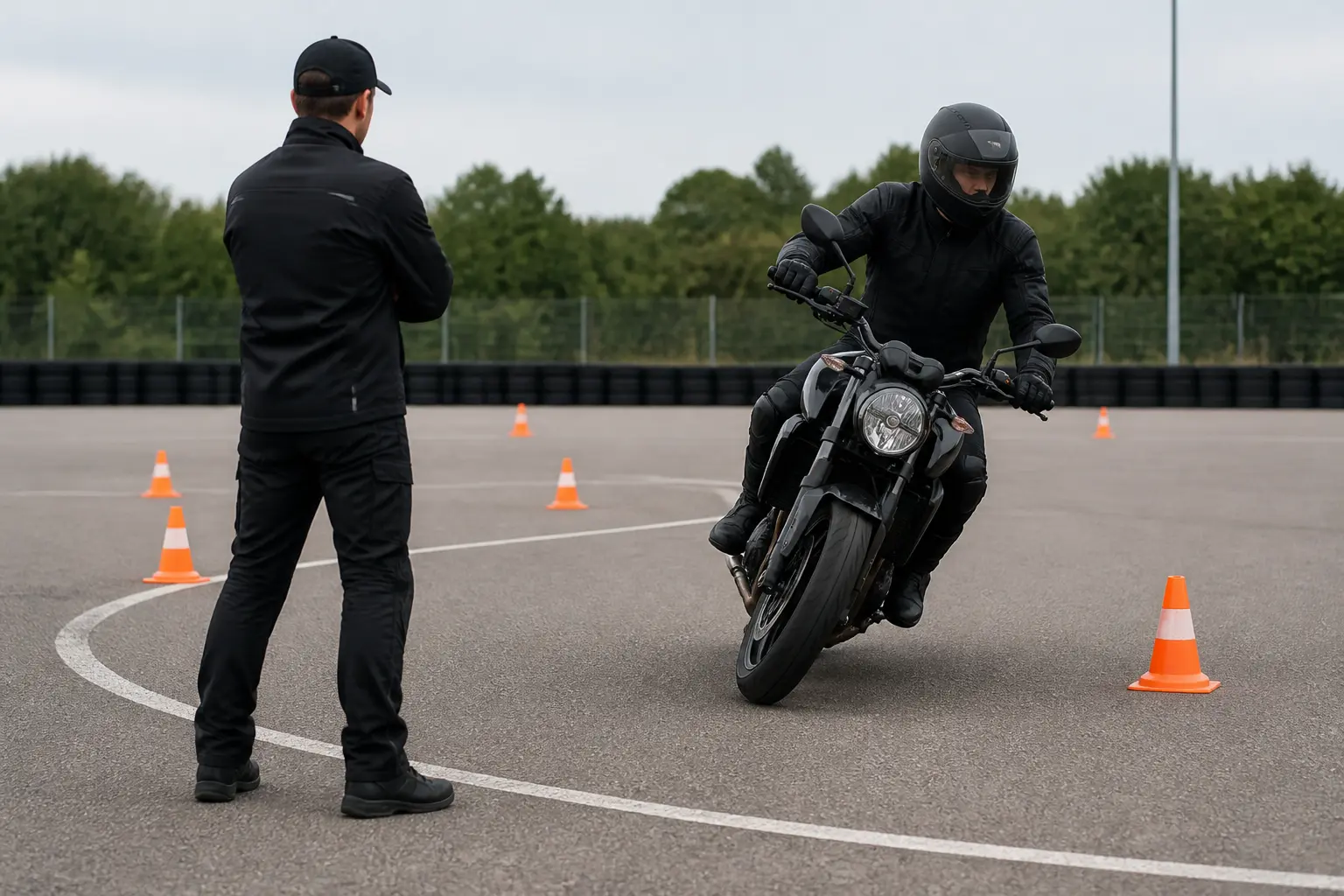
The value of a well-matched course is not that it makes a rider invulnerable. Its value is structure: someone can observe the overall pattern, provide a staged learning environment, and help prevent a vague concern from becoming a risky public-road experiment.
Observation is the first advantage. A rider may label the problem “I cannot corner smoothly.” That label could conceal many different issues: uncertainty before entry, an incomplete view of the road, tension caused by following another rider, or a plan that leaves no reserve. Qualified observation can narrow the question before the rider tries to solve the wrong problem.
Progression is the second advantage. Public roads present difficulty in whatever order they happen to appear. Training can organize learning from simpler tasks toward more demanding ones. That sequence gives the rider time to understand the purpose of an exercise before environmental pressure is added.
Feedback is the third advantage. General encouragement can feel good but is rarely enough to guide change. Helpful feedback identifies what was observed, connects it to a manageable focus, and leaves room for questions. It should not demand bravado or imply that struggling riders must push through discomfort.
Boundaries are the fourth advantage. A responsible provider should allow riders to pause, ask for clarification, repeat an easier element, or stop. If a training culture treats speed, intimidation, or extreme outcomes as the main measure of success, it is not well aligned with a street rider who wants better judgment and safer margins.
The MSF Basic RiderCourse combines curve-related instruction with braking, maneuvering, traction, and avoidance themes. That combination matters because street decisions are connected: a rider may need to process road shape, surface changes, and another vehicle within the same moment. The course overview lists its curriculum themes.
Training can be especially sensible after time away from riding. Returning riders may remember concepts while lacking current comfort or consistency. A structured session can provide a conservative reset. Medical readiness is separate; follow relevant medical advice rather than assuming a skills course overrides a health-related limitation.
Solo Practice vs. a Motorcycle Cornering Skills Course
Use this table as a decision aid, not as a scorecard. Many riders will benefit from both: instruction to clarify the issue and modest solo reinforcement afterward.
| Decision factor | Solo practice may suit the situation | A skills course may suit the situation |
|---|---|---|
| Nature of the concern | One clear behavior is ready to reinforce | The issue is vague, recurring, or difficult to describe |
| Need for feedback | You can honestly evaluate the outcome | You need an observer to identify the pattern |
| Practice setting | A lawful, low-pressure setting is available | Road conditions are becoming your only way to create challenge |
| Rider mindset | You are calm, rested, and content to stop early | Fear, frustration, or group pace changes your choices |
| Recent progress | Improvement is modest but repeatable | The same difficulty remains after thoughtful attempts |
| Motorcycle familiarity | The motorcycle and its controls are well known | You are adjusting to a substantially different machine |
| Complexity | The goal involves one limited decision | Several curve-related decisions are linked together |
| Best next result | A short session followed by honest review | Supervised feedback and a structured progression |
The environment row deserves special attention. Do not make roads with restricted views, changing surfaces, or traffic into an improvised training range. If a goal appears to require a more hazardous setting in order to feel challenging, reduce the goal or seek supervised learning.
How to Choose the Right Cornering Course
Course names alone do not explain whether the format suits your need. A foundational program, a returning-rider session, a focused clinic, and individual coaching may have different entry requirements and objectives. Start by describing your concern plainly, then ask whether the provider’s structure is designed to address it.
Before enrolling, ask the provider:
- What riding experience and licensing requirements apply?
- Which curve-management, traction, and risk-management topics are included?
- How is individual feedback delivered?
- What motorcycle condition, equipment, and rider-preparation requirements apply?
- What happens if a rider needs extra explanation, a slower progression, or a pause?
- Is the course centered on street judgment and control, or primarily marketed around spectacle and speed?
A good provider should welcome an honest account of your confidence level. Be cautious of promises that suggest every rider will become fearless in a day. A more credible result is clearer self-assessment, better understanding of the next focus, and a plan for staying within an appropriate margin.
Look for a course culture that respects a rider’s choice to simplify. The MSF materials consistently emphasize ability, traction awareness, and sound curve judgment. Those principles point toward instruction that expands options and supports thoughtful decisions, not training that makes hesitation seem shameful. The MSF Motorcycle Operator Manual provides related guidance.
A Conservative Decision Process Before Your Next Ride
Before deciding to practice alone or enroll in a course, work through this short process.
Describe the exact trigger. Avoid broad self-judgments such as “I am bad at bends.” Instead, identify the moment: uncertainty when an exit is hidden, tension late in a ride, trouble on unfamiliar roads, or difficulty after a change in weather. Specific wording creates a question that can be answered.
Separate motorcycle readiness from rider learning. Follow manufacturer documentation for controls, warnings, and operating checks. If there is an unresolved concern about the motorcycle, deal with that first. Do not attempt to compensate for uncertainty about the machine by changing your riding behavior on the road.
Assess whether the setting is suitable. If success depends on a traffic gap, a blind bend, a particular road hazard, or riding harder than you want to, it is not a suitable solo-learning situation. Simplify the route or choose formal instruction.
Select a conservative result. A useful result could be earlier planning, a more deliberate route choice, or deciding to turn around. It should not be an obligation to ride faster or prove that you can keep up.
Set a stop rule. Decide in advance that fatigue, worsening weather, traffic changes, reduced focus, mounting frustration, or equipment concerns end the session. Stopping early protects the quality of your judgment.
Review what happened. Ask whether the decision became easier to repeat. If you still cannot say what changed, or if the same concern returns, that is evidence for qualified feedback rather than a reason to make the next attempt more demanding.
Checklist: Decide Before You Practice Alone
Use this checklist before a cornering-focused ride:
- I can name one specific decision or behavior I intend to reinforce.
- I have consulted relevant manufacturer guidance for my motorcycle.
- I have no unresolved concern about the motorcycle’s safe operation.
- I am wearing appropriate protective gear and am rested enough to concentrate.
- My route is lawful and avoids unnecessary traffic pressure and restricted sightlines.
- My objective does not require higher speed or a smaller safety margin.
- I will not treat unpredictable public-road conditions as a substitute for instruction.
- I have decided what conditions will make me stop.
- I will judge the session by preparation, consistency, and available options.
- I will seek qualified instruction if the same concern continues without a clear explanation.
If several items remain unchecked, postpone the session. Rest, a simpler route, an owner-manual review, a readiness check, or a suitable course may be the more productive next move.
Misleading Signs of Cornering Progress
Familiarity can look like skill transfer. A favorite road has fewer surprises because you know its bends, entrances, and likely surface changes. That familiarity can make riding feel smoother, but it does not prove that the same decisions will hold up somewhere new.
A faster pace can also be a false measure. It reduces time for observation and correction, which may conceal an incomplete plan until conditions change. Better evidence of progress is earlier recognition of uncertainty, less rushed decision-making, and a larger usable margin.
Group riding can distort self-assessment as well. Following another rider’s pace may move your attention away from your own sightlines, comfort, and route decisions. Agree on a no-pressure plan before leaving, and treat regrouping as normal. Chasing is not training.
Finally, do not expect a course to solve every surrounding condition. Instruction does not replace sleep, hydration, suitable gear, weather judgment, manufacturer-specific knowledge, or readiness of the motorcycle. The strongest learning plan combines sound preparation with a setting that matches the rider’s actual need.
Build a Course-Then-Practice Plan

For many riders, the best answer is not a permanent choice between formal instruction and solo practice. It is a sequence: use a course to clarify the issue, then reinforce one appropriate takeaway through conservative rides.
Start with two or three factual notes about the situations that concern you. For example, record that uncertainty appears when a curve exit is obscured, when a route is unfamiliar, or late in a longer day. Do not turn these notes into judgments about talent. Their purpose is to give an instructor a clear starting point.
During training, focus on understanding the lesson rather than appearing advanced. Ask what to notice earlier, what conditions should make you simplify the task, and what a suitable follow-up goal would be. The answer may differ according to motorcycle, experience, location, and current confidence.
Afterward, choose only one small focus to reinforce. Keep the route straightforward and evaluate whether the decision became more consistent. If the original concern does not change, return for more guidance rather than increasing the difficulty on your own.
A successful result may be choosing not to continue on a demanding route, slowing earlier, taking a break, or changing plans when the conditions no longer suit the ride. These are not failures of confidence. They are practical signs that caution has become timely and intentional.
How Vojo Helps
Create a cornering-confidence record in Vojo before a course or a conservative practice ride. In the motorcycle service history, add a short entry with the motorcycle used, the route conditions, one concern you want to understand, and your planned stop rule. After the ride, log whether the concern appeared, what conditions affected it, and whether the next action is a simpler repeat, a route adjustment, or formal instruction.
Over several entries, this workflow helps distinguish a recurring pattern from a one-off difficult day. It also gives you a concise, factual summary to take to an instructor instead of relying on an unclear memory of one troubling corner. Download Vojo on the App Store.
Quick answers
Frequently asked questions
When is a motorcycle cornering skills course better than solo practice?
A course is generally the better choice when the difficulty keeps returning, you cannot identify its cause, or it combines several decisions such as curve reading, traction awareness, braking judgment, and responding to changing conditions. An instructor can provide observation that is difficult to obtain alone.
Can solo practice improve motorcycle cornering confidence?
Yes, when it reinforces one understood and conservative goal in a lawful, low-pressure setting. It is less appropriate when you are unsure what is causing the issue or feel tempted to make public-road riding more demanding to create a challenge.
Should I use winding public roads for motorcycle cornering practice?
Do not use blind, busy, or variable public roads as an improvised training course. Traffic, limited visibility, changing surfaces, and unexpected hazards add variables you cannot control. Simplify the setting or seek structured instruction.
What should I ask a motorcycle skills course provider?
Ask about rider prerequisites, curve and risk-management content, how feedback is delivered, motorcycle and equipment requirements, and whether riders may pause or repeat simpler work. Look for a culture focused on judgment and safety margin rather than speed or pressure.
Does formal training replace my motorcycle owner’s manual?
No. The owner’s manual remains the first source for model-specific controls, warnings, operating requirements, and limits. Training should complement manufacturer guidance, not override it.
How can I measure real progress in corners?
Assess earlier planning, calmer choices, repeatability, and retained room to respond rather than pace. If you cannot identify a consistent improvement or the same concern remains, qualified feedback is likely the better next step.