
When Should a Motorcyclist Take a Formal Skills Course?
Decide when a motorcycle skills course is a better investment than solo drills, using warning signs, course-fit questions, and a safer practice plan.
Fact-checked against cited official documentation
Reviewed against Reviewed against MSF guidance on continuing rider education, focused Rider Skills Lab topics, and Basic RiderCourse practice with instructor feedback..
Last updated November 3, 2026
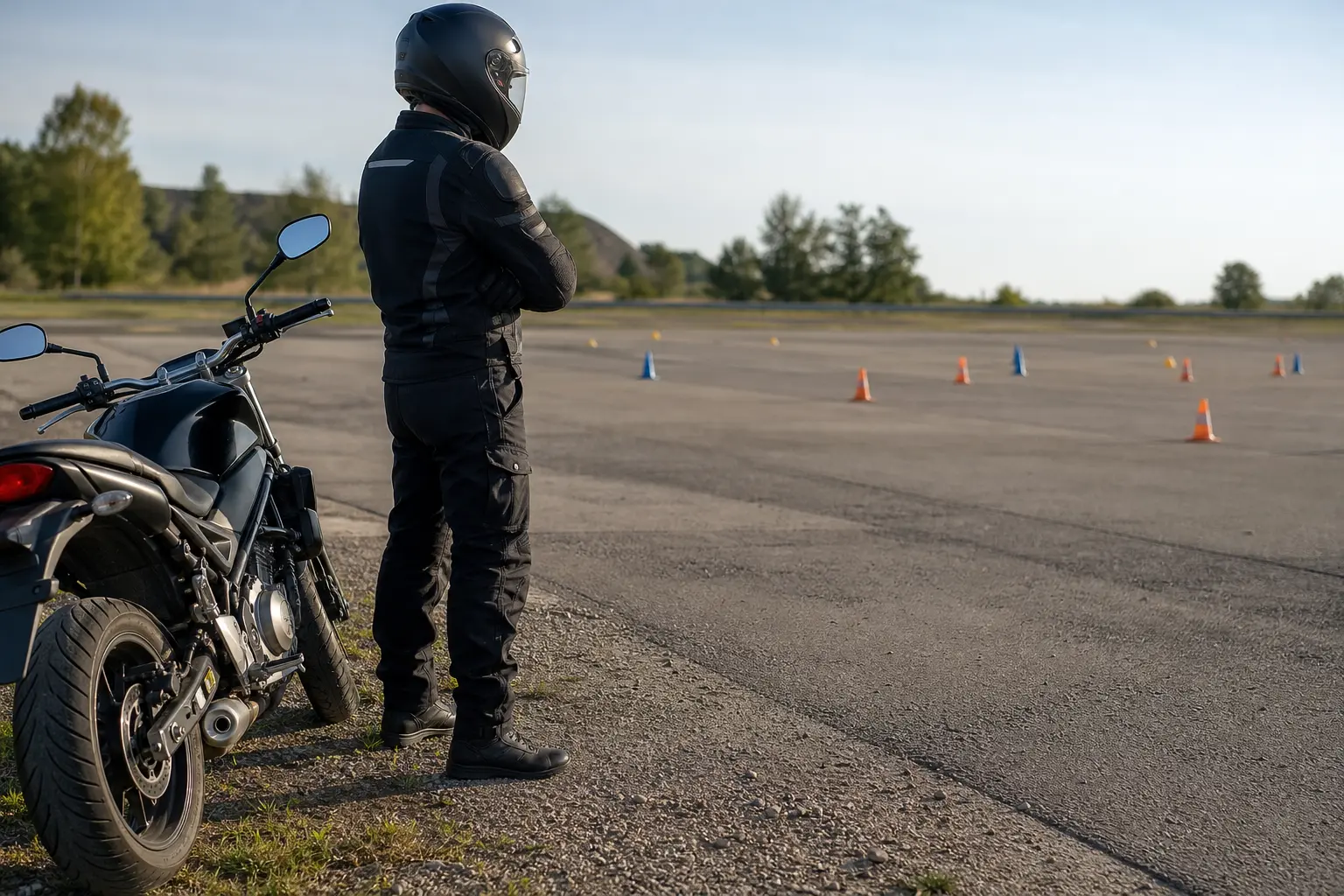
A quiet practice area has real value. It can let a rider remove traffic pressure, work at a manageable pace, and revisit basic motorcycle control without turning every attempt into a road decision. For some needs, that is exactly the right answer.
But there is a point where another solo session is unlikely to answer the real question. If the same error keeps returning, you cannot tell what is causing it, or the skill involves braking, turning, or avoidance decisions that feel beyond your ability to evaluate, formal training can be the more productive—and more conservative—choice.
So, when should a motorcyclist take a formal skills course? Take one when structured coaching is more likely than independent repetition to identify the gap, create an appropriate learning sequence, and give you useful feedback. That can apply to a newer rider, a rider returning after time away, or a highly experienced rider adapting to a changed motorcycle or riding purpose.
The Motorcycle Safety Foundation (MSF) presents continuing rider education as a way to develop street-riding abilities, including braking and cornering, and its offerings include training on the rider’s own motorcycle. Its Rider Skills Lab also describes targeted sessions around subjects such as braking, tight turns, and cornering. The useful takeaway is not that every rider needs every course. It is that the next learning step should match the particular problem.
When Should a Motorcyclist Take a Formal Skills Course Instead of Practicing Alone?
The core comparison is simple: solo practice is strongest when you have a narrow, low-pressure objective and can tell whether your result improved. A formal course is stronger when you need someone qualified to observe the whole attempt, identify an unhelpful pattern, and guide the next step.
Neither option is a badge of competence. More practice is not automatically better practice, and enrolling in a course is not an admission of failure. The decision is about the quality of information available to you.
| Decision factor | More independent practice may fit | A formal course is often the better choice |
|---|---|---|
| Your goal | You can state one modest, observable goal | The goal feels vague, broad, or changes with each attempt |
| Feedback | You can recognize clear, consistent improvement | You see an outcome but do not understand what produced it |
| Repeated result | A mistake is occasional and linked to a known condition | The same problem appears repeatedly despite careful attempts |
| Motorcycle change | The new machine feels familiar after cautious use | Different fit, response, or controls are disrupting established habits |
| Skill demand | You are reinforcing a previously learned, basic task | You want coaching in a focused area such as braking, turning, or cornering |
| Emotional state | You remain calm enough to notice and adjust | Frustration, fear, or overconfidence is distorting decisions |
| Practice setting | You have a legal, controlled space with room to stop | The only available setting adds traffic, surface, or bystander uncertainty |
A rider can use both paths in sequence. A few brief solo sessions may help you arrive at training with a clear description of the issue. Then training can supply a better framework for later solo reinforcement. The false choice is thinking that all learning must happen in one parking lot or all learning must happen in a class.
Before deciding, eliminate a different category of problem: a motorcycle condition that needs service. If a control feels damaged, a warning appears, the motorcycle behaves unexpectedly, or you are unsure whether it is fit to ride, stop trying to “practice through” it. Consult the owner’s manual and manufacturer guidance first, then seek qualified service if needed. Riding instruction is not a substitute for a sound motorcycle.
Why Formal Feedback Can Beat More Motorcycle Parking-Lot Drills
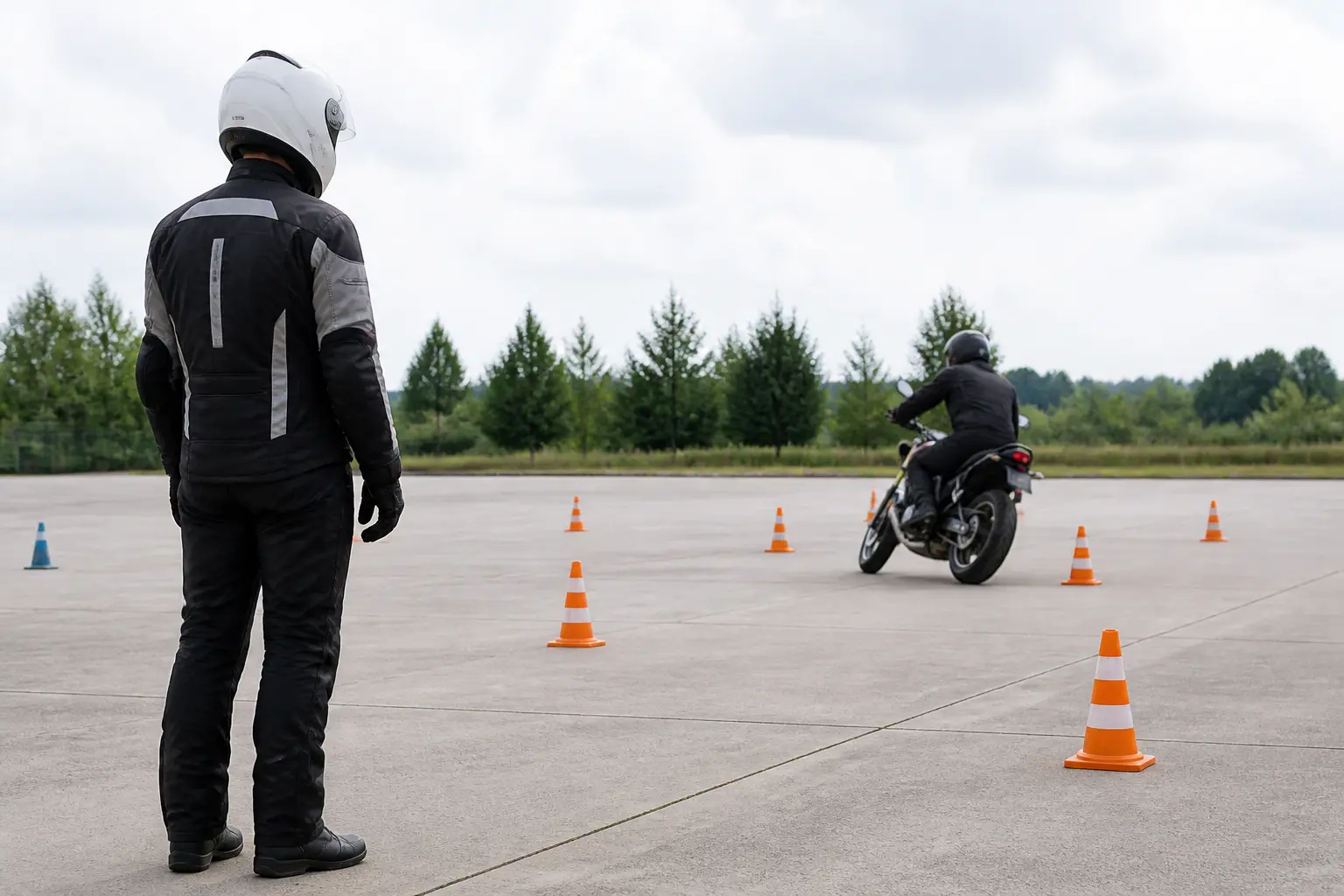
A solo rider can observe what happened: a turn felt rushed, a stop was abrupt, or a chosen path became wider than intended. The difficult part is determining why. Was the original speed choice unsuitable? Did your attention move to the wrong place? Did tension appear before the maneuver? Did you change an input too late? Were you simply fatigued?
An instructor’s value is not just encouragement. It is informed observation. Good feedback reduces a large, discouraging judgment—“I cannot do this”—into a smaller question that can be explored safely. It may reveal that the issue is not the one you assumed. That is why repeating a drill without a diagnosis can become inefficient: you may be getting very good at rehearsing the same workaround.
The MSF’s Basic RiderCourse describes organized practice that includes low-speed control, quick stops, obstacle swerves, cornering, and instructor feedback. That structure matters. A course can pair an exercise with observation and progression instead of asking a rider to invent all three alone.
This does not mean that every friend’s input is worthless. A calm, experienced companion may help identify a visible pattern or remind you to take a break. Still, riding experience and teaching ability are different things. Avoid accepting advice that creates pressure, encourages speed as proof of success, or conflicts with your motorcycle’s manual or the training provider’s instructions.
A useful test is this: after three thoughtful attempts, can you explain what changed, what you intended to change, and whether the change helped? If not, you may have reached the point where qualified feedback is worth more than another set of repetitions.
Warning Sign One: The Same Motorcycle Mistake Keeps Returning
One imperfect attempt does not justify a course booking. Conditions vary. A poor surface, a distraction, unfamiliar footwear, heat, cold, fatigue, or a rushed schedule can affect an otherwise capable rider. Look instead for a stable pattern that shows up across separate, well-rested attempts.
Examples of training questions include:
- “I repeatedly become tense during slow, confined turns, but I cannot identify when that tension begins.”
- “My planned approach is conservative, yet I often feel hurried before the motorcycle is where I expected.”
- “I avoid a common riding situation even though I want to handle it calmly.”
- “I know the result was not what I wanted, but I cannot separate a judgment issue from a control issue.”
Notice that these statements describe behavior without pretending to diagnose it. That is useful. You do not need to arrive at a course with the answer; you need to arrive with an honest, specific question.
Repeated errors can also indicate that the session itself is poorly designed for your current level. Making an area tighter, adding speed, or extending the session often makes a stubborn problem harder to understand. A formal environment can give the rider a more measured progression and a chance to pause before an unhelpful pattern becomes familiar.
Warning Sign Two: You Have Results but No Reliable Explanation
Many riders know the frustrating gap between seeing an outcome and understanding the sequence that led there. You may be aware that something felt abrupt but be unable to recall the timing clearly. You may finish a maneuver safely but not know whether the approach was repeatable or merely fortunate.
This is where video, notes, and self-reflection can help—but only up to a point. A recording can show position or path. It cannot necessarily supply sound instruction, judge whether a setting is appropriate, or tailor the next exercise to your response. Social-media demonstrations are even less useful as a training plan because they may omit the rider’s background, setup, safety controls, and unsuccessful attempts.
Formal instruction is particularly valuable if you are caught between conflicting advice. Rather than blending several online opinions into a homemade method, ask a legitimate provider what level of course is suited to your experience and goal. Explain your motorcycle, your riding history, and the behavior you want to address. A reputable provider should be able to discuss prerequisites, equipment requirements, and course focus without promising that one day will solve every issue.
Feedback should leave you with something practical: a clearer observation to make, an adjusted objective, or a reason to stop and reassess. It should not leave you feeling that you need to prove yourself by attempting a harder version immediately.
Warning Sign Three: You Changed Motorcycles or Changed How You Ride
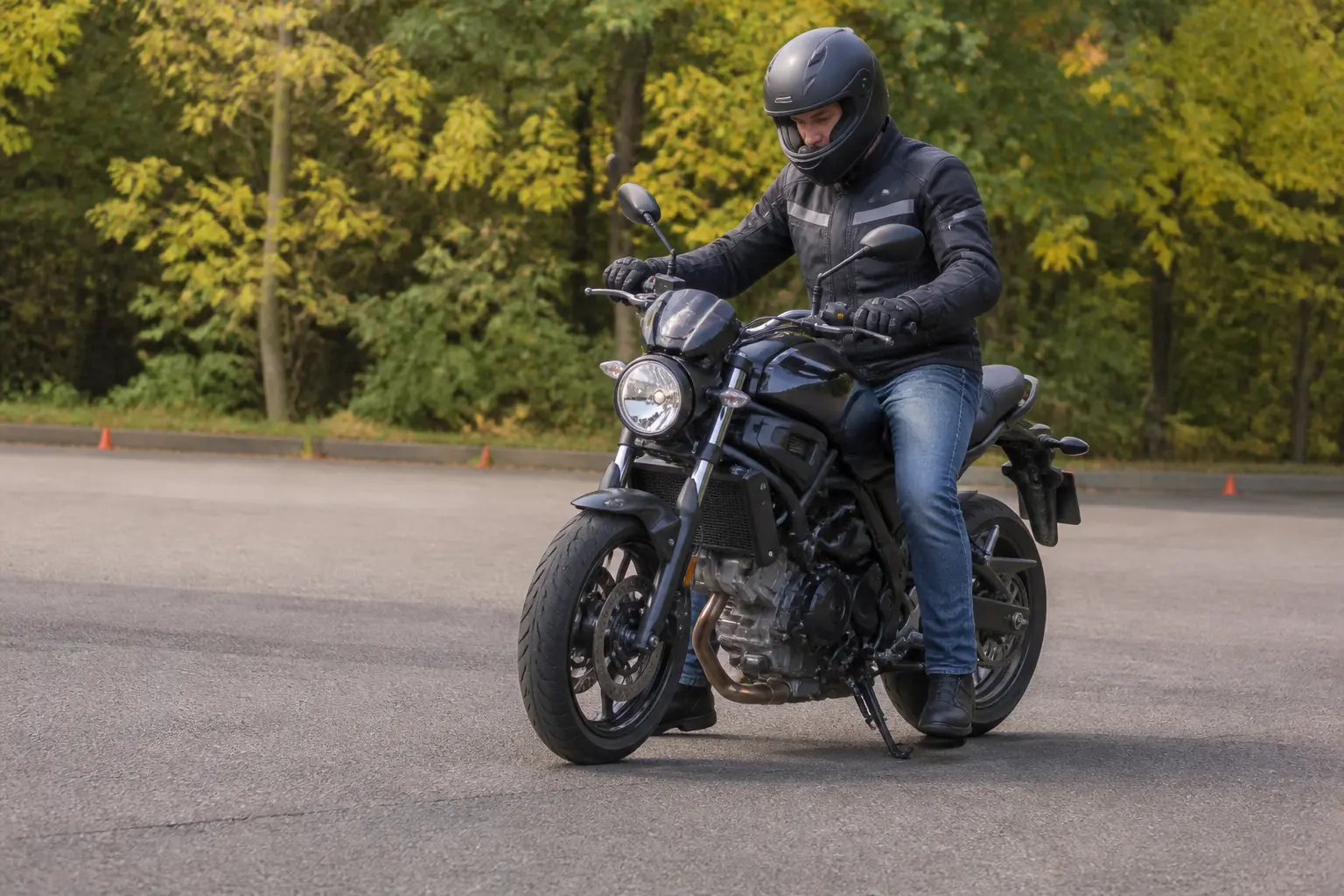
A motorcycle change can turn formerly automatic actions into conscious ones. Fit, mass, control reach, seating position, response, and loading can all alter what a rider notices and when they notice it. The change does not need to be dramatic to matter. A familiar motorcycle with luggage, an approved passenger arrangement, or a different intended use may also change the rider’s workload.
Begin with the manufacturer. Read the owner’s manual for the model you will ride, including operating instructions, warnings, inspection information, and any limits relevant to carrying loads or passengers. Follow manufacturer requirements before using generic advice from a course, friend, or article. If there is a conflict, the motorcycle manufacturer’s guidance takes priority.
Independent familiarization may be enough when the adjustment is mild and you can keep the first rides simple. Choose low-demand conditions, avoid unnecessary time pressure, and give yourself permission to stop. Do not stack challenges by making your first outing on an unfamiliar bike a long trip, a complicated route, poor weather ride, or social ride where you may feel tempted to keep up.
A formal skills course becomes more appealing when the new motorcycle exposes recurring hesitation, awkwardness, or habits that do not transfer well. MSF’s Advance Your Ride information describes advanced training conducted with the rider’s own motorcycle. That option can be useful because the observation relates to the machine you actually plan to use rather than to an abstract version of the problem.
The point is not to blame the motorcycle or assume that a more expensive machine requires a more advanced rider. It is to respect adaptation. A rider who notices a persistent mismatch has already identified a worthwhile reason to seek structured support.
Warning Sign Four: You Need Coaching for a Specific Street Skill
“Get better at riding” is too broad to select a course well. A focused need is easier to match with a course and easier to evaluate afterward. You may want help building confidence around low-speed turns, making more deliberate braking decisions, or approaching corners with less uncertainty. Those are different needs and may call for different training formats.
The MSF Rider Skills Lab identifies sessions with distinct focuses, including braking, tight turns, and cornering. That model supports a better question than “What is the most advanced course available?” Ask: “Which supervised learning environment addresses the exact gap I am experiencing?”
For a provider, describe the issue in everyday language:
- What situation brings it on?
- What do you observe yourself doing?
- What have you already tried?
- What conditions make it easier or harder?
- What would controlled improvement look like to you?
Avoid treating a course as permission to explore limits on public roads afterward. Training can improve choices and control, but it does not erase surface uncertainty, traffic behavior, visibility limits, weather, or the need to preserve space. A lesson is successful when it expands your margin and judgment, not when it makes a familiar road feel like a test venue.
Warning Sign Five: Confidence and Capability No Longer Match
Too little confidence and too much confidence can both interfere with learning. A nervous rider may avoid situations that could be addressed gradually in an appropriate environment. An overconfident rider may confuse years ridden with a current, reliable response in every condition.
Watch for mismatches between your plan and your behavior. Perhaps you intend to leave more room but repeatedly use it up. Perhaps you tell yourself a situation is ordinary, but your body becomes rigid whenever it occurs. Perhaps a near miss is interpreted as evidence that you handled everything well rather than as a prompt to reassess the margin.
A course gives a rider a neutral place to replace labels with observations. Instead of trying to become “fearless” or “advanced,” choose a smaller target: understand what triggers tension, receive feedback on a recurring decision, or rebuild comfort with a basic task. Controlled evidence is a healthier basis for confidence than either bravado or avoidance.
If anxiety makes a task feel overwhelming, do not force a breakthrough in traffic or in an improvised drill. Tell the training provider about your concerns before attending and select an appropriate level. You can pause, ask questions, or opt out of an activity. Good judgment includes recognizing when today is not the day to add difficulty.
How to Compare Motorcycle Skills Courses Before You Enroll
Course titles are inconsistent. “Advanced,” “performance,” and “refresher” can mean different things at different organizations. Evaluate the actual format rather than relying on a label.
Ask these questions before you register:
- Who is the course designed for? Confirm that your experience and licensing situation fit the stated prerequisites.
- What is the learning focus? Look for a defined purpose, not a vague promise to transform every part of your riding.
- Will I use my motorcycle or a supplied motorcycle? This affects the relevance of feedback and the provider’s requirements.
- How is the practice area managed? Ask about the setting, rider separation, weather policy, and what happens if you need a break.
- What equipment and motorcycle condition standards apply? Meet the provider’s rules and the manufacturer’s instructions.
- What kind of feedback is offered? A course should include observation and explanation, not just a sequence of tasks.
- What is the next step after the class? The best answer may be a modest practice goal, not a more difficult course.
A foundation-level course may be a sensible reset after a long time away or when basic control feels uncertain. A focused lab may suit someone with one defined objective. Broader continued-learning options can help a rider connect motorcycle handling with street judgment. The MSF advanced-riding overview is an example of an official source that distinguishes continuing development from entry-level instruction.
Be wary of marketing that equates risk, speed, or dramatic photographs with good training. The right course should give you better information and more measured choices, not a story about how close you came to losing control.
A Practical Loop: Practice, Course, Reinforce, Review
The strongest approach is often a loop rather than a one-time decision.
First, use short independent sessions to notice a question. Keep the objective small and the environment appropriate. Stop before fatigue, frustration, reduced attention, changing surface conditions, or other users erode your margin.
Second, take that question to a formal course. Explain what you have observed rather than demanding confirmation of a self-diagnosis. Listen for the instructor’s description of the issue, the intended outcome of an exercise, and the limits of what should be practiced next.
Third, reinforce only what you can safely and legally practice on your own. Do not compress space, increase pace, or add multiple variables simply to make the session feel challenging. Repeat the instructor’s follow-up plan conservatively, with the motorcycle inspected in accordance with its manual.
Finally, review the result. Did the original problem become clearer? Is the improved response available only in a controlled setting, or does it translate to calmer decisions on ordinary rides? If uncertainty remains, that is useful information—not a reason to force a harder drill.
For a broader routine that separates motorcycle readiness from rider-development planning, see the Motorcycle Maintenance Guide. A well-maintained motorcycle and an appropriately trained rider address different parts of the same safety picture.
Formal Motorcycle Skills Course Decision Checklist
Use this checklist before deciding that more parking-lot drills are the best next move:
- I can describe the behavior I want to improve without using a vague label.
- I have considered whether a motorcycle condition or warning requires manufacturer guidance or qualified service instead.
- I have reviewed the owner’s manual and followed its operating warnings and limits.
- My recent practice has been legal, controlled, and free from pressure to perform.
- I have noticed a recurring pattern across more than one rested attempt.
- I cannot confidently explain the cause of the pattern or tell whether my adjustment helped.
- I want feedback on a specific area, rather than a generic promise of improvement.
- The course provider can explain its level, prerequisites, setting, and motorcycle requirements.
- I understand that a course does not make public-road margins less important.
- I have a conservative plan to revisit one lesson after training.
If several of these statements are not true, booking structured instruction may be the wiser next move. If most are true and the task is already familiar, a brief, disciplined independent session may be sufficient. In either case, avoid treating discomfort as something to overpower. It is often information worth examining.
How Vojo Helps
Use Vojo to make a rider-training decision from actual observations instead of a vague feeling. Before a practice day or course, create a note in your Motorcycle Service History with the motorcycle used, the single skill question, the conditions, and any owner-manual checks you completed. Afterward, add the instructor’s feedback or your own observations, then schedule one modest follow-up ride to see whether the question is resolved or whether more coaching is warranted.
Keeping those notes beside service records helps separate a possible motorcycle-condition concern from a rider-development concern, while making your next course choice more specific. Download Vojo on the App Store.
Quick answers
Frequently asked questions
Is a formal motorcycle skills course only useful for new riders?
No. A course can help any rider who has a repeated problem, lacks dependable feedback, is adapting to a different motorcycle, or has a specific learning goal. The relevant factor is the current gap, not the number of years ridden.
When is solo parking-lot practice enough?
It can be enough when your objective is modest and clear, the practice area is legal and controlled, and you can recognize genuine improvement. Stop if the same issue persists or if you cannot tell why the result changes.
Should I take a course after buying a different motorcycle?
Consider it if the new motorcycle creates ongoing uncertainty or if familiar habits no longer feel dependable. Start with the owner’s manual and cautious familiarization, then choose a course whose requirements match your motorcycle and experience.
What should I ask a motorcycle training provider?
Ask who the course is for, what it teaches, whether you use your own motorcycle, what prerequisites and equipment rules apply, how the practice environment is managed, and what follow-up practice is recommended.
Can formal training remove the risks of street riding?
No. Training can improve observation, control, and decisions, but it cannot eliminate traffic, weather, surface changes, limited sightlines, or other road users. Continue to use conservative speed, space, and judgment.