
Motorcycle Horn Use: When a Warning Helps—and Why It Is Not an Escape Plan
Learn when to use a motorcycle horn as a warning, why it cannot replace space or escape paths, and how to include a horn check before a ride.
Fact-checked against cited official documentation
Reviewed against Fact-checked against MSF guidance on horn limits, hazard search, space, lane position, and escape paths, plus NHTSA pre-ride motorcycle safety guidance..
Last updated October 15, 2026
When should you use a motorcycle horn?
Use a motorcycle horn when it may prompt another road user to notice an immediate conflict developing—not as a substitute for slowing, changing position, braking, or moving toward a safer open space. It is a warning tool, not a force field.
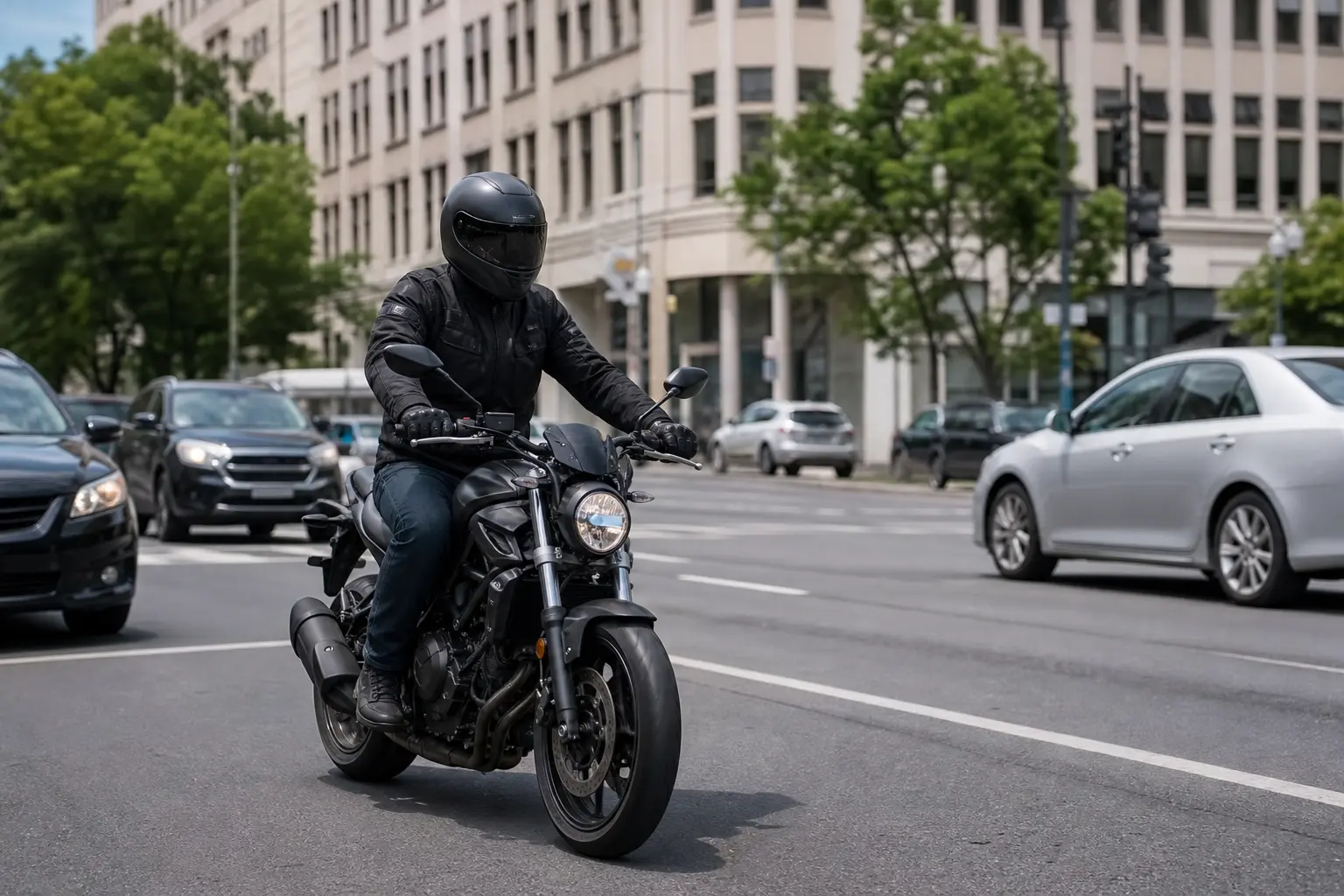
A horn can make sense when a driver appears ready to enter your path, drift into your lane, reverse from a parking space, or make a turn across your line of travel. It can also be useful when a pedestrian, cyclist, or another rider is about to move into your immediate path and has not shown awareness of you.
But the central safety idea is easy to miss: the person who needs the warning may not hear it, recognize its meaning, or react soon enough to solve the problem. Motorcycle Safety Foundation guidance specifically warns that a motorcycle horn is less prominent than a car horn and says riders should pair it with time and room to maneuver rather than rely on it alone. Motorcycle Operator Manual
That makes the best mental model:
Horn first only when it is available without delaying a safer response; space and an escape path remain the actual backup plan.
The horn’s job is communication. Your job is still collision avoidance.
What the horn can—and cannot—do
A horn is valuable because it can interrupt another person’s assumption that the space around them is clear. A brief, deliberate warning may cause a driver to pause before continuing a lane change or may make a pedestrian look up before stepping farther into the road. In that limited role, it can buy attention.
What it cannot do is guarantee a response. A vehicle may have closed windows, music, road noise, an inattentive driver, a distracted driver, a rider wearing hearing protection, or simply too little time for the warning to register. Even when the other person notices, they may brake, accelerate, steer unpredictably, or freeze. None of those reactions is something you control.
That uncertainty is why a horn should never be your entire plan at an intersection, beside a large vehicle, in dense traffic, or while closing quickly on a possible hazard. If the situation is serious enough to need the horn, it may already be serious enough to need reduced speed, more following distance, a lane-position change, or preparation to stop.
The following table separates reasonable expectations from risky assumptions.
| Situation | What the horn may contribute | What must still protect you | Unsafe assumption to avoid |
|---|---|---|---|
| A vehicle begins drifting toward your lane | A quick alert that you are alongside or nearby | Space beside the vehicle, a path away from it, and controlled speed | “They will immediately steer back.” |
| A driver waits to turn across your path | A warning if the vehicle begins moving into your path | Early speed reduction, line-of-travel awareness, and room to stop | “They saw me because I sounded the horn.” |
| A parked vehicle appears ready to pull out | A prompt to look before it enters traffic | A speed that preserves stopping room and attention to wheel movement | “The horn means the vehicle will stay parked.” |
| A pedestrian steps toward the roadway | A cue that a motorcycle is approaching | Reduced speed and a path that does not depend on the pedestrian retreating | “They will move predictably.” |
| Another rider or road user creates an immediate close conflict | A short warning that reinforces your presence | Smooth control inputs and a safe direction of travel | “A long blast will fix the situation.” |
| You are angry after a close call | Usually nothing constructive | Continue scanning, create distance, and avoid escalation | “Using the horn will teach them a lesson.” |
The table is deliberately conservative. The horn is not useless; it is simply not dependable enough to carry the full safety burden.
The right priority order: see, create time, warn, move
Riders sometimes treat horn use as a reflex: spot a problem, press the button, hope the problem disappears. A better sequence puts the horn into a larger defensive-riding process.
1. See the developing conflict early
Look for behavior rather than waiting for a completed mistake. A vehicle that is angled toward your lane, a front wheel beginning to roll from a driveway, a driver’s head turned away, a gap in queued traffic, or a pedestrian approaching the curb can all be clues that the roadway picture may change.
Early recognition matters because it gives you choices. If you recognize a risk while there is distance available, you can adjust your speed and position gradually. If you wait until the other road user actually crosses your line, the horn may be the only action that feels available—yet it may be too late to be meaningful.
The MSF advises riders to search for collision traps and escape paths, give themselves time and space, and use lane positioning to see and be seen. That framework puts observation and margin ahead of any single warning device. If You Ride A Motorcycle
2. Create time before the conflict reaches you
Time is what lets a rider make a measured decision instead of a panicked one. Slowing modestly before an uncertain intersection, increasing following distance behind a vehicle that blocks your view, or choosing a lane position that improves sightlines may change a horn-worthy emergency into a manageable possibility.
This is not an argument for creeping through all traffic. It is an argument for matching speed to what you can actually see, predict, and avoid. If a vehicle could enter your path from behind a visual obstruction, leave yourself enough time to respond if it does.
A horn cannot create braking distance. It cannot improve tire grip. It cannot clear gravel, wet leaves, potholes, or oil from the pavement. Your speed, distance, and line choice determine how much room you have to manage those factors.
3. Warn when a warning may help
Once you have identified a road user who may not recognize you, use the horn as a clear warning when doing so does not distract from control. Think of it as communicating, “I am here and this space is not clear,” rather than expressing frustration.
A warning is most useful when it comes early enough for the other person to process it and when you still have a path if they do not. For example, if a driver is edging toward your lane while you have room to slow or move away, a horn can complement that space. If a vehicle has already entered directly in front of you at close range, your immediate priorities are avoiding impact and maintaining control; the horn may happen, but it cannot be the plan.
Use the button deliberately. Repeated or prolonged horn use can consume attention, add stress, and encourage an emotional response from everyone involved. A brief, purposeful warning followed by continued escape planning is generally more useful than an argument conducted through sound.
4. Move toward the best available outcome
Whether the horn is heard or not, keep assessing where you can go. That may mean continuing straight while slowing, stopping in your available space, or moving only when you can do so without creating a second conflict. The correct choice depends on traffic, road surface, speed, visibility, and your available room—not on a universal rule to swerve or brake.
This is also why riders should avoid locking themselves into a position with no options. Riding alongside another vehicle for long periods, following so closely that its rear bumper fills your view, or entering an intersection faster than you can evaluate it all make a horn less useful because they reduce the maneuvering room that must accompany it.
Situations where a motorcycle horn can be useful
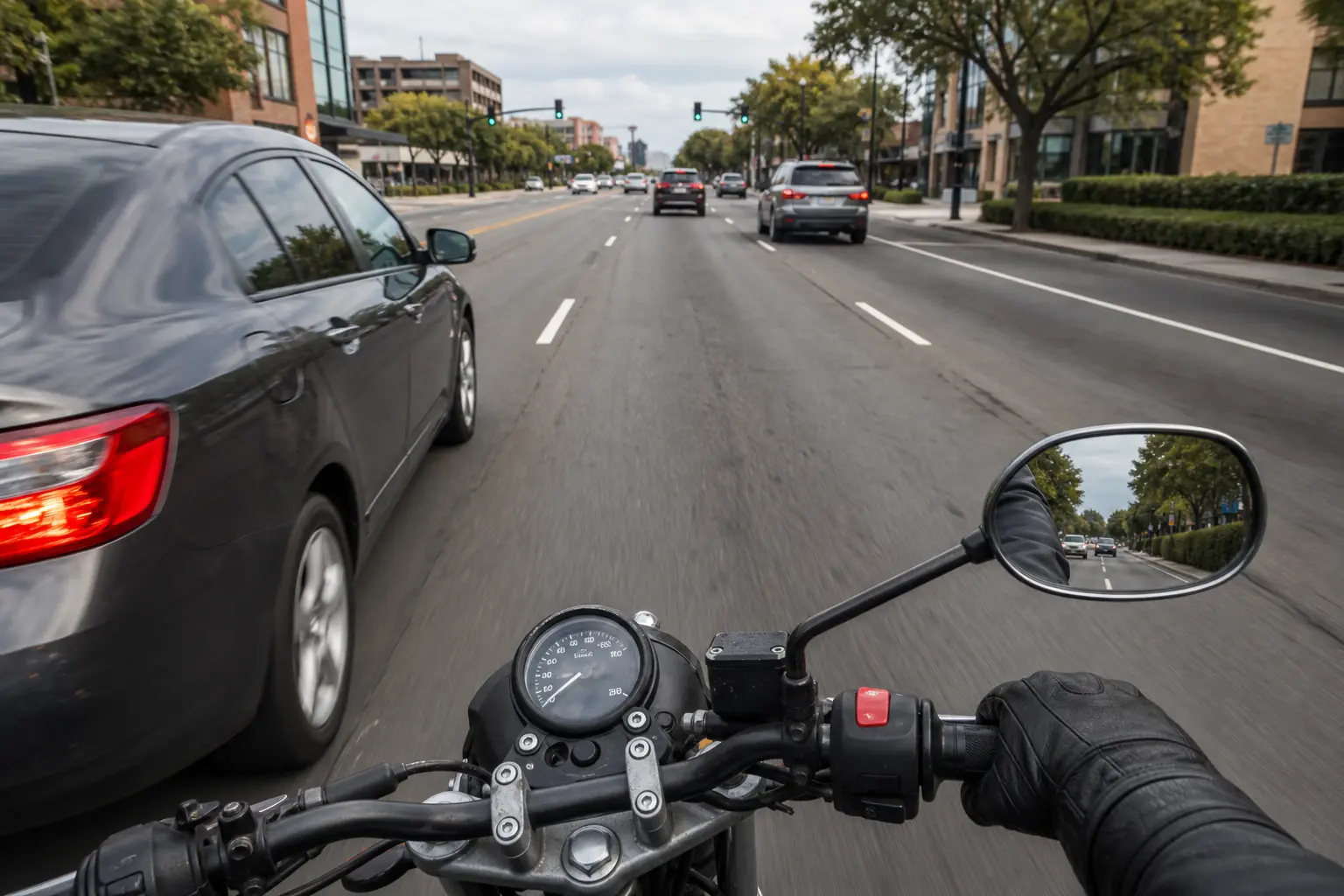
The horn is most defensible when it addresses a specific, immediate risk. These are not promises that honking will prevent a crash. They are examples of moments when an alert can be a sensible part of a wider response.
A vehicle is beginning a lane encroachment
A driver may drift because they are changing lanes, avoiding something, looking at a screen, or simply not maintaining lane position. If you notice the encroachment early, first preserve your own space. A short horn warning may help the driver notice you, especially if you are near a blind-spot area.
Do not remain beside the vehicle merely to make the horn work. If you can safely avoid riding in its blind area by changing your relative position or creating more gap, that is stronger protection than staying close and repeatedly warning.
A vehicle may turn across your path
Intersections deserve special caution because several paths converge and drivers may be focused on gaps, signals, pedestrians, or larger vehicles. If a vehicle is waiting to turn and begins to enter your path, a horn may add a useful cue. But approach the situation as though the turn could still happen.
That means looking for escape space, avoiding an approach speed that erases your stopping margin, and accounting for sightline limits. A driver looking directly toward you is not proof that they have judged your speed or distance correctly.
A parked vehicle is entering, backing, or opening into your route
Parking lots, curbside parking, and driveways create low-speed but unpredictable conflicts. A vehicle can roll, back, swing outward, or open a door with little warning. A horn can alert someone who has started moving into your route, but the reliable response remains lowering speed and leaving space around potential movement.
Watch the whole scene rather than one detail. Vehicle orientation, wheel movement, brake lights, reverse lights where visible, people near doors, and a driver seated behind the wheel can all contribute to a more cautious approach.
A pedestrian or cyclist has not noticed you
A pedestrian looking away or a cyclist moving unpredictably may not recognize an approaching motorcycle. A brief horn use can draw attention. Yet the rider should assume the person may respond in an unexpected direction. Slow early and do not steer toward the space you expect them to vacate.
This applies especially near crosswalks, schools, transit stops, trail crossings, and crowded urban blocks. A horn may help communicate presence, but yielding enough room for a human mistake is the better risk-management habit.
You are approaching a hidden-space conflict
A vehicle near a driveway, a truck blocking a side street, or a queue with a visible gap can create uncertainty. In some cases, a horn may warn a road user you cannot clearly see. But do not use sound as permission to proceed at a speed that exceeds your sight distance. If the space is hidden, ride as if something could emerge from it.
The useful question is not, “Can they hear me?” It is, “If they do not hear me, can I still avoid the conflict?”
When not to rely on the horn
There are situations where the horn may be unavailable, ineffective, or secondary to more urgent actions. Recognizing them prevents a rider from assigning the horn more authority than it has.
When you are already out of time
If a hazard has suddenly occupied your path at close distance, your attention belongs on maintaining control and choosing the safest available response. There may be no meaningful time to warn, wait for recognition, and see what the other person does.
A horn does not reset the physics of closing distance. It is therefore essential to avoid riding in a way that depends on a last-second warning.
When horn use would delay your response
If your hand position, traffic density, or workload means pressing the horn would distract from a necessary braking or steering decision, do not make horn use the priority. The warning is optional; control is not.
This is not a recommendation to ignore a hazard. It is a reminder to put the actions that preserve stability and collision margin first.
When you are using it to express anger
A horn can become a trigger for escalation, especially in congested traffic or after a close call. Once the immediate threat has passed, continued horn use does not improve your safety margin. It can divert your focus away from scanning and may provoke unpredictable behavior from another road user.
Your safest follow-up after a near miss is usually to regain composure, re-establish following distance, and continue with a larger safety cushion—or stop somewhere safe if stress is affecting your riding.
When you are trying to compensate for poor position or following distance
If you find yourself constantly needing the horn around the same types of hazards, reconsider the setup that repeatedly leaves you without time. Are you following a large vehicle too closely? Sitting beside traffic too long? Approaching conflict points at a pace that gives others no time to recognize you? Riding when tired or rushed?
The answer is not necessarily “use the horn more.” It is usually “create more time sooner.”
Build an escape route before you need the horn
The phrase “escape route” can sound dramatic, but it simply means retaining a safer option if the traffic picture changes. It does not mean forcing your way into another lane, riding onto a shoulder, or assuming an open-looking gap is safe. It means continuing to notice usable space and avoiding positions that leave no reasonable response.
When traffic is moving, scan beyond the vehicle directly ahead. Look for changing brake lights, gaps, merging vehicles, cross traffic, parked vehicles, pedestrians, and road-surface changes. Check mirrors often enough to understand what is behind you before you need to slow. Avoid fixation on the one vehicle that concerns you; the route around a problem may be affected by another road user you have not yet seen.
Lane position is a tool, not a permanent identity. A position that improves your view around a vehicle may be useful until it places you in another vehicle’s blind area or near road debris. Reassess as conditions change.
At intersections, do not let a green signal turn into a guarantee. Search for turning traffic, late entries, obscured vehicles, and pedestrians. When stopped, leave enough room ahead to move if a vehicle behind approaches too quickly, while also monitoring mirrors. These habits do not eliminate risk, but they reduce dependence on a sound device that may or may not change another person’s behavior.
For a broader habit-based approach to inspections, records, and ride readiness, see the Motorcycle Maintenance Guide. Mechanical condition does not replace road strategy, but a motorcycle that communicates clearly and is checked before use supports the rider’s decisions.
A parked-bike horn check without turning it into a diagnosis

A horn is part of the motorcycle’s communication equipment, so include it in a sensible pre-ride review. The goal is not to troubleshoot the electrical system in a parking space. The goal is to discover whether the horn appears to operate before you enter traffic.
With the motorcycle parked securely and the surrounding area clear, confirm that the horn can produce its normal warning sound under the operating conditions specified for your model. If the horn does not sound, sounds unusually weak, works intermittently, or produces any behavior that concerns you, do not assume one cause from that symptom alone. Electrical symptoms can have multiple causes, and model-specific systems differ.
Start with the owner’s manual for your exact motorcycle. Manufacturers identify the controls, describe normal operation, and may provide model-specific inspection or service direction. If the manual treats the horn or another related warning system as a concern requiring service, follow that direction. Avoid improvised wiring changes, bypasses, or modifications intended to create more volume or alter how the motorcycle’s equipment operates.
A non-working horn is not a reason to casually dismiss other readiness checks. NHTSA advises riders to check key items before every ride, including tire condition and pressure, brakes, lighting and signal indicators, fluid levels, and signs of leaks. That does not make every item equally urgent in every situation; it does reinforce that safe riding begins before the motorcycle joins traffic. Motorcycle Safety: Helmets, Motorists, Road Awareness
If you choose not to ride because a horn or other safety-related item is questionable, that is a prudent decision, not an inconvenience to rationalize away. Arrange qualified inspection when the issue is beyond a straightforward manual-directed check.
Horn-use checklist: before and during a ride
Before leaving
- Read the owner’s manual section covering your motorcycle’s controls and pre-ride guidance.
- With the motorcycle parked securely, confirm the horn operates normally for the model.
- Check the other rider-communication basics required for your ride: lighting, turn signals, brake-light operation, mirrors, and required protective gear.
- Look at the route and conditions likely to create conflict points, including intersections, parking lots, traffic queues, construction areas, and poor visibility.
- Begin the ride without assuming the horn will compensate for reduced attention, limited visibility, or a rushed schedule.
When a conflict may be developing
- Search for a safe place to create more time or space.
- Reduce speed when uncertainty is increasing and sightlines are limited.
- Use a brief horn warning if it may alert a road user and does not interrupt your control task.
- Keep looking for the other person’s actual movement; do not treat the horn as proof they understood.
- Preserve a legal, stable, and available escape option rather than riding beside the conflict.
- Avoid escalating with repeated horn use once the immediate safety purpose has passed.
After a near miss
- Rebuild following distance and scan for the next hazard.
- Check whether fatigue, frustration, speed, position, or route pressure contributed to the close call.
- Stop in a safe location if your concentration has dropped.
- Make a note of recurring situations that deserve practice, route changes, or formal training.
Practice the skills that make the horn less important
The point is not to avoid using the horn. The point is to avoid reaching the point where the horn is your only option.
Training and controlled practice help riders develop smoother observation, braking, swerving, low-speed control, and traffic judgment. Formal instruction is especially worthwhile for new riders, returning riders, and anyone who has found themselves startled by everyday traffic conflicts. The MSF encourages formal hands-on training and skill refreshers, and its rider guidance emphasizes developing emergency braking and swerving ability before relying on it in traffic. If You Ride A Motorcycle
Practice should take place within your experience, in a controlled environment, and without treating public traffic as a drill area. If you are uncertain about a maneuver, choose instruction from a qualified course rather than inventing a test on the road.
The payoff is not just better reaction speed. It is better anticipation: recognizing the conditions that lead to trouble early enough that a slight speed adjustment, a different lane position, or additional following distance makes the horn merely supportive rather than essential.
How Vojo Helps
Create a recurring pre-ride communication-and-readiness check in Vojo before a commute, weekend ride, or longer trip. In the checklist, log whether the horn, lights, turn signals, brake light, mirrors, tires, and visible leak check appeared normal; then add a note if a concern needs an owner’s-manual review or qualified service. Use the motorcycle maintenance tracker to keep that check tied to the motorcycle and to review recurring concerns before the next ride.
Download Vojo on the App Store
The practical bottom line
Use a motorcycle horn to communicate an immediate hazard, not to demand right of way or guarantee that another person will act correctly. It can be helpful when a driver, pedestrian, cyclist, or other road user appears unaware of your presence. It is most valuable when you use it early, briefly, and while you still have time and a safe alternative.
The stronger safety system is built before the horn button: search actively, manage speed, keep space around the motorcycle, use lane position thoughtfully, and continuously protect an escape path. If the warning works, that is helpful. If it does not, your preparation still has to carry you through the moment.
Related posts
Quick answers
Frequently asked questions
When should you use a motorcycle horn?
Use it as a warning when another road user appears about to enter, drift into, or otherwise conflict with your path and may not recognize your presence. Keep managing speed, space, and an escape route at the same time.
Should I honk at every car that might not see me?
No. Constant horn use can distract you, create stress, and may not improve safety. Use it purposefully for an immediate developing conflict, while relying primarily on early observation, speed management, and positioning.
Can a motorcycle horn prevent a driver from turning in front of me?
It may alert the driver, but it cannot guarantee recognition or a predictable response. Approach possible turn-across conflicts with enough time and space to slow or otherwise avoid the hazard if the driver continues.
What should I do if my motorcycle horn does not work?
Check the owner’s manual for model-specific guidance and avoid guessing at the cause. Treat the concern as part of your pre-ride readiness decision and arrange qualified inspection when manual-directed checks do not resolve the concern.
Is it better to use the horn, brake, or swerve in an emergency?
There is no universal single action. The safer response depends on available space, speed, traction, traffic, and the exact hazard. The horn is a warning tool; it should not delay the control action that best preserves safety.
Why is an escape route more important than a horn?
A horn depends on someone else hearing, noticing, interpreting, and responding in time. An escape route gives you an option you can control, provided you have created enough time and space to use it safely.