
When Should You Replace a Motorcycle Helmet? Crash, Age, and Damage Clues
Learn when to replace a motorcycle helmet after a crash, drop, visible damage, aging, fit changes, or uncertain history—and when not to risk guessing.
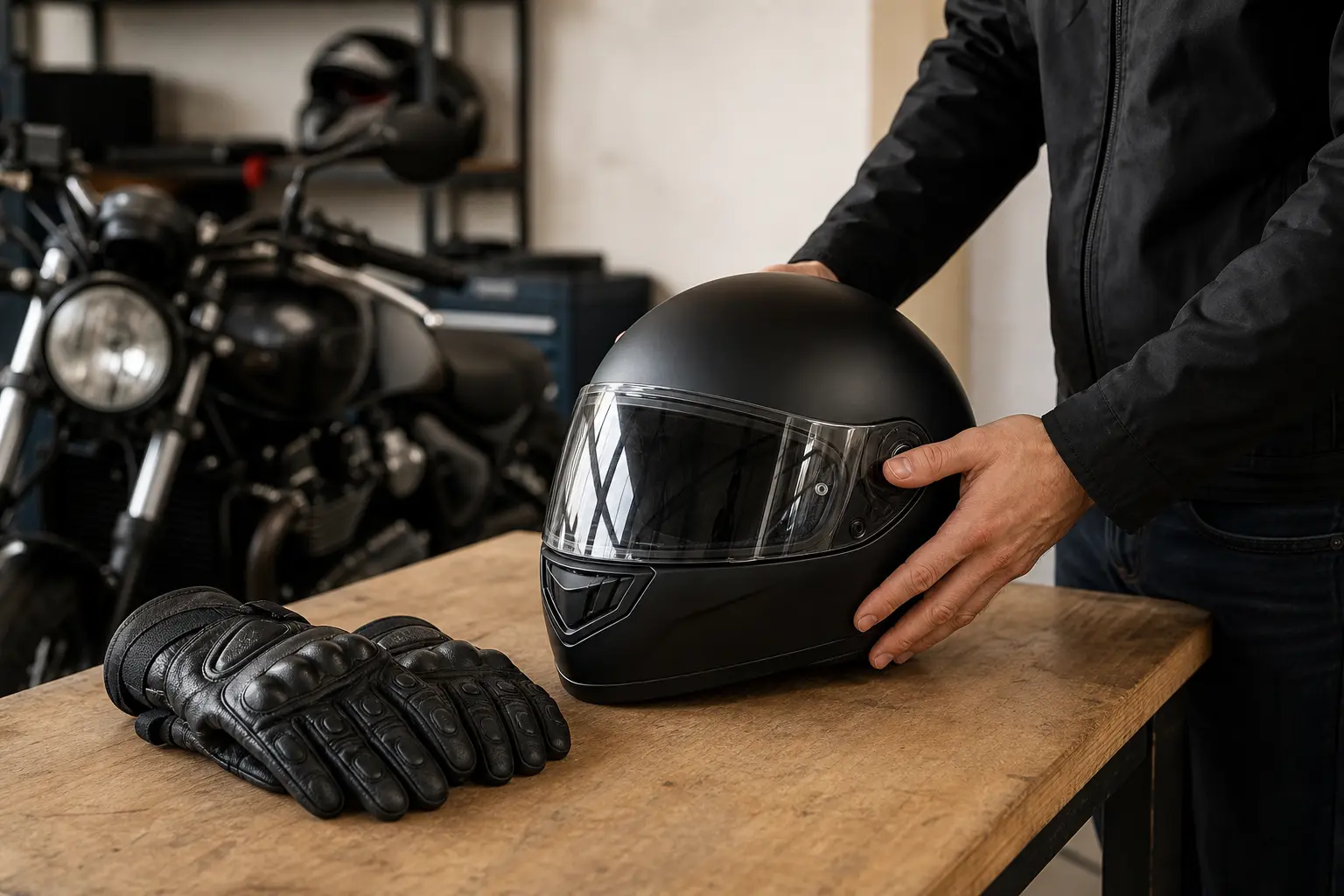
Fact-checked against cited official documentation
Reviewed against Fact-checked against the Motorcycle Safety Foundation’s How Helmets Work webpage and Cycle Safety Information PDF for helmet construction, hidden crash damage, care, manufacturing-date clues, and replacement guidance..
Last updated November 9, 2026
A motorcycle helmet can look fine and still be the wrong helmet to keep wearing. The outer shell may show only a scuff—or no obvious mark at all—while the impact-absorbing material inside has already done work that cannot be judged reliably from the outside.
That is why the safest answer to when should you replace a motorcycle helmet after crash or age is not based on appearance alone. A crash, a questionable drop, deteriorated fit, damaged components, an unknown history, or the manufacturer’s replacement guidance can each change the decision.
This guide is about making a conservative go/no-go decision. It is not a repair manual, and it does not replace the instructions for your particular helmet. If the manufacturer gives a more restrictive instruction, follow that instruction.
The short answer: replace it after a crash
If a helmet was involved in a crash, replace it rather than trying to prove that it survived. The Motorcycle Safety Foundation explains that a helmet’s impact-absorbing liner is intended to manage impact energy and may be compromised even when damage is not obvious. Its guidance specifically supports replacing a helmet involved in a crash because hidden damage may not be visible during a casual inspection.
That applies whether the helmet struck the road, another vehicle, a barrier, or the ground while it was on your head. It also applies when the helmet protected you from a direct blow but appears cosmetically normal afterward.
Do not turn this into a debate about whether the impact was “hard enough.” Riders often remember the event differently after a stressful incident, and the visible mark is not a reliable measurement of what happened inside. The practical decision is simpler: if the helmet was involved in a crash, retire it and obtain a suitable replacement.
A crash helmet should not be passed to another rider, sold as protective equipment, or kept as a spare for future use. If you keep it for documentation or sentimental reasons, clearly separate it from your usable riding gear.
For the motorcycle itself, use a separate post-incident inspection. A helmet decision does not establish that the bike is safe to ride. Vojo’s Motorcycle Maintenance Guide can help you organize the broader maintenance and inspection work, but a collision that may have caused injury deserves appropriate medical attention and professional assessment.
A drop is not automatically the same as a crash—but uncertainty matters
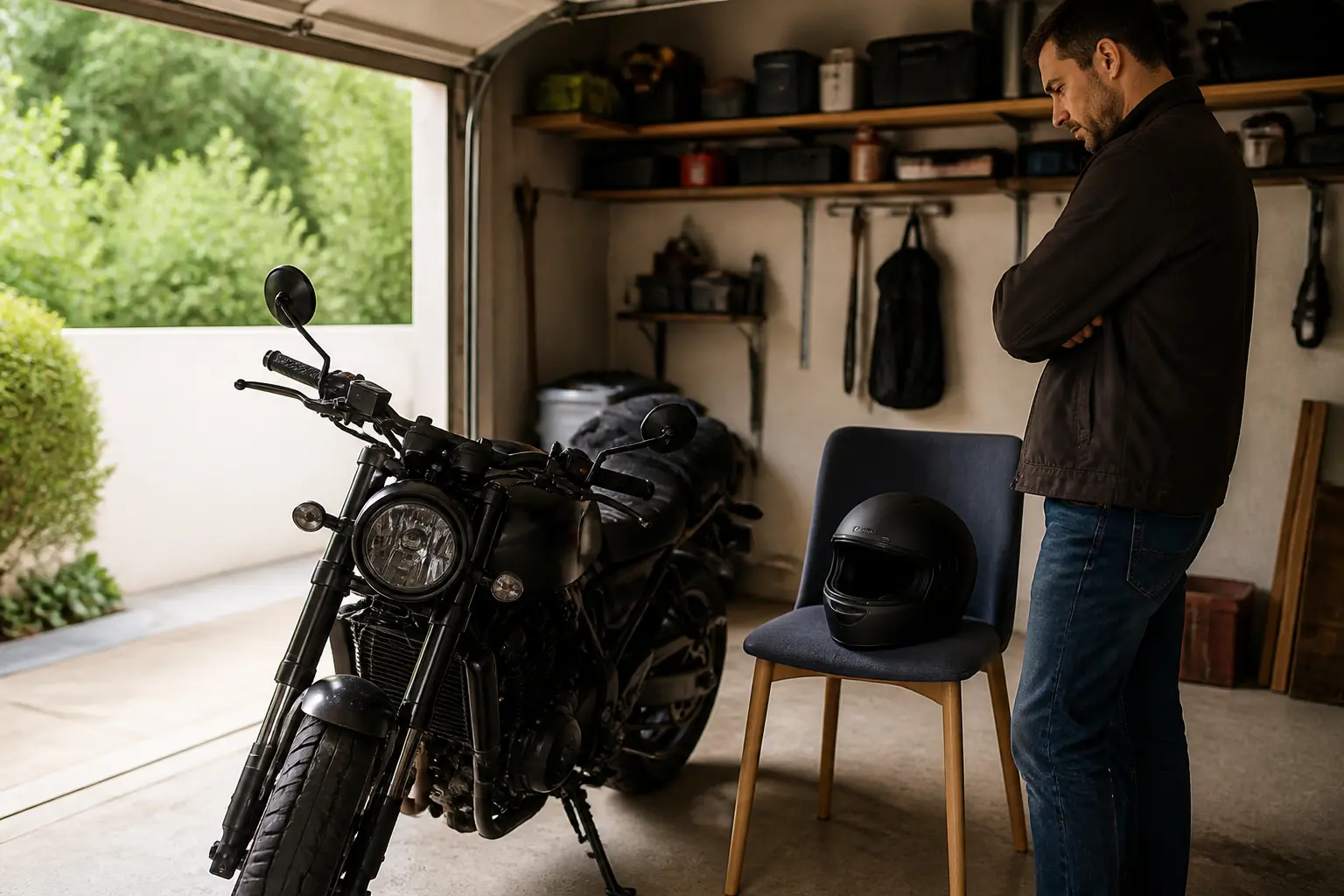
A helmet that falls from a seat, shelf, or motorcycle can be difficult to classify. The important questions are not only how far it fell, but also what it struck, whether it landed on a hard surface, whether it was occupied, and whether you can confidently establish its history.
Do not assume that an unoccupied drop is harmless simply because nobody was wearing it. The event may still have damaged the shell, liner, retention system, visor mechanism, or other parts. At the same time, avoid inventing a universal pass/fail rule from a single anecdote. Helmet construction, materials, design, and manufacturer instructions differ.
The conservative process is:
- Stop using the helmet until you have checked the manufacturer’s guidance.
- Record what happened while the details are fresh: approximate height, surface, point of contact, and whether anything was inside the helmet.
- Look for obvious damage without dismantling or modifying the helmet.
- Check whether the fit, retention, visor, and other components still behave as intended.
- Contact the manufacturer or an authorized dealer if the history is uncertain or the helmet shows any concern.
- Replace it if the manufacturer advises replacement, if damage is present, or if you cannot make a confident safety decision.
This is intentionally more conservative than saying “it fell once, so it is definitely ruined” or “there is no crack, so it is definitely fine.” A rider does not need to diagnose hidden impact performance in a garage. When the facts are unclear, replacement is the way to remove the uncertainty.
Why visible damage is only one clue
A helmet is a system rather than a decorative shell. The MSF describes the shell, impact-absorbing liner, and retention system as parts that work together. A visual check can identify some concerns, but it cannot certify the performance of the internal structure after an impact.
Outer shell concerns
Look for cracks, splits, deep gouges, deformation, missing material, or other changes that were not present before the event. Also note damage around vents, openings, visor pivots, trim, and attachment points. Do not treat a superficial scuff as a precise indicator of impact severity; it may be minor, or it may be part of a larger event that deserves manufacturer review.
Never cover damage with paint, stickers, filler, or adhesive and then return the helmet to service. Such changes can conceal the condition and may conflict with the manufacturer’s care instructions.
Liner and interior concerns
The impact-absorbing liner is not meant to be casually repaired, reshaped, compressed back into place, or replaced with improvised material. Watch for crushed areas, looseness, separation, unusual movement, or a change in the helmet’s shape. You may not be able to see the relevant damage without taking the helmet apart, and taking it apart can create a new problem.
A helmet that feels different after an incident deserves attention even if the exterior looks normal. A new pressure point, looseness, rocking movement, or inability to achieve the previous secure fit is a reason to stop using it until the manufacturer or qualified source provides a decision.
Retention and hardware concerns
The strap and retention hardware must remain secure and function as intended. Look for fraying, cuts, damaged stitching, detached components, or changes in adjustment. Do not improvise a repair to a retention system. If the retention system is damaged or questionable, do not ride in the helmet.
Visor and accessories
A scratched or damaged face shield can affect vision even when the helmet itself has not been impacted. Check for cracks, distortion, loose pivots, failed closures, or a shield that will not remain in the intended position. Replace components only as the manufacturer specifies, using compatible parts. A new visor does not make an impact-damaged helmet safe again.
Age, manufacturing dates, and replacement guidance
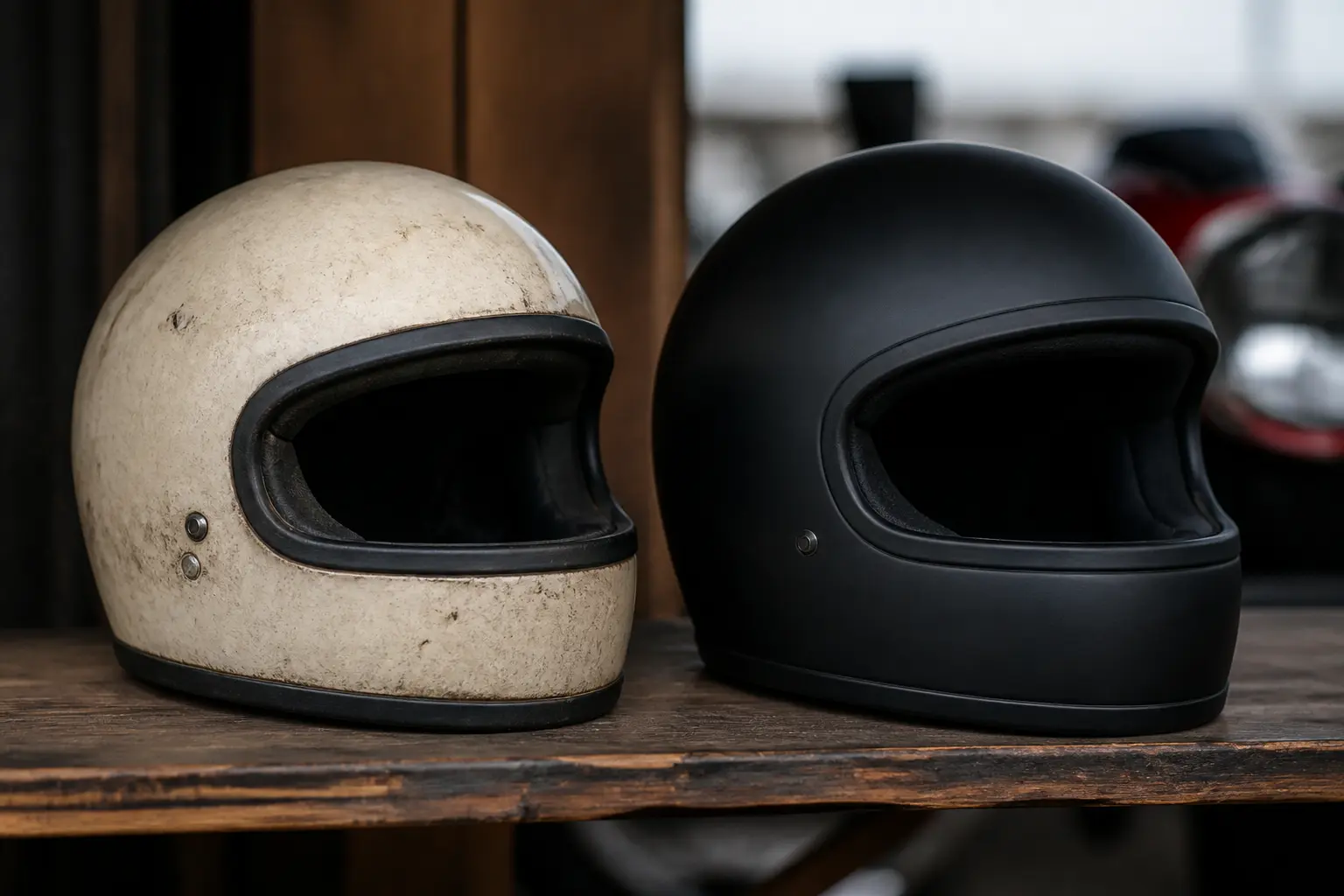
Age matters because helmet materials and components can change with use, storage, cleaning, and exposure to the riding environment. The MSF’s helmet guidance points riders toward the manufacturing-date information and periodic replacement guidance associated with the helmet. That information is a starting point—not permission to keep a damaged helmet in service until a date arrives.
Find the manufacturing information according to the helmet’s labeling and instructions. Record the date, model, and any identification information before contacting the manufacturer. If the label is missing, unreadable, or inconsistent with the seller’s story, treat the history as uncertain.
Do not use one generic replacement age as a substitute for the instructions that came with your helmet. Manufacturers may publish model-specific care, storage, inspection, and replacement guidance. Usage also matters: a frequently worn helmet may experience more sweat, handling, cleaning, and environmental exposure than a rarely used helmet stored correctly.
Age-related replacement becomes especially sensible when several clues appear together:
- The manufacturer’s recommended service or replacement period has been reached.
- The helmet has had extensive or harsh use.
- The interior fit has become loose, compressed, uneven, or uncomfortable.
- The shell, liner, strap, visor, vents, or trim show deterioration.
- The helmet has been exposed to chemicals, unsuitable cleaners, heat, moisture, or poor storage.
- The manufacturing date or usage history cannot be established.
- Replacement parts or manufacturer support are no longer available.
A helmet that is old but undamaged is not the same decision as a helmet that is old and has been in a crash. Treat impact history as the higher-priority concern. Do not postpone replacement because the helmet still looks clean.
Fit deterioration can be a replacement clue
A secure fit is part of helmet safety, but this article is not a substitute for a full helmet-fit guide. The useful distinction here is between a helmet that has always fit poorly and one whose fit has changed.
If the helmet has become noticeably looser, shifts when you move your head, develops new pressure points, or no longer settles as it did when new, investigate before riding. Interior padding can change through use and cleaning. The retention system can also wear or become damaged. A changed fit may indicate that the helmet has reached the end of its useful service, even without a dramatic crash.
Do not solve a deteriorating fit by adding household foam, altering the liner, tightening the strap beyond its intended adjustment, or wearing bulky items underneath. Those workarounds can change how the helmet sits and how its components function. Use the manufacturer’s approved replacement parts and instructions, or replace the helmet when a reliable fit cannot be restored through approved means.
Fit is also a history clue. If a used helmet fits differently from the same model did when new, you do not know whether the change comes from wear, an impact, improper storage, or altered components. An unknown helmet with an uncertain past is a poor place to economize.
DOT compliance is a baseline, not a condition report
A DOT marking or other applicable compliance marking helps identify a helmet intended to meet the relevant regulatory requirements, but it does not tell you that a particular used helmet is undamaged, correctly fitted, or still in good condition.
Check the helmet’s labeling and the requirements that apply where you ride. Confirm that the helmet is the correct type for motorcycle use and that its manufacturer information is credible. Be cautious with missing labels, altered markings, suspiciously poor construction, or a seller who cannot explain the helmet’s history.
Compliance labeling cannot answer these questions:
- Was this helmet involved in a crash?
- Has the liner been compressed or altered?
- Was it stored in damaging conditions?
- Is the retention system still sound?
- Does it fit you securely today?
- Has it passed the manufacturer’s replacement guidance?
Use compliance as one part of a selection and inspection decision, not as proof that an old or damaged helmet is safe to continue using.
Manufacturer-first decision table
| Situation | What you can reasonably establish | Conservative decision | Next step |
|---|---|---|---|
| Helmet involved in a crash | Impact history is known | Replace it | Retire the helmet and follow manufacturer guidance for a replacement |
| Helmet dropped while unoccupied | Event details may be incomplete | Stop using it until assessed | Check instructions and contact the manufacturer or an authorized dealer |
| Visible crack, deformation, crushed area, or damaged strap | Physical concern is present | Do not ride in it | Replace it or obtain a manufacturer-approved decision |
| Fit has become loose or unstable | Protective position may have changed | Do not rely on it as-is | Check approved fit components or replace the helmet |
| Manufacturing date is old or unknown | Service history is uncertain | Do not guess | Compare with manufacturer guidance and plan replacement if appropriate |
| Visor is cracked, distorted, or will not secure | Vision or closure may be compromised | Do not ride until corrected | Use an approved replacement component or replace the helmet if the shell system is affected |
| Helmet has been exposed to unsuitable chemicals or heat | Materials may have been affected | Stop and consult guidance | Follow the manufacturer’s care instructions; replace if condition is uncertain |
| Used helmet has unknown history | Past impacts and storage are unknown | Replacement is the safer choice | Buy a known-history helmet from a credible source |
| Helmet is clean, fits securely, and has known history | No immediate concern is identified | Continue monitoring | Keep records and follow the manufacturer’s care and replacement guidance |
The table is a decision aid, not a certification. If two clues conflict, use the more conservative result. A clean appearance should not cancel a crash history, and a compliance label should not cancel a damaged retention system.
Helmet replacement checklist
Use this checklist before a ride, after a drop, or when deciding whether to keep an older helmet in service.
Incident and history
- Was the helmet involved in a crash or impact while worn?
- Has it been dropped onto a hard surface?
- Do you know where it struck and what happened afterward?
- Can you verify who used it and how it was stored?
- Is the manufacturing information present and readable?
Condition
- Is the shell free from new cracks, splits, deformation, or deep damage?
- Is the liner free from obvious crushing, looseness, separation, or unusual movement?
- Is the retention system intact, secure, and free from damaged stitching or hardware?
- Does the helmet still sit and fit as it did when it was known to be sound?
- Are the visor, pivots, vents, trim, and closures functioning as intended?
- Has the helmet been exposed to unsuitable cleaners, chemicals, heat, or poor storage?
Manufacturer decision
- Have you read the care and replacement guidance for this exact helmet?
- Are any replacement parts manufacturer-approved and compatible?
- Have you contacted the manufacturer or an authorized dealer where the history is uncertain?
- Are you willing to replace the helmet rather than guess about hidden damage?
If any answer raises a serious concern, do not turn the checklist into a score. The purpose is to find a reason to pause, not to accumulate enough “good” boxes to outweigh a crash or major uncertainty.
How to retire and replace a questionable helmet
Once you decide a helmet should no longer protect your head, keep it out of the active gear pile. Mark it as retired so another rider does not mistake it for usable equipment. Do not donate or resell it as protective gear when its condition or history is the reason for replacement.
When choosing the replacement, start with the manufacturer’s intended use, the applicable certification or compliance information, your head shape and size, and a secure fit. Avoid buying a used helmet unless you can establish its complete history and condition with unusual confidence. A low price does not compensate for unknown impact history.
Keep the new helmet’s documentation and record its manufacturing information. Store it according to the manufacturer’s instructions, avoid unsuitable chemicals and heat, and inspect it periodically. A simple record makes future decisions easier because you are not relying on memory.
Remember that replacement is not only about the shell. If you replace a helmet after an incident, also consider whether the visor, communication equipment, mounts, or other attached accessories were damaged. Follow the component manufacturer’s guidance rather than transferring questionable parts automatically to the new helmet.
When in doubt, make the no-ride decision
The cost of replacing a helmet is visible. The risk of relying on hidden damage is not. That asymmetry explains the conservative approach: a crash history, a serious drop, damaged components, a changed fit, chemical or heat exposure, an old or unknown manufacturing history, or uncertainty that cannot be resolved through the manufacturer should push the decision toward replacement or professional guidance.
You do not need to prove that a helmet is unsafe before choosing not to wear it. You only need to recognize when you cannot establish that it remains suitable for its intended protective job.
For the official technical basis behind this approach, see the Motorcycle Safety Foundation’s How Helmets Work guidance and its detailed Cycle Safety Information PDF. Both are useful references to keep with your riding and maintenance records.
How Vojo Helps
Use Vojo to turn a helmet decision into a repeatable safety record rather than a memory test. After buying a helmet, create a maintenance or gear note with the manufacturer, model, manufacturing information, purchase date, fit observations, and the official replacement guidance you found. If the helmet is dropped or involved in a crash, add the date and a short incident description, mark the helmet as retired, and create a follow-up task to contact the manufacturer or source a replacement.
A practical workflow is to keep the helmet record beside your motorcycle’s regular inspection history in the Motorcycle Maintenance Tracker. Before a ride, review the open task: if the helmet has an unresolved impact, fit, or retention concern, the record makes the no-ride decision visible instead of letting a rushed departure erase it. Keep the manufacturer’s instructions as the authority, and use Vojo for reminders, dates, and accountability.
Download Vojo on the App Store.
Safety disclaimer
Follow your motorcycle owner’s manual. If a procedure or specification is uncertain, consult a qualified mechanic before continuing.
Quick answers
Frequently asked questions
Should I replace my motorcycle helmet after a crash if it looks fine?
Yes. A helmet involved in a crash should be replaced even when the shell has no obvious damage. The impact-absorbing liner and other parts may have been compromised in ways a casual inspection cannot confirm. Follow the manufacturer’s guidance as well.
Do I need to replace a helmet after dropping it?
Pause use and assess the event using the manufacturer’s instructions. Consider the height, surface, point of contact, whether the helmet was occupied, and whether its history is certain. If damage or uncertainty remains, contact the manufacturer or replace the helmet rather than guessing.
How old is too old for a motorcycle helmet?
There is no single generic age that overrides every manufacturer’s instructions. Use the manufacturing information, the helmet’s care and replacement guidance, its usage and storage history, and its current fit and condition. Replace it when the manufacturer’s guidance indicates, or sooner if damage or deterioration is present.
Can I keep riding if my helmet has only a small scratch?
A superficial scratch does not by itself establish the helmet’s condition, but it also does not prove that the helmet is safe. Consider what caused it, check for related shell or component damage, and follow the manufacturer’s guidance. Stop using the helmet if the damage is deep, the structure is altered, or the history is uncertain.
Does a DOT label prove that my old helmet is still safe?
No. A compliance marking is not a condition report. It does not reveal crash history, liner compression, retention damage, poor storage, age-related deterioration, or current fit. Inspect the helmet’s history and condition and follow the manufacturer’s replacement guidance.
Can I repair a damaged motorcycle helmet?
Do not improvise repairs to the shell, impact-absorbing liner, retention system, or other safety-critical parts. Ask the manufacturer about approved components or replacement guidance. If the helmet was involved in a crash or its protective condition is uncertain, replacement is the safer course.