
Motorcycle Traction Budget: Why Braking, Cornering, and Acceleration Compete
Learn how a motorcycle traction budget connects braking, cornering, and acceleration, and how smoother planning preserves a safer grip margin.
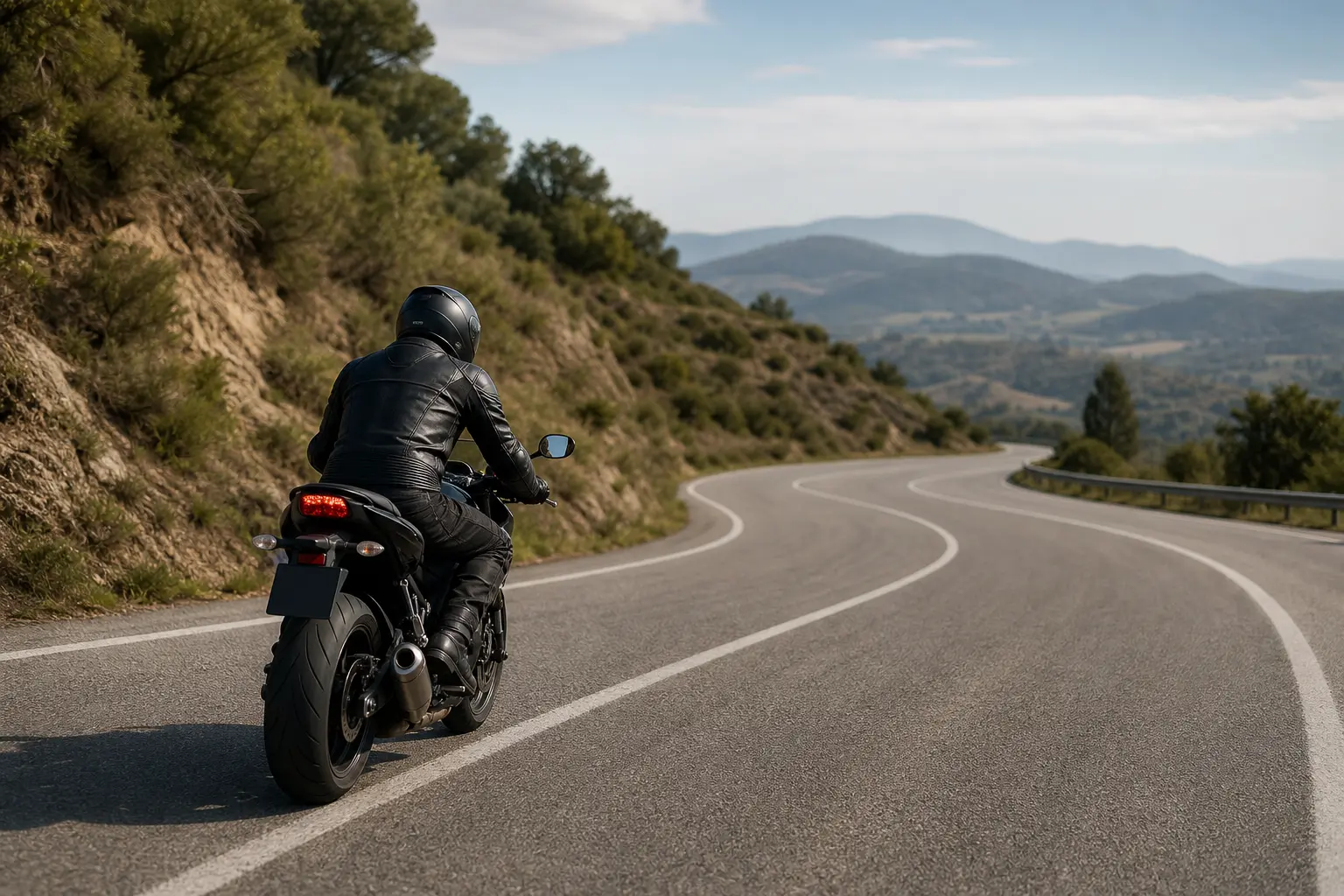
Fact-checked against cited official documentation
Reviewed against Fact-checked against MSF materials on tire contact forces, shared traction demands, progressive braking, curve braking, ABS context, and supervised rider training..
Last updated October 24, 2026
Motorcycle traction budget braking cornering acceleration describes one useful riding idea: each tire has a limited ability to transmit forces to the pavement at any given moment. Turning uses part of that ability. Slowing uses part of it. Drive from the engine uses part of it too. When a rider asks for several of those things at once, the available reserve becomes smaller.
It is not a dashboard measurement, a promised grip level, or a substitute for model-specific guidance. It is a way to think ahead. Rather than waiting until a corner tightens or the surface changes, the rider manages speed, line, and control inputs early enough to retain choices.
The Motorcycle Safety Foundation (MSF) explains that the tire contact patch is the small area through which motorcycle forces are delivered to the road, and that braking, cornering, and acceleration compete for available traction. Its operator material also addresses progressive braking, weight transfer, braking in curves, and the value of reducing lean while slowing. Those principles support a conservative conclusion: avoid spending nearly all available grip before you know what the road will ask next. MSF’s How Motorcycle Tires Work guide is the primary reference for this shared-demand concept.
Your motorcycle manufacturer comes first. Follow the owner’s manual for approved tires, cold tire-pressure settings, loading, controls, warning systems, and maintenance. If the motorcycle’s condition is uncertain, or a tire shows damage or abnormal wear, pause the ride and seek qualified inspection. This article explains a riding framework; it does not provide an exact repair method or a universal cornering technique.
Motorcycle traction budget: braking, cornering, acceleration
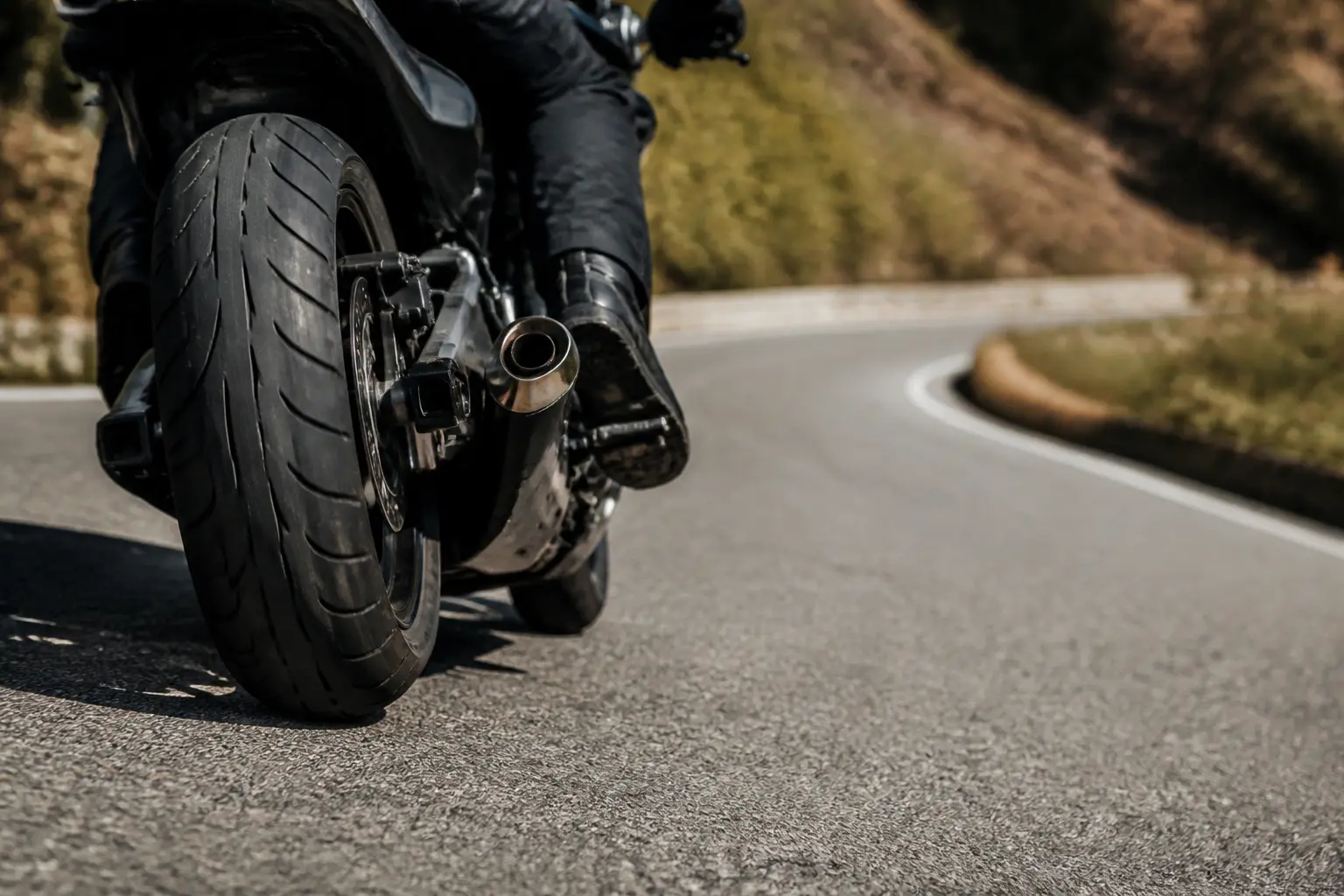
Think of traction as a changing allowance rather than a fixed quantity. On an upright motorcycle moving steadily over a clean, predictable surface, relatively little of that allowance may be needed to alter direction or speed. In a bend, the tires must generate force to follow the chosen path. Under braking, they must also help reduce speed. Under acceleration, the rear tire must deliver drive to the pavement.
The point is not that any overlap is automatically unsafe. Normal riding naturally combines inputs. The important question is how much margin remains after those demands are added together. A gentle speed adjustment in a wide, open curve is different from a sharp brake application on a dirty, tightening corner. The inputs can have similar names, but the situation and the remaining margin are not similar.
A traction budget also changes continually. Pavement may be dry in one section and damp under trees. A road repair may alter the texture unexpectedly. Passenger or cargo load, tire condition, tire pressure, temperature, rider fatigue, sight distance, and the motorcycle’s own setup can all affect what feels manageable. Because the available amount cannot be known precisely while riding, a sensible road strategy is to leave more of it unused.
This model helps explain a familiar experience: a corner felt ordinary until something required a quick reaction. The issue may not be that the original turn was impossible. Rather, the original turn may already have consumed enough grip and attention that an unexpected brake, direction change, or throttle change left little spare capacity.
The MSF tire guide presents traction as a shared resource at the road contact area, not as isolated reserves for separate controls. That perspective discourages a risky assumption that a motorcycle can always turn, brake, and accelerate as hard as the rider wishes at the same time.
| Riding demand | What the tire is being asked to do | What raises the total demand | Margin-building response |
|---|---|---|---|
| Cornering | Change or hold the motorcycle’s direction | More lean, a tighter path, abrupt steering, uncertain pavement | Set an appropriate entry pace and look well through the available road |
| Braking | Reduce speed through tire-road force | Late braking, a lean angle, a low-grip surface, abrupt input | Begin earlier when possible and apply braking progressively |
| Acceleration | Transfer drive force to the road | Sudden throttle, a tight bend, poor surface conditions | Roll on smoothly only when the road and motorcycle are ready |
| Combined demands | Turn while slowing or driving | Surprises, reduced visibility, changing radius, rushed decisions | Simplify the task: reduce speed, reduce lean when safely possible, and avoid abrupt changes |
The table is a planning aid, not a calculation. It cannot predict a particular motorcycle’s response. Manufacturer guidance and formal rider instruction remain more specific than any general article.
Why cornering consumes traction margin
A motorcycle needs tire force to travel around a curve. As the bike leans and follows its path, the contact patch is already doing directional work. This does not make lean angle inherently wrong; lean is part of ordinary motorcycle riding. What matters for the traction-budget idea is that a leaned motorcycle has less unused capacity for a sudden additional demand than one travelling upright under otherwise comparable conditions.
There is no universal lean-angle number that marks a safe or unsafe boundary. Road shape, speed, surface, tire condition, machine design, loading, and rider actions all matter. Trying to turn this concept into an angle target would create false precision. The useful lesson is simpler: the more demanding the turn becomes, the more carefully a rider should avoid adding abrupt braking or acceleration.
Good corner preparation makes this easier. A rider who identifies the bend early has more time to select a speed that works with the visible road. That rider is less likely to be surprised by a decreasing-radius turn, limited sight line, driveway, intersection, debris, or slower traffic. Entering with options is not timid riding; it is what preserves the ability to respond without a large control input.
Vision matters because it affects planning. Looking toward the useful, visible path through a bend helps a rider assess whether the curve continues, tightens, opens, or contains a surface concern. Fixating on the road edge, a guardrail, or an obstacle can make decision-making narrower at exactly the wrong time. The objective is not to follow a memorized “perfect line,” but to retain a legal path, good visibility, and room to respond.
A safer street approach is therefore to make the corner less demanding before the motorcycle is deeply committed: approach at a pace that permits adjustment, use smooth steering, and avoid treating opposing traffic space or a shoulder as part of the planned route. If the road ahead is uncertain, the traction budget should be treated more conservatively.
How braking changes the traction budget
Braking does more than remove speed. As a motorcycle decelerates, load shifts and the machine’s balance changes. The MSF operator manual emphasizes progressive braking: applying braking force smoothly rather than abruptly. That gives the motorcycle time to settle and gives the rider more opportunity to recognize whether the surface and situation support the chosen level of braking.
Progressive does not mean weak or indecisive. It means deliberate control rather than a sudden grab. The correct application for a real situation depends on the motorcycle, road, available space, rider ability, and the manufacturer’s instructions. A public-road surprise is not the place to discover personal or machine limits.
An upright motorcycle generally leaves more traction available for slowing than a motorcycle already committed to a demanding turn. In a curve, tire grip is already being used for direction. The MSF operator material discusses reducing lean while slowing, which reflects the basic advantage of asking the tires to do fewer competing jobs when a safe path permits it. Read the source alongside your own owner’s manual: MSF Motorcycle Operator Manual.
That guidance is not an instruction to suddenly straighten the motorcycle regardless of surroundings. A rider must not steer into oncoming traffic, leave the roadway, or create a different hazard in an effort to become upright. Road position, traffic, surface, and escape space still govern the safe choice. The traction-budget principle is about recognizing that braking and turning are linked, not about applying one rigid response everywhere.
If a motorcycle has anti-lock braking system (ABS), follow the manufacturer’s directions for that system. ABS can support braking control in some wheel-lock circumstances, but it cannot supply unlimited traction or remove the consequences of excess entry speed, poor pavement, or a path with no room. It is a safety aid within the same physical limits, not a replacement for observation and planning.
How acceleration competes with turning
Acceleration asks the rear tire to send drive force into the road. In a straight, predictable section of pavement, that may be a straightforward request. In a turn, the rear tire may already be contributing to the motorcycle’s directional work. A sharp throttle change adds a new demand while the available margin may already be reduced.
This should not be read as “never use throttle in a corner.” Controlled, gradual throttle use is part of normal riding. The concern is an abrupt request that does not suit the available surface, the corner’s shape, or the motorcycle’s current lean. A smooth input is easier to assess and less likely to turn a manageable situation into a rapidly changing one.
Acceleration can also alter how the motorcycle feels and how its load is distributed. The exact behavior differs by motorcycle and conditions, so it is not responsible to promise a single outcome. What can be said generally is that adding drive while already using traction for turning leaves less spare capacity for an unexpected slick patch, tighter radius, or added steering correction.
For everyday road riding, it is often helpful to separate the major tasks as much as conditions allow. Complete the main speed reduction before the curve, choose the intended path with the available view, then add power gradually once the exit and surface support it. This is not a strict sequence that overrides an immediate hazard. It is a way of reducing unnecessary overlap in demands.
The key word is gradual. Abrupt roll-off, abrupt roll-on, abrupt braking, and abrupt steering can each increase workload. Smoothness buys time: time for the motorcycle to respond, time for the rider to observe the road, and time to decide whether the original plan still fits.
When braking, cornering, and acceleration overlap
The traction-budget concept becomes most valuable when events start stacking up. Imagine approaching a bend with limited visibility. The rider realizes the turn is tighter than expected, begins braking late, remains leaned, and then uses a sudden throttle change in an attempt to alter the path. Each action may be understandable in isolation. Together, they can put the tires and the rider under much more pressure.
The practical solution starts before that moment. Do not use public roads as a place to test how much overlap the tires will tolerate. Instead, make the road situation simpler early: lower speed while there is a clear view, choose a lane position that protects space and visibility, and avoid entering so fast that an unseen change requires an extreme response.
If circumstances change in a corner, stability and a safe available path matter more than trying to execute a dramatic correction. Avoid assuming that one forceful control movement is always the answer. The best response varies with traffic, road geometry, surface, motorcycle, and the skills the rider has developed under supervision. If you feel repeatedly rushed in bends, that is useful feedback to reduce pace and seek coaching—not a reason to chase a higher personal limit.
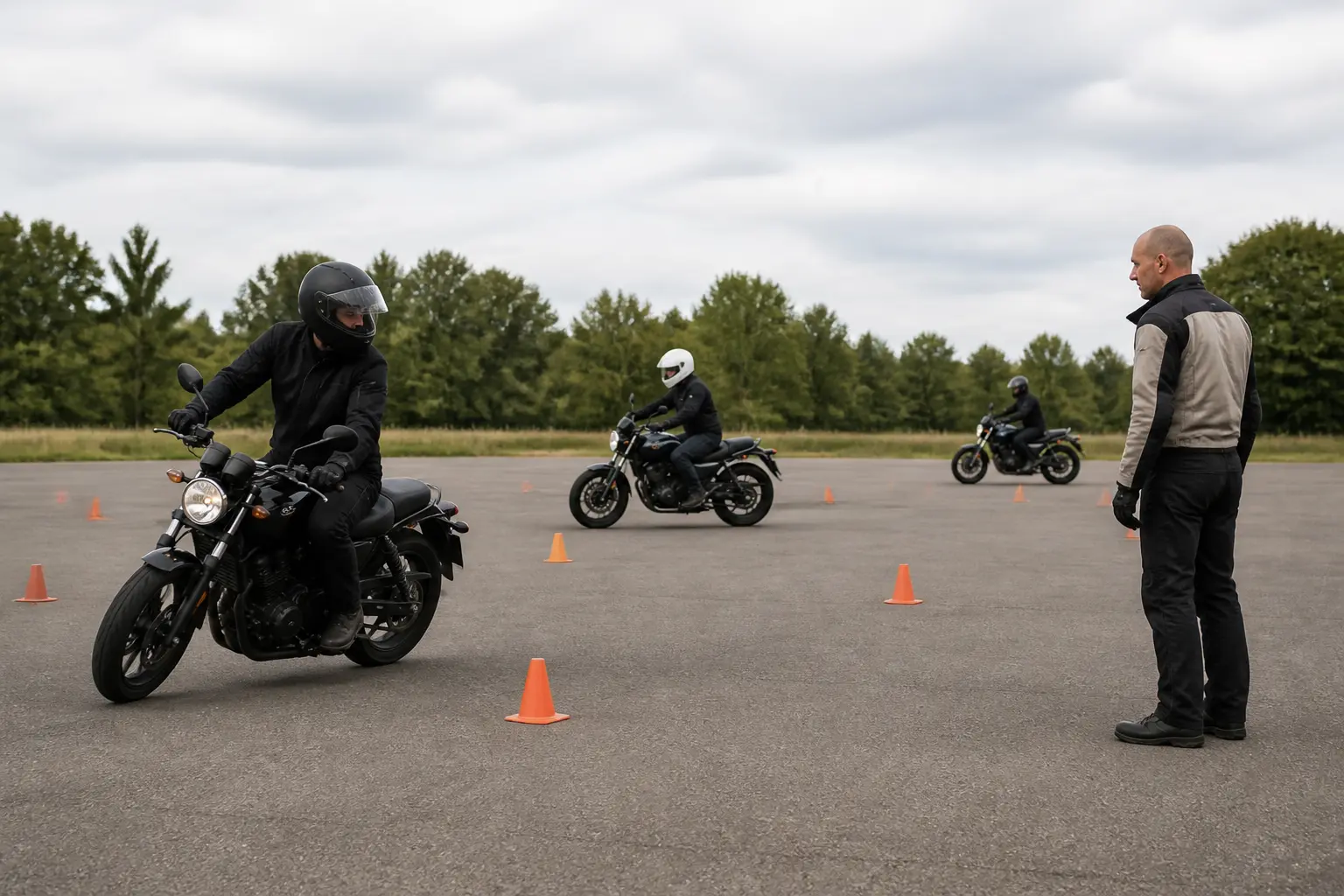
Formal training provides a better setting for skill development. The MSF Basic RiderCourse describes controlled exercises that include traction management, progressive braking, curve judgment, and stopping in a curve. A supervised range is fundamentally different from discovering these limits around traffic, roadside objects, or changing pavement. Explore the MSF Basic RiderCourse.
Surface, tires, and load can shrink the budget
No traction model is complete without the road itself. The apparent grip available on clean pavement can be reduced by rain, pooled water, loose material, oily contamination, painted markings, metal surfaces, broken pavement, repair seams, leaves, and changing texture. A rider cannot reliably assign a grip number to such conditions from the seat. The prudent response is to reduce speed sooner, make inputs gentler, and avoid piling multiple demands onto an uncertain surface.
Tire condition is equally relevant. The motorcycle manufacturer specifies approved tire information and pressure guidance for the machine. Use those instructions rather than generic online figures. Check pressures under the conditions specified by the manufacturer, inspect visually before riding, and do not dismiss a concern simply because tread appears present. Visible damage, unusual wear, uncertainty about fitment, or a pressure concern deserves a conservative decision and, where appropriate, qualified help.
Load matters as well. A passenger, luggage, and other added weight can change how the motorcycle behaves and may affect manufacturer-specified settings. Confirm the motorcycle’s load guidance before travel rather than assuming that a familiar solo setup behaves the same way when loaded.
Maintenance is part of traction awareness, not a separate chore to defer. A rider who does not know whether the tires are correctly maintained is starting the trip without a key piece of safety information. For a broader manufacturer-first inspection and recordkeeping approach, see the Motorcycle Maintenance Guide.
A practical corner-reading framework
You do not need to calculate tire forces while riding. Instead, use a short set of questions before a potentially demanding curve:
- What can I actually see? Base speed on the visible, usable road—not on a hope that the bend will open.
- What might change? Consider tighter radius, intersections, vehicles, debris, wet patches, and pavement changes.
- How much adjustment room remains? Keep a legal path and do not rely on opposing lanes, shoulders, or luck as an escape plan.
- Which demand can I reduce now? Often that means reducing speed while the motorcycle is upright and the view is clear.
- Are my inputs calm and deliberate? Smooth braking, steering, and throttle use reduce unnecessary spikes in demand.
These questions convert a physics concept into a riding decision. They do not guarantee safety, but they counter the common habit of treating speed, turning, and throttle as unrelated tasks.
Common misunderstandings
“A better tire removes the problem.” Suitable, well-maintained tires are important, but no tire eliminates the need for appropriate speed, smooth inputs, and surface awareness.
“No slide means lots of grip remains.” A motorcycle can feel settled while much of the available traction is already committed. The issue is what remains if something changes.
“ABS makes hard braking in every corner safe.” ABS is valuable equipment, but it does not create pavement grip, increase sight distance, or change the corner’s path.
“The fastest-looking line is the safest line.” A street line must account for traffic, legal road position, visibility, road condition, and escape space. Efficiency is not the only goal.
“Practice belongs in real traffic.” Skill development should occur in an appropriate controlled setting, preferably with qualified instruction, rather than in an unpredictable traffic environment.
Traction-budget checklist
Use this conservative checklist as a prompt before riding and before demanding corners. It does not replace the motorcycle owner’s manual, a pre-ride inspection, or qualified instruction.
Before leaving
- Confirm tire pressures using the motorcycle manufacturer’s specified conditions and values.
- Look for visible tire damage, unusual wear, foreign objects, or any issue that makes the ride questionable.
- Check that passenger, cargo, and any accessories are within manufacturer guidance.
- Consider weather, temperature, visibility, likely road contamination, and your own fatigue.
- Confirm that primary controls feel normal before joining traffic.
- Delay the trip or arrange qualified assessment if a significant condition is unknown.
Before entering a corner
- Adjust speed early enough to avoid rushed decisions after the motorcycle is leaned.
- Look through the visible road for surface changes, traffic, junctions, and changes in radius.
- Keep a legal, realistic path; do not plan around space that may be occupied or unsafe.
- Treat reduced visibility and questionable pavement as reasons to keep a larger traction reserve.
- Use smooth, purposeful control inputs rather than trying to correct several issues at once.
After a rushed moment
- Do not turn one uncomfortable corner into a reason to ride faster or prove a point.
- Reduce pace and reassess the road, your fatigue, and the motorcycle’s condition.
- Note whether the issue began with late observation, excess entry speed, a surface change, or unclear planning.
- Seek formal training if braking, curves, or traction management regularly feel uncertain.
- Review tire and maintenance concerns conservatively before the next ride.
How Vojo Helps
Use Vojo to turn traction awareness into a repeatable pre-ride workflow. In your motorcycle profile, save the manufacturer’s tire-pressure and load guidance along with the tire details fitted to the bike. Before a ride, log the cold-pressure check, visible tire condition, passenger or luggage plan, and expected weather or surface concerns. Afterward, add a brief ride note if a bend felt rushed or a surface condition changed your plan.
Over time, those notes can show whether a recurring concern is maintenance-related, route-related, or a cue to seek more training. They also create a dated record you can review with a qualified technician or instructor instead of relying on a vague memory. Keep the inspection and service side organized in the Vojo motorcycle maintenance tracker.
Quick answers
Frequently asked questions
What is a motorcycle traction budget?
It is a practical mental model for shared tire grip. Braking, turning, and acceleration all make demands at the tire-road contact area, so increasing one demand can reduce the margin available for the others.
Can a motorcycle brake while it is cornering?
A motorcycle can be slowed in a curve, but turning already uses traction. The MSF operator material discusses progressive braking and reducing lean while slowing. Follow your manufacturer’s instructions and develop situation-specific skills through formal training.
Why does throttle matter in a motorcycle corner?
Throttle changes can add drive demand through the rear tire while the motorcycle is already turning. Smooth, measured inputs leave more margin than abrupt changes, especially when surface conditions or the corner shape are uncertain.
Does ABS solve traction problems in a bend?
No. ABS may assist with braking control in applicable conditions, but it cannot produce unlimited grip, remove road contamination, provide more sight distance, or guarantee a safe path. Follow the motorcycle manufacturer’s ABS guidance.
How should I safely learn traction management?
Use formal instruction and an appropriate controlled practice environment. The MSF Basic RiderCourse includes controlled exercises related to traction management, progressive braking, curve judgment, and stopping in a curve.