
Motorcycle Tire Contact Patch: Why Small Pressure Errors Matter
Understand why motorcycle tire pressure affects the contact patch and traction, and use a practical pre-ride routine for load, condition, and road changes.
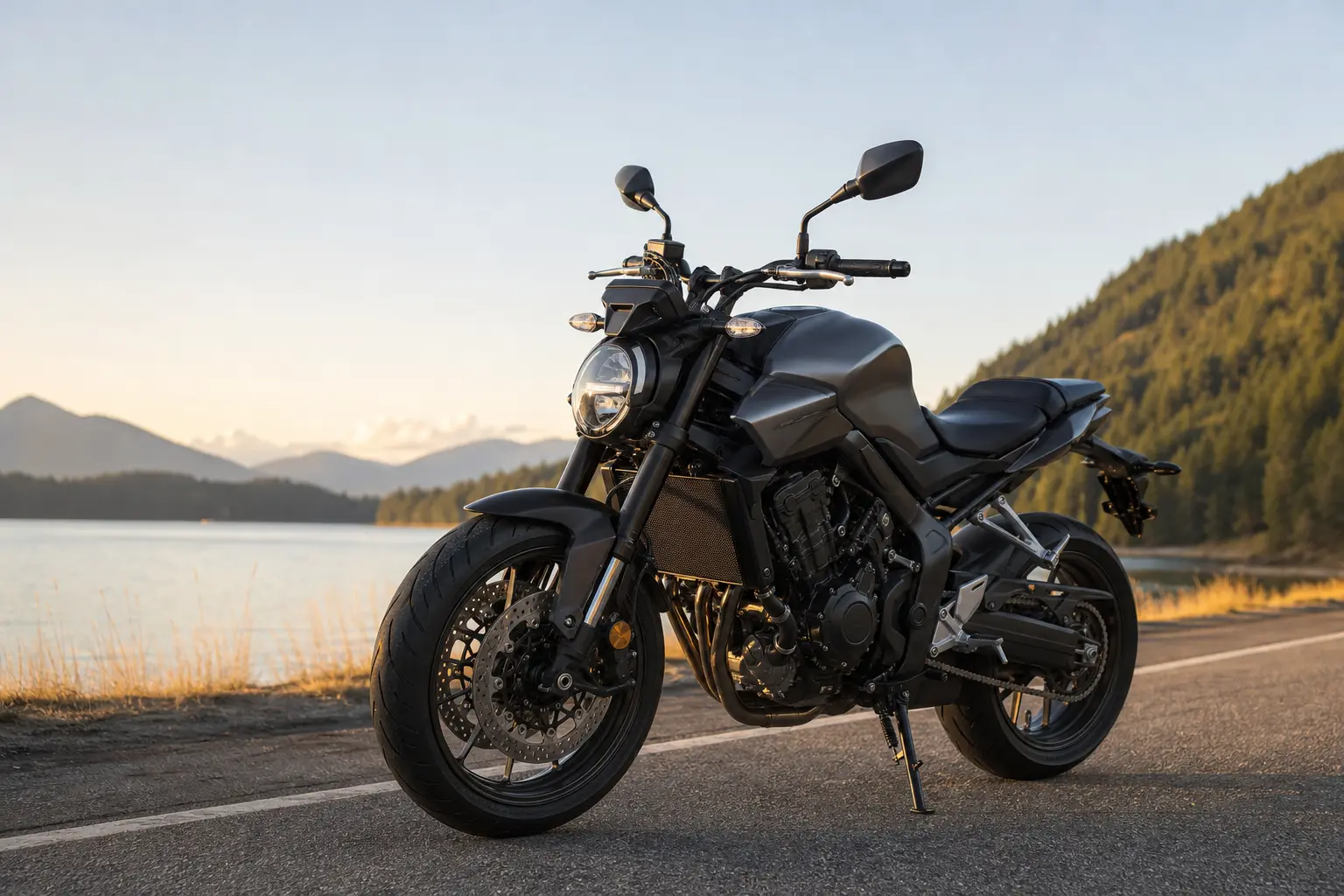
Fact-checked against cited official documentation
Reviewed against Checked against MSF guidance on motorcycle tire contact patches and T-CLOCS pre-ride checks for cold pressure, load adjustment, tire damage, weathering, wheels, and related components..
Last updated November 9, 2026
Motorcycle tire pressure affects contact patch and traction because the tire is not a rigid wheel. It is a flexible structure that must support the motorcycle, respond to the road, and transmit the rider’s braking, steering, and drive demands. A pressure reading that is only slightly away from the applicable specification can change how that structure behaves—even when the tire still looks normal from a distance.
A motorcycle has only a front and rear tire connecting it with the pavement. The Motorcycle Safety Foundation (MSF) describes those tires as the motorcycle’s only traction contact patches, and links sound tire selection, inflation, inspection, deterioration checks, and replacement decisions to safe riding. See the MSF Motorcycle Tire Guide.
The useful takeaway is not that a rider should chase a bigger or smaller patch by experimenting with air pressure. It is the opposite: tire pressure should be treated as part of a manufacturer-designed system. Use the motorcycle manufacturer’s specified cold settings, including any approved setting for a passenger or cargo. Then inspect tire and wheel condition before riding. The MSF T-CLOCS Pre-Ride Inspection Checklist includes cold pressure, load adjustment, tread, weathering, bulges, embedded objects, rims, bearings, and seals among its tire-and-wheel checks.
Why Motorcycle Tire Pressure Affects Contact Patch and Traction
A tire contact patch is the small area of rubber meeting the road at a particular moment. It is not permanently one shape or one size. As the wheel rolls, the patch is continuously renewed. Its shape and behavior respond to load, road texture, tire design, inflation pressure, the motorcycle’s lean and braking state, and the condition of the tire itself.
That patch is where a motorcycle asks the road for several things:
- Braking: the tire must transmit slowing force without exceeding the grip available from the road and tire.
- Acceleration: the rear tire must deliver drive force to the pavement.
- Cornering and steering: both tires guide the motorcycle along its intended path.
- Road following: tires must cope with bumps, grooves, debris, and changing pavement texture.
Pressure matters because air inside the tire helps support its shape. If it is below or above the approved cold setting, the tire may not respond as its motorcycle and tire manufacturers intended. The rider may notice a handling change, but a feeling alone does not identify the cause. Pressure is only one possible explanation; wear, damage, a loading change, a wheel concern, or a road surface can produce similar symptoms.
It is also misleading to reduce traction to a simple “larger patch equals more grip” rule. A footprint that appears broader because a tire is operating at an unsuitable pressure is not automatically an improvement. The tire’s support, flexibility, temperature, surface contact, and ability to respond predictably all matter. The practical goal is not to maximize visible rubber on the ground. It is to keep the motorcycle within the specifications and condition limits that allow its tires to work as designed.
The patch is a moving working area
When the motorcycle is upright and rolling smoothly, the load on each tire has one pattern. During braking, load shifts forward. During acceleration, the rear tire is asked to do more work. In a turn, the tire is used at a lean angle and the portion of tread engaging the road changes. A passenger, luggage, rough pavement, or a rapid control input can alter the demands again.
This does not mean a rider needs to calculate contact-patch size before every trip. It means that tire pressure cannot be evaluated in isolation. A tire may have an apparently acceptable reading but still deserve attention because of a bulge, cracking, an embedded object, unusual wear, or repeated loss of pressure. Equally, a motorcycle loaded for a trip needs the applicable manufacturer guidance rather than a guessed adjustment.
The front and rear tire work as one system
Front and rear tires do not carry exactly the same duties at every moment, yet both are essential to directional control and traction. A concern at either end changes the safety margin of the whole motorcycle. Do not compensate for an unexplained front or rear handling issue by changing the other tire’s pressure. Start with the approved settings, a consistent measurement, the current load, and a full visible inspection.
If a motorcycle has a new pull, wobble, vibration, vague steering response, or unusual reaction to pavement grooves, make safety the first decision. Slow down, stop where it is safe, and assess only what can be checked without dismantling components. When the reason is not clear, qualified inspection is a safer next step than continued testing on the road.
Pressure, Tire Flex, and Predictable Handling
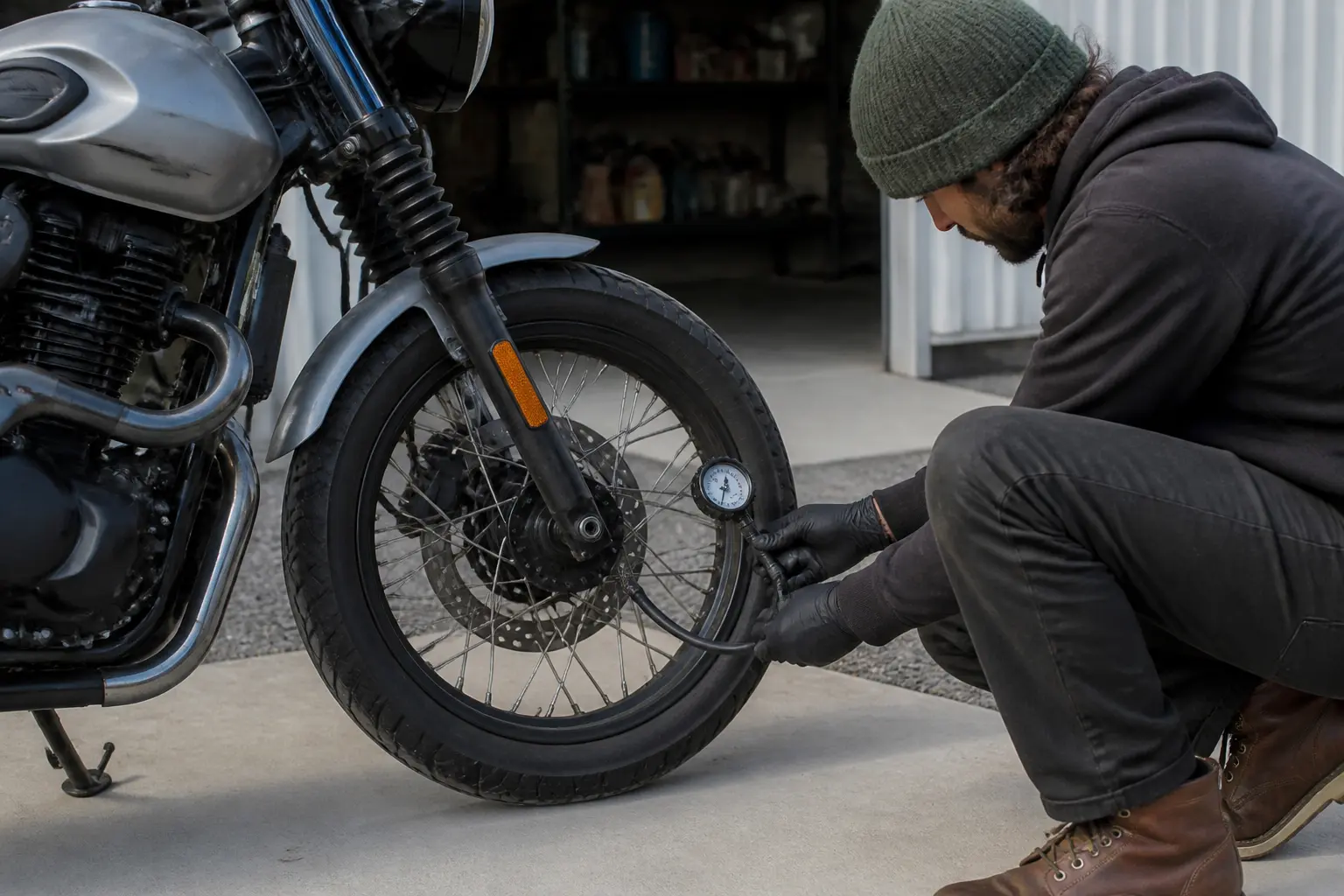
Inflation pressure helps a tire retain the shape and support expected by its design. A tire that is materially below the relevant setting may flex differently under load. A tire above the relevant setting may respond differently over imperfect pavement. Neither condition is a basis for a rider to select a personal “feel” setting.
Instead, regard a noticeable difference in ride or steering as information. It may justify a pause to check pressure and inspect the tire, but it is not permission to make arbitrary adjustments. The appropriate reference is the motorcycle manufacturer’s information, together with applicable tire-maker guidance.
| Rider observation or situation | What it can mean | Safer first response |
|---|---|---|
| Tire appears normal but pressure has not been checked | Appearance does not confirm an approved pressure | Measure both tires cold with a suitable gauge and compare with the specified setting |
| Pressure is unexpectedly lower than normal | There may be a leak, valve-area concern, or tire damage | Inspect visibly and arrange qualified help if the cause is unclear or loss continues |
| Motorcycle feels different after a passenger or luggage is added | Load and balance have changed | Verify limits, secure the load, and follow approved loaded guidance |
| A new vibration, pull, or wobble appears | Tire, wheel, loading, or another issue may be involved | Stop safely and seek inspection if basic approved checks do not explain it |
| Tire has a bulge, obvious damage, or embedded object | The tire may not be suitable for continued riding | Do not rely on a pressure change; arrange qualified tire service |
The table is deliberately a decision aid, not a diagnostic chart. A similar sensation can come from different causes. A rider who treats every handling complaint as a pressure problem may overlook an issue that deserves professional attention.
Why a gauge matters more than a glance
Tires can lose pressure without looking visibly flat, particularly to someone checking quickly in a driveway or parking area. A pressure gauge provides a measurement; the owner’s information provides the target. Both are needed. A gauge cannot determine what is appropriate for a particular motorcycle, tire fitment, rider, and load.
Use the same routine whenever practical: check before the day’s ride, compare against the applicable cold-pressure specification, and note a reading that is different from the motorcycle’s normal pattern. Consistency makes a trend easier to see. It also reduces the temptation to react to a warm reading as if it were directly comparable with a pre-ride cold reading.
Cold pressure is the comparison point
The MSF T-CLOCS checklist specifically identifies cold tire pressure and load-related adjustment as pre-ride items. “Cold” matters because a tire’s reading can change after riding. A number collected after a ride describes a different state from one measured before the motorcycle has been used.
For that reason, do not release air from a warmed tire merely to make its reading match a cold reference number. Likewise, do not add or remove air based on one questionable reading without checking the measurement conditions and the applicable specification. If readings repeatedly differ from expectations, investigate why rather than continually correcting the symptom.
For the broader habits that support this routine, see the Motorcycle Maintenance Guide.
Load, Surface, and Temperature Change the Traction Margin

Tire pressure is not the only condition affecting how a contact patch performs. The total load carried by the motorcycle changes the work each tire must do. A passenger, luggage, or extra equipment can change the motorcycle’s balance and response as well as the demand on its tires.
Follow the motorcycle manufacturer’s instructions for passenger and cargo use, limits, and tire-pressure settings. Do not assume that the setting from another motorcycle, a social-media post, or a similarly sized tire is appropriate. Motorcycle models, tire specifications, weights, and intended load arrangements differ.
Load placement matters as much as total weight. Cargo that is loose, poorly secured, or positioned in a way the motorcycle manufacturer does not approve introduces hazards that pressure cannot solve. Before departure, confirm that the load is allowed, secured, and not creating an obvious clearance concern.
Road conditions set another limit. Water, gravel, leaves, paint, metal surfaces, dust, broken pavement, and other contaminants can lower the traction available at the contact patch. Correct pressure supports normal tire function; it cannot create grip where the road offers little. Smooth inputs, a suitable speed, longer following distance, and more conservative cornering are still necessary.
Ambient temperature and sunlight can affect the tire’s state over the course of a day, while riding changes the tire from its pre-ride condition. The rider’s most useful response is a repeatable cold check—not frequent guesswork during a ride. If a concern appears after riding, stop safely and inspect. If the concern persists or involves loss of pressure, visible damage, or abnormal handling, obtain qualified assessment.
Tire Condition Can Override a Correct Pressure Reading
A correct cold-pressure reading does not establish that a tire is fit to ride. Pressure is only one part of tire condition. The MSF pre-ride checklist also directs attention to tread, weathering, bulges, embedded objects, wheels, rims, bearings, and seals.
Look across the whole accessible tire, not only at the center of the tread. A short check can reveal concerns that a gauge cannot:
- Cracks, cuts, splits, or visible weathering on tread or sidewall areas.
- Bulges, blisters, or an irregular tire shape.
- Screws, nails, glass, or other objects lodged in the tire.
- Unusual wear, visibly low tread, or exposed internal material.
- Damage around the valve area or a sign of air loss.
- Obvious rim damage or an unusual wheel condition.
A visual examination has limits. It cannot prove there is no internal damage, particularly after a hard impact. If the motorcycle has struck a pothole, curb, or road object and the tire or wheel appears abnormal—or the motorcycle subsequently rides abnormally—do not assume that a pressure adjustment resolves the concern. Seek a qualified inspection.
Age and storage exposure also deserve a conservative approach. A tire can retain tread while showing weathering or other deterioration. If you are unsure whether a crack or changed surface is acceptable, avoid making that call from tread depth alone. Tire and motorcycle manufacturer guidance, followed by qualified evaluation when needed, is a safer basis for a decision.
Contact-Patch Clues While Riding: Treat Them as Signals, Not Diagnoses
Riders may describe a tire-related concern as nervousness, a harsh ride, reluctance to turn, wandering, heaviness, instability, or sensitivity to grooves. Those descriptions can be valuable because they indicate a change from normal. They do not establish whether the cause is pressure, tire wear, wheel balance, loading, fitment, road surface, or another mechanical issue.
The timing can help decide what to check first:
- After adding a passenger or luggage: review approved load guidance, load security, and the cold-pressure requirement for that load.
- After a tire-related service visit: pause if the motorcycle now handles differently and have the work reviewed rather than experimenting while riding.
- After an impact: inspect tire and wheel areas once stopped safely; obtain assistance if there is damage or uncertainty.
- After finding recurring low pressure: regard it as a problem to investigate, not a reason to keep topping up indefinitely.
A severe or new wobble, meaningful vibration, pull, persistent pressure loss, or unexpected steering behavior calls for a conservative decision. Reduce risk, stop in a safe location, and do not continue simply because the tire still has tread. A qualified technician can assess matters that a roadside inspection cannot.
Contact-Patch and Tire Pressure Pre-Ride Checklist
Use this checklist with your owner’s manual and tire-maker instructions. It is a pre-ride screening process, not an exact repair procedure.
- Find the approved reference. Confirm the motorcycle manufacturer’s cold-pressure specification and any approved passenger or cargo setting.
- Check before riding. Measure both tires cold with a suitable gauge rather than relying on appearance.
- Compare against your normal pattern. An unexplained difference is worth investigating, especially if it recurs.
- Inspect tread and sidewalls. Look for damage, weathering, bulges, embedded objects, low tread, and irregular wear.
- Inspect the valve area and wheel. Look for obvious damage or signs of air loss, plus visible concerns at rims, spokes where fitted, bearings, and seals.
- Review the load. Confirm passenger and cargo limits, approved placement, secure attachment, and applicable pressure guidance.
- Consider the route. Plan for reduced grip on wet, loose, contaminated, painted, metallic, or damaged surfaces.
- Respect new symptoms. Do not ride on with a significant new vibration, wobble, pull, pressure-loss concern, or visible damage.
This routine puts the contact-patch idea into action. Rather than trying to estimate the patch itself, you inspect the conditions that influence whether each tire can do its intended job.
A Conservative Three-Level Response
Routine check: The motorcycle feels normal, both tires have no visible concern, and pressure is due for verification. Measure cold, follow the manufacturer’s specification, and record the result if you track maintenance.
Pause and investigate: Pressure is unexpectedly different, the load changed, the motorcycle encountered a notable impact, or there is a new but mild handling change. Recheck under consistent conditions, inspect visible tire and wheel areas, confirm load setup, and consult manufacturer information. If uncertainty remains, arrange an inspection before returning to ordinary riding.
Do not continue riding: There is a bulge, serious crack, exposed internal material, obvious damage, an embedded object accompanied by pressure loss, a recurring leak, major vibration, severe wobble, or a major unexplained change in control. Do not attempt to make a questionable tire safe by changing its pressure.
Manufacturer instructions take priority over general guidance. When they are unavailable, conflicting, or unclear, contact the manufacturer or consult a qualified motorcycle technician. Conservative choices are especially important because tires are the motorcycle’s only direct traction connection to the road.
How Vojo Helps
Use Vojo to create a repeatable tire-check workflow before a commute or longer trip. In the Motorcycle Maintenance Tracker, save your motorcycle’s approved cold-pressure references and create a recurring tire inspection reminder. Before leaving, log the front and rear gauge readings, select whether you are carrying a passenger or luggage, and add a short condition note such as “normal,” “weathering noticed,” or “pressure lower than usual.”
If a reading changes over several checks, or a new vibration follows an impact, your record gives a technician a clear timeline of observations, loads, and dates. That documentation supports a better service conversation; it is not a substitute for stopping on a visibly damaged or questionable tire.
Quick answers
Frequently asked questions
What is a motorcycle tire contact patch?
It is the part of the tire that is touching the road at a given moment. The front and rear patches are the motorcycle’s direct traction connection to the pavement, and they change as the motorcycle rolls, turns, brakes, accelerates, and carries different loads.
Why does motorcycle tire pressure affect traction?
Pressure helps the tire support its intended shape and respond to load and road texture. A reading outside the applicable manufacturer setting can change tire behavior and handling. The safer approach is to use the specified cold pressure, not to experiment in pursuit of a larger-looking footprint.
Does lower pressure always mean more grip?
No. A larger-looking contact area is not automatically better. Lower-than-specified pressure can change how the tire supports the motorcycle and responds to riding demands. Follow the motorcycle manufacturer’s applicable cold-pressure guidance.
Should I check motorcycle tire pressure when the tires are hot or cold?
Use the manufacturer’s cold-pressure specification and check under consistent pre-ride conditions. The MSF T-CLOCS checklist includes cold tire pressure as a pre-ride item. Do not release air from a warm tire solely to match a cold reference number.
Can correct tire pressure make a damaged motorcycle tire safe?
No. Correct pressure does not correct a bulge, serious crack, exposed internal material, embedded object with air loss, or other damage. Stop riding and arrange qualified tire service when there is visible damage, persistent pressure loss, or uncertainty about tire condition.
What should I do if my motorcycle feels different after adding luggage?
Confirm that the load is within the motorcycle manufacturer’s limits, properly secured, and placed as directed. Follow any approved load-related pressure guidance. If the bike has a new wobble, vibration, or instability, stop and investigate rather than continuing normally.