
Motorcycle Stopping Distance: Reaction Time Is Part of the Stop
Understand motorcycle stopping distance by separating perception, reaction time, and braking distance, then use speed and space to retain a safer margin.
Fact-checked against cited official documentation
Reviewed against Fact-checked against MSF guidance on progressive braking, speed management, intersection strategy, and Basic RiderCourse stopping-distance exercises..
Last updated November 12, 2026
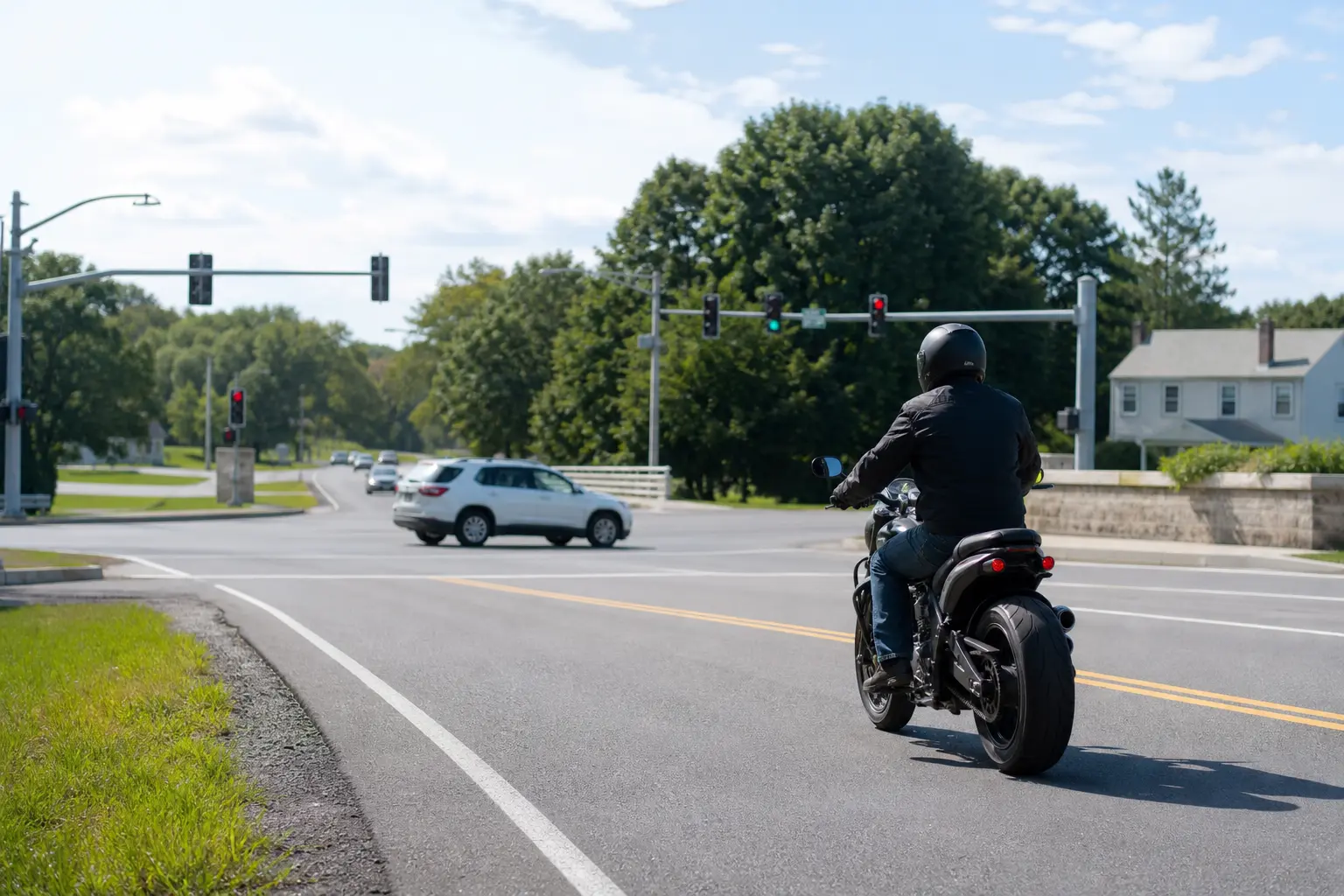
Motorcycle stopping distance begins before brake pressure
Motorcycle stopping distance is often discussed as though the measurement starts at the instant a rider applies a brake. That is only the final portion of the event. Before the motorcycle slows, the rider has to notice something, make sense of it, decide that it needs a response, and move to the controls. The motorcycle continues covering ground throughout that sequence.
That is why reaction time belongs in any useful discussion of motorcycle stopping distance. A rider might see a vehicle ahead change direction, a pedestrian step toward the roadway, or traffic compress around an intersection. If recognition comes late, even a well-executed stop begins with less road available.
A practical planning model is:
total stopping distance = perception distance + response distance + braking distance
The terms are not intended to produce a universal road-side calculation. They are a way to identify where a rider can gain safety margin. The first two components happen before meaningful deceleration; the last starts once the motorcycle is slowing. Conditions can change every component, including visibility, speed, road surface, rider readiness, traffic behavior, load, and the motorcycle's condition.
The Motorcycle Safety Foundation (MSF) links speed choice, braking, and intersection strategy in its Motorcycle Operator Manual. The MSF Basic RiderCourse uses structured exercises to help riders experience stopping-distance concepts. The takeaway is broader than brake application: a rider creates a better stopping opportunity by seeing sooner, entering hazards more slowly, and keeping usable space.
For motorcycle-specific operation, brake-system behavior, tire requirements, loading limits, and warnings, begin with the owner’s manual for the particular motorcycle. Training advice can support judgment, but it cannot replace manufacturer instructions or make a particular stop predictable on every surface.
| Part of the stop | What is occurring | What can reduce available margin | Rider planning focus |
|---|---|---|---|
| Perception distance | The rider detects a possible conflict and recognizes relevant clues. | Blocked view, glare, fatigue, distraction, visual clutter, and excessive speed. | Scan farther ahead and slow before visibility becomes limited. |
| Reaction distance | The rider decides on a response and begins operating the controls. | Surprise, uncertainty, unfamiliar controls, close following, and divided attention. | Keep a buffer and anticipate likely traffic movements. |
| Braking distance | The motorcycle is decelerating after braking starts. | Reduced grip, surface changes, speed, load, motorcycle condition, and abrupt inputs. | Use manufacturer-first guidance, smooth control use, and trained technique. |
Reaction time and braking distance are separate parts of a motorcycle stop
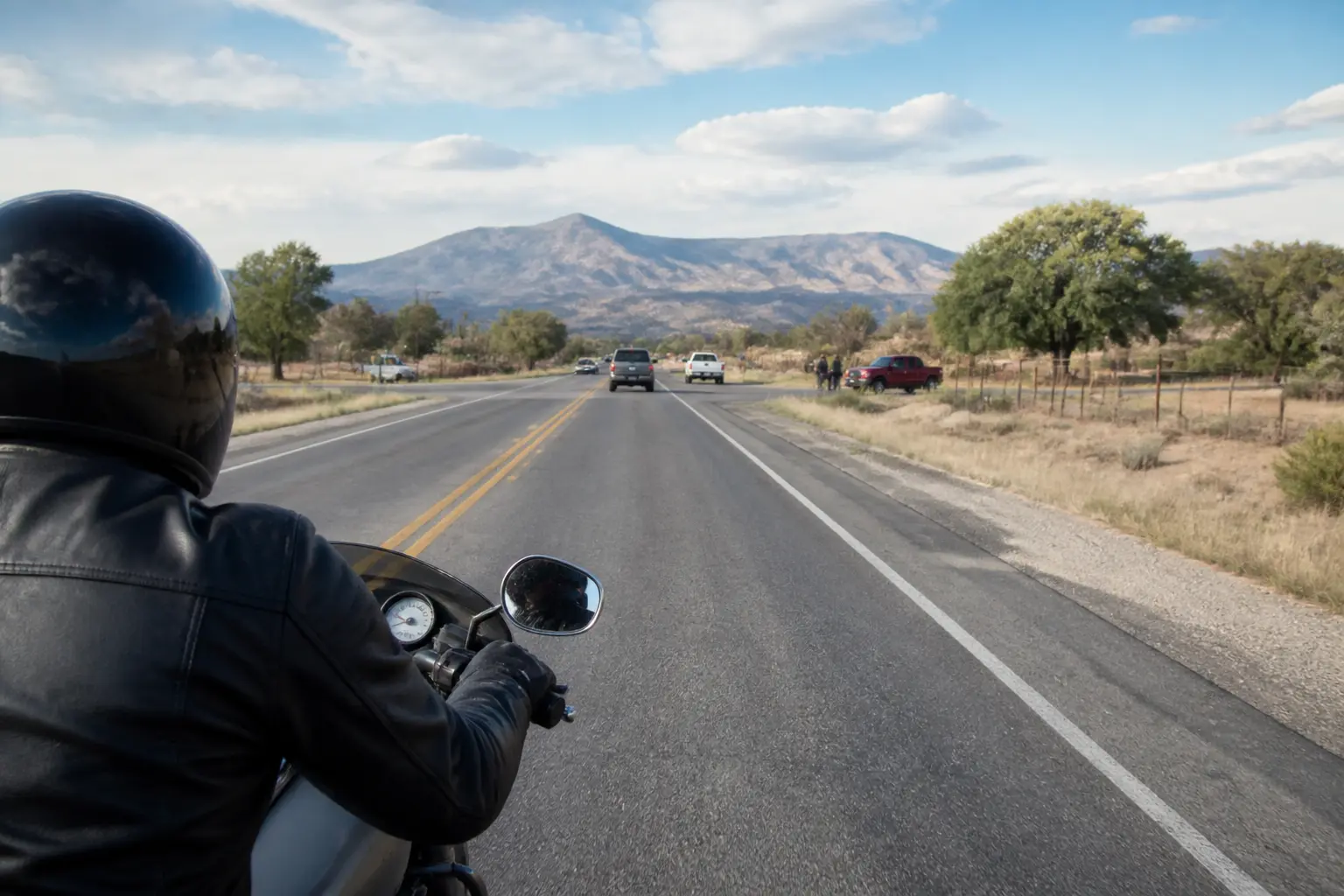
Reaction time is not a mechanical specification of the motorcycle. It is the human interval between recognizing that action is needed and beginning an effective response. It includes more than moving fingers toward a lever. A rider may first need to identify whether an object is actually entering the lane, whether the vehicle ahead is braking, whether there is a safe alternative path, or whether the apparent hazard is concealed by another vehicle.
During that interval, distance accumulates. At a greater speed, the motorcycle travels farther before the rider has even started braking. This is a strong reason not to treat an open lane as proof that a higher speed is low-risk. The important question is whether the rider can recognize what may develop within the visible roadway and still respond without resorting to a sudden, desperate input.
Perception: noticing the conflict early enough
Perception begins with attention. A rider who looks only at the rear of the closest vehicle may have little warning when traffic several vehicles ahead begins slowing. A rider who regularly scans the traffic stream, side streets, driveways, road edges, signal areas, and likely pedestrian zones can often recognize a developing issue earlier.
This is not a promise that every hazard can be seen in time. Some threats emerge with little warning. It is a reason to avoid spending all available attention on one point. The farther ahead a rider can understand traffic flow, the more likely the first response can be a calm speed adjustment rather than an abrupt attempt to recover lost space.
Vision quality matters as well. Rain, darkness, low sun, headlight glare, a dirty face shield, and a cluttered environment can all make a conflict harder to interpret. When the view is compromised, the conservative adjustment is to preserve more time and space. A rider cannot safely compensate for reduced information by assuming that braking performance will always make up the difference.
Response: choosing and initiating an action
Once a threat is recognized, the rider chooses a response. Braking may be appropriate, but not every situation has a single predetermined answer. Traffic position, roadway layout, surface condition, and the movement of surrounding vehicles affect what remains available.
Anticipation makes this stage less demanding. Approaching a driveway, for example, a rider can already expect that a vehicle may enter or exit. Approaching stopped traffic, the rider can expect sudden changes in pace. That expectation does not mean predicting exactly what will happen; it means arriving with a speed and following gap that allow a response if it does.
Alertness has a direct practical role. Fatigue, emotional stress, distraction, or unfamiliarity with a motorcycle can make a response less prompt or less organized. The safer decision may be to reduce pace, take a break, or choose a less demanding route rather than treating concentration as unlimited.
Braking: the deceleration phase
Braking distance is the part most riders picture first, but it is not independent of the earlier stages. It is influenced by speed and the grip available between tires and road, among other real-world conditions. Road contamination, wet pavement, loose material, uneven surfaces, grades, and a motorcycle’s load can all change the context in which a rider needs to slow.
The MSF manual emphasizes smooth, progressive control application rather than abrupt actions. That is useful guidance because sudden control use can add instability at exactly the moment a rider needs composure. Apply manufacturer instructions for the motorcycle’s controls and systems, and seek qualified training for practice rather than trying to establish a personal stopping-limit number in traffic.

Looking farther through the traffic environment can reveal changes before they become immediate braking demands.
Why a universal motorcycle stopping-distance chart is a poor riding plan
Stopping charts can appear authoritative because they show neat numbers. Yet every number rests on assumptions. The chart may presume a certain rider response, surface condition, speed, straight-line path, tire state, load, and braking behavior. On a public road, those details are rarely identical from one moment to the next.
A published number can therefore be misunderstood in two ways. First, a rider may assume it predicts the distance needed by their motorcycle in current conditions. Second, the number may become an invitation to use all available space: if a chart suggests a stop might fit within a certain distance, a rider may follow close enough that there is no reserve when one assumption changes.
A safer use of stopping-distance information is conceptual. It shows why extra speed, delayed recognition, and poor visibility compound each other. It should lead to a larger buffer, not to a promise that the same stopping result can be repeated on a wet road, around a bend, with a passenger, or behind unpredictable traffic.
The MSF Basic RiderCourse presents stopping-distance learning as part of formal riding instruction, not as an argument for internet-derived performance targets. A controlled training setting offers an appropriate place to observe how speed, space, and braking relate. It does not turn one exercise into a guarantee for an uncontrolled roadway.
Do not use a chart to decide that a blind approach, short following gap, or uncertain surface is acceptable. If the route ahead cannot be clearly assessed, the available stopping distance is not simply the visible length of pavement. It is the visible length minus the distance that may be needed to recognize and react to what is hidden.
Speed changes reaction distance before braking even begins
Speed affects every stage of a stop. At a higher pace, the motorcycle covers more pavement while the rider is looking, interpreting, deciding, and reaching the controls. The same speed also changes the demand placed on the eventual braking phase. The practical implication is simple: speed selection is a stopping-distance decision made before a hazard appears.
Consider the approach to a crest, a curve, a queue of vehicles, or a business driveway. The road may seem clear at the moment, but the view does not reveal the full risk. A speed that feels comfortable on an unobstructed section can become poorly matched to the distance available once sight lines shrink.
Use a forward-looking review rather than judging speed only by what is directly in front of the wheel:
- How far ahead can I actually see and interpret the lane?
- What could emerge from a driveway, side road, gap in traffic, or obscured area?
- Is glare, rain, darkness, road texture, or congestion reducing the quality of information?
- Is the road curving, dropping away, narrowing, or leading into a conflict area?
- Could I respond smoothly if traffic suddenly slows?
- Is my current pace leaving a reserve after perception and reaction time?
This approach does not require exact arithmetic while riding. It asks the rider to match pace to uncertainty. When visibility or predictability drops, reducing speed early leaves more time for a clear decision. Early speed reduction is usually less dramatic, easier for surrounding traffic to read, and more stable than waiting until a hazard is close.
Following space is your reaction-time reserve
A following gap is not unused road. It is working room for recognition, decision-making, braking, and unexpected change. The right amount is situational rather than fixed, because traffic pace, sight lines, weather, road grip, and rider condition are not constant.
The nearest vehicle should not become the limit of a rider’s vision. Look through and around it where possible. Brake lights farther up the traffic line, lane changes, slowing cross traffic, and movement at the roadside may reveal a problem before the vehicle immediately ahead reacts. If a large vehicle blocks the view completely, increase the space available rather than assuming it will provide enough warning.
Traffic often changes the gap without permission. A vehicle may merge into it, or a driver ahead may brake unexpectedly. Rebuilding space is normally a better objective than aggressively trying to preserve the previous position. The safety value of the buffer comes from having options, not from owning a particular piece of pavement.
Also consider the vehicle behind. A rider should not base every decision on a fear of being rear-ended, but it is sensible to remain aware of following traffic. Smooth early slowing may give another road user more notice than a late, sharp response. When stopped, road position and an awareness of escape space can matter if traffic behind is still approaching.
Intersection planning protects motorcycle braking distance
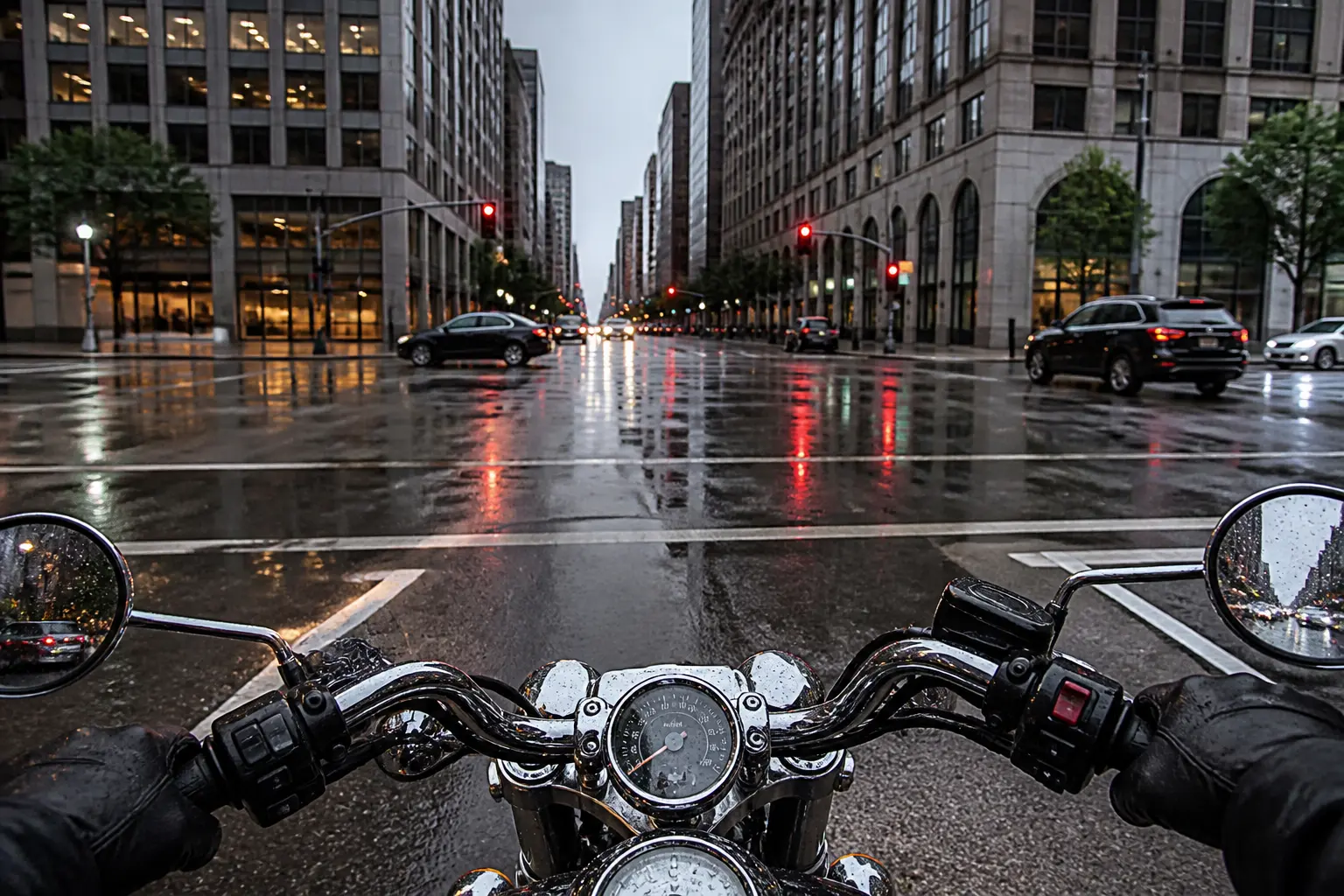
Intersections combine many reasons for stopping distance to become uncertain: turning traffic, crossing traffic, pedestrians, signals, queues, limited views, and road users who may not have noticed the motorcycle. They deserve a deliberate approach rather than a continuation of open-road speed.
The MSF Motorcycle Operator Manual connects intersection strategies with speed management and braking. Put that connection into practice before entering the intersection. Scan for vehicles waiting to turn, vehicles angled toward the lane, traffic hidden by larger vehicles, pedestrians near crossings, and gaps that may invite another driver to move.
A favorable signal is not a guarantee that the travel path is clear. Right of way matters, but it does not eliminate the need to observe what other people are doing. If sight lines are blocked or a driver’s intention is unclear, create time by rolling off earlier and approaching more conservatively.
Lane position should support visibility and options within applicable traffic rules and current conditions. Avoid treating position as a rigid formula. The useful goal is to see, be seen where practical, and avoid placing the motorcycle where a single vehicle blocks every possible response. If no meaningful escape area exists, that is another reason to reduce speed before the conflict point.
Rain, reflections, traffic movement, and restricted sight lines can all justify preserving additional room before an intersection.
Braking practice should build judgment, not false confidence
Practice is valuable when it improves smoothness, awareness, and the ability to recognize when a situation is deteriorating. It becomes counterproductive when it is framed as a contest to discover the shortest possible stop. Public roads, changing surfaces, and real traffic are not suitable places to test limits.
The MSF Basic RiderCourse offers a formal training route that includes exercises related to stopping distance. Riders seeking improvement should use qualified instruction and an appropriate controlled setting. Follow the owner’s manual for the motorcycle and its systems, particularly when questions involve warnings, controls, tires, load, or brake-related behavior.
Useful practice habits include:
- Start only when the riding area and conditions are appropriate for the training activity.
- Look ahead before beginning the response rather than becoming fixated on the controls.
- Use smooth, deliberate inputs consistent with training and motorcycle documentation.
- Notice how speed and surface changes alter the amount of room that feels available.
- Leave ample runout and avoid treating one result as a road-going benchmark.
- Stop the session if the motorcycle, controls, tires, or surface raise a concern.
Do not diagnose an unusual brake feel, warning indication, or handling change through repeated testing. Consult the manufacturer’s documentation and an appropriately qualified professional before resuming normal riding if a safety-relevant concern is unresolved.
Motorcycle stopping distance checklist: protect time and space
Use this checklist to make stopping margin part of ordinary ride planning. It is not a substitute for the motorcycle’s manual, professional training, local law, or real-time judgment.
Before departure
- Review the motorcycle manufacturer’s warnings and operating guidance when anything about the motorcycle or its setup has changed.
- Confirm that you are rested enough to maintain active visual attention.
- Check that eye protection is clean and suitable for the expected light and weather.
- Consider weather, road condition, passenger or luggage changes, traffic density, and unfamiliar routes.
- Decide to reduce pace early where sight lines are likely to be restricted.
While riding
- Scan beyond the nearest vehicle and look for traffic flow changes farther ahead.
- Keep a following buffer that grows when grip, light, visibility, or traffic behavior worsens.
- Expect movement at side roads, driveways, crossings, and gaps in queues.
- Ease off early when approaching curves, crests, congestion, or uncertain pavement.
- Preserve options instead of relying on a last-second braking response.
- Re-establish space after another vehicle enters the gap.
At intersections and other conflict areas
- Identify what is blocking the view and what might emerge from it.
- Look for turning vehicles, rolling wheels, pedestrians, and changing traffic gaps.
- Treat a green signal as permission to proceed with observation, not proof that others will yield.
- Choose an approach speed that permits recognition and a controlled response.
- Avoid abrupt control actions caused by entering the conflict area too quickly.
After a close call, review the moment without trying to prove that one perfect maneuver would have solved everything. Ask when the threat first became visible, what delayed recognition, whether speed matched the view, and whether following space was sufficient. The best lesson is often an earlier adjustment: a slower approach, more scanning, a larger buffer, or a break when attention is fading.
For a broader ownership routine that supports road readiness, see the Motorcycle Maintenance Guide. It can help organize model-first inspections, service records, and questions that should be resolved before a ride.
How Vojo Helps
Create a simple margin-review workflow in Vojo after rides that include difficult traffic, poor visibility, or a close call. Open the motorcycle’s profile in the motorcycle maintenance tracker, add a dated note describing the conditions and the earlier decision that would have created more room, then flag any unresolved bike-related concern for follow-up against the owner’s manual. Before the next comparable ride, review that note alongside your maintenance reminders so route, weather, alertness, and motorcycle readiness receive attention together. This keeps the lesson useful without using an app as a substitute for manufacturer guidance or qualified inspection.
Quick answers
Frequently asked questions
What is included in motorcycle stopping distance?
A practical model includes the distance traveled while noticing a hazard, the distance covered while deciding and starting a response, and the distance traveled while braking slows the motorcycle. The first two portions occur before meaningful deceleration begins.
Why is reaction time important for motorcycle braking distance?
The motorcycle continues moving while the rider recognizes a threat and initiates a response. At greater speed, more road is covered during that interval, leaving less margin for the braking phase.
Can one motorcycle stopping-distance chart apply to every ride?
No. A chart depends on assumptions about conditions and rider response. Surface, visibility, traffic, motorcycle condition, load, speed, and other factors can differ substantially, so a chart should not be treated as a personal guarantee.
How should speed affect a rider's stopping plan?
Choose speed according to how far ahead you can see and understand, not merely how open the immediate lane appears. Slow earlier when a curve, crest, intersection, weather, traffic, or blocked view reduces the time available to respond.
How can I leave better following space on a motorcycle?
Maintain a buffer that accounts for speed, road conditions, visibility, traffic behavior, and your alertness. Look beyond the closest vehicle when possible, and rebuild the gap calmly if traffic moves into it.
Where can I improve my braking skills safely?
Use qualified rider training and an appropriate controlled environment. The MSF Basic RiderCourse describes structured exercises related to stopping distance; follow the owner’s manual for motorcycle-specific operation and avoid limit-testing in public traffic.