
Motorcycle Crosswind Riding: Build a Lane-Position Plan for Gusts
Learn how to assess motorcycle crosswinds, protect lane margins, anticipate gusts, choose speed, manage traffic exposure, and decide when to postpone.
Fact-checked against cited official documentation
Reviewed against Fact-checked against Motorcycle Safety Foundation riding tips and its 2023 guidance on constant and gusty side winds, lane position, and windward space..
Last updated October 31, 2026
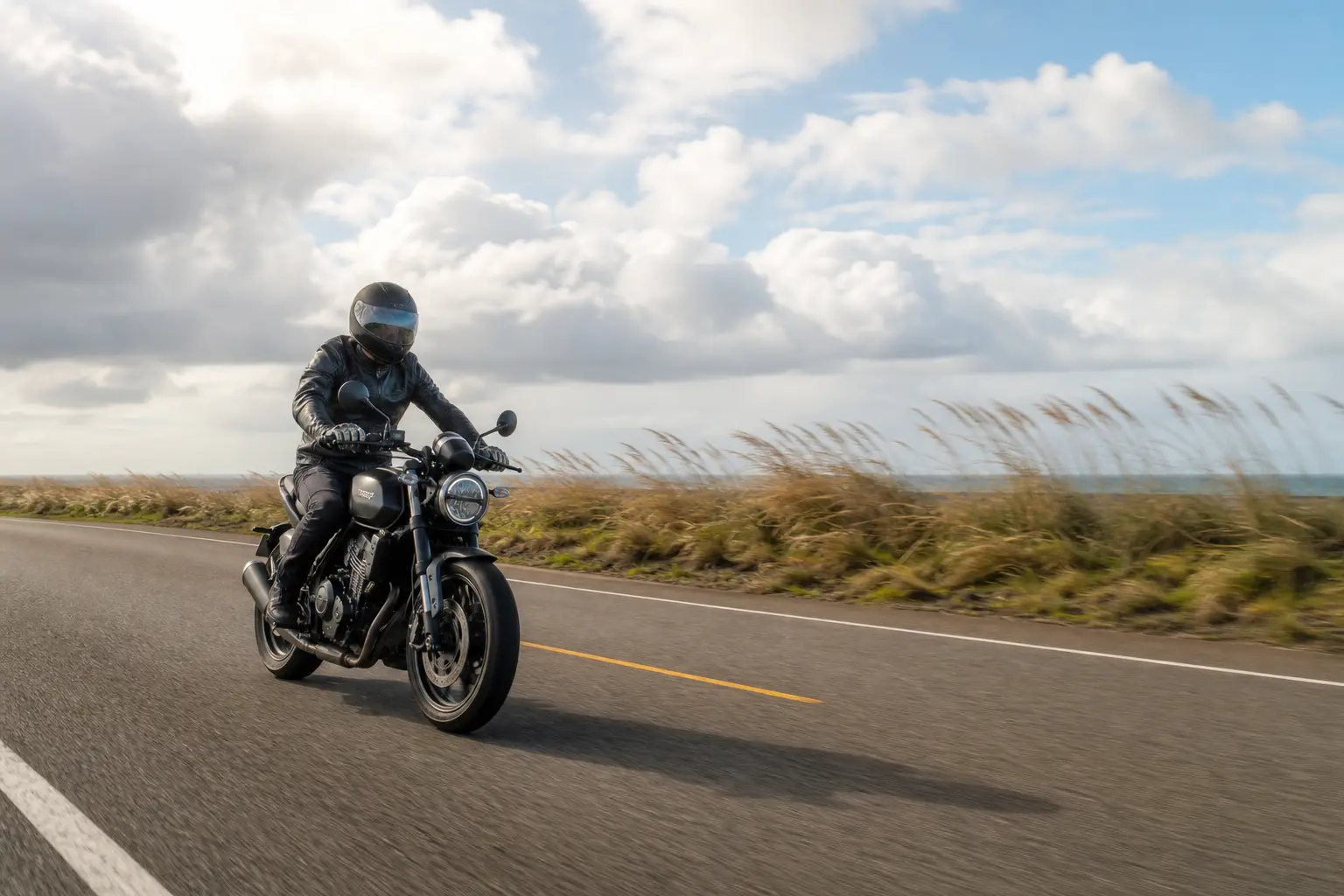
Strong wind changes the space around a motorcycle faster than a rider may expect. A steady crosswind can require a continuous correction. A gust can arrive when a rider passes a truck, leaves a line of trees, crosses an opening, or reaches the end of a bridge. The danger is not simply that the motorcycle leans. The larger problem is that a sudden sideways push can use up lane space, reduce attention, and bring the rider closer to traffic or a road edge.
A good crosswind plan therefore begins before the motorcycle moves. It asks whether the ride is necessary, what the route exposes you to, where you can pause, and how much room you can preserve if the wind changes. It also treats every rider, motorcycle, load, and weather situation as different. Start with the owner’s manual and the manufacturer’s guidance for your specific motorcycle, including any instructions about luggage, passenger loading, tire condition, and operation in adverse weather. If the manual gives a more conservative limit or warning, follow it.
The Motorcycle Safety Foundation identifies wind as one of the special situations riders should understand and places safe riding in the context of awareness, changing conditions, and personal limits (MSF riding tips). Its guidance on constant and gusty side winds also describes leaning to maintain position and leaving room on the windward side of the lane for movement (MSF wind guidance). Those ideas are useful, but they work best as part of a complete decision framework rather than as a single instruction to “lean into the wind.”
What Makes Crosswinds Difficult on a Motorcycle?
A crosswind applies force from the side, while the motorcycle is trying to travel along its intended path. The rider’s task is to keep the motorcycle on that path without making abrupt steering, throttle, or braking inputs. The required correction can change when the surrounding landscape changes.
A wind that feels manageable on an exposed road may behave differently beside a high-sided vehicle. A truck can block or redirect airflow, then the motorcycle may encounter a different force after moving beyond it. Buildings, sound barriers, wooded sections, cuttings, and open fields can create transitions between sheltered and exposed conditions. Bridges and elevated roadways may offer fewer places to stop and may leave less visual protection from the wind.
The motorcycle’s configuration matters too. A tall touring screen, top case, side luggage, passenger, or bulky load can alter how the bike feels in side gusts. That does not mean any particular accessory automatically makes a motorcycle unsafe. It means the rider should use the motorcycle manufacturer’s loading instructions and recognize that a changed profile may change the effort required to hold a line. A recently loaded motorcycle deserves a cautious test in mild conditions before a windy trip.
Wind also competes for attention. If you are watching the road edge, nearby vehicles, mirrors, and the movement of your own motorcycle all at once, your mental margin may shrink. Fatigue, cold, rain, glare, unfamiliar roads, and a passenger can add further demands. The right response is not to prove that you can tolerate the conditions. It is to create more time and space—or choose not to ride.
Build a Go-or-Wait Decision Before Departure
There is no universal wind speed that makes every motorcycle ride safe or unsafe. Local exposure, gust variability, road design, traffic, motorcycle setup, rider experience, and escape options all matter. A forecast number can be useful context, but it cannot replace an on-site decision.
Use a conservative decision in three stages:
- Check the conditions. Review the forecast for sustained wind, gusts, direction, rain, dust, debris, warnings, and the expected timing of changes. Compare it with the route rather than looking only at the starting point.
- Check the consequences. Identify exposed bridges, open agricultural stretches, elevated roads, construction areas, high-speed traffic, and sections with narrow shoulders or few safe stopping places.
- Check your margin. Consider your experience in wind, current energy and concentration, motorcycle loading, passenger needs, and whether you can turn around without pressure.
A ride is more defensible when the wind is predictable, the route offers frequent safe pauses, traffic is light, the motorcycle is correctly loaded, and the rider has plenty of experience in similar conditions. A ride deserves postponement when gusts are abrupt or worsening, warnings are active, debris is present, visibility is poor, the route is exposed for a long distance, or you already feel tense before leaving.
Do not let a schedule, group pace, event, reservation, or sunk fuel cost make the decision for you. A delayed ride is inconvenient. A rider who feels pushed into conditions beyond their skill may make rushed decisions for the rest of the route.
The same test applies after departure. If the wind becomes more forceful, the motorcycle requires constant large corrections, you are repeatedly pushed toward a lane boundary, or you are losing awareness of other hazards, take the next safe opportunity to stop and reassess. Pull off only where the location is legal, stable, visible, and away from moving traffic. Do not stop on a narrow shoulder merely to escape discomfort if doing so creates another hazard.
Choose Lane Position for Movement, Not Perfection
Lane position is a margin decision. You are not trying to find a magical “correct” track that eliminates wind. You are trying to keep enough usable space between the motorcycle and hazards if a gust moves you.
The MSF’s wind guidance emphasizes leaving room on the windward side of the lane. In practical terms, avoid placing yourself so close to the side from which the wind is arriving that a sideways push immediately consumes your margin. At the same time, do not drift toward another hazard simply because the opposite side appears more protected. Lane position must account for traffic, pavement condition, road edge, visibility, and an escape route.
Think in terms of three questions:
- Where is the wind coming from? Look for blowing vegetation, dust, spray, flags, and the movement of taller vehicles, but remember that these signs may be delayed or misleading.
- What happens if a gust moves me? Identify the nearest vehicle, barrier, opposing traffic, rough edge, shoulder drop-off, or debris path.
- Where can I go if the situation worsens? Preserve a visible, usable area rather than committing yourself beside a hazard.
A lane position that works on a quiet, open road may not work beside a semi-truck or in a lane narrowed by construction. Reassess after every major change in road environment. Keep your path predictable; sudden lateral moves can surprise drivers who are already dealing with the same wind.
Avoid hugging the road edge as a default. Edges may contain loose material, uneven pavement, standing water, drainage grates, or a sharp drop-off. Avoid hugging the centerline as a default as well, especially when opposing traffic, limited sight distance, or a gust could reduce your margin. The safest position is the one that balances windward space, visibility, traction, and escape room for the current section of road.
Manage Speed and Inputs Conservatively
Speed affects how much time you have to notice a change and how much distance you cover while correcting. It also affects how quickly a situation develops around traffic. In crosswinds, choose a speed that leaves you comfortable making a smooth correction while maintaining a lawful, predictable pace appropriate to visibility, pavement, traffic, and the motorcycle’s limits.
Do not use a fixed speed reduction as a universal rule. The correct choice depends on conditions and the owner’s manual. Instead, ask whether your current speed gives you enough time to recognize a gust, keep your lane, create space, and respond to another road user. If the answer is no, reduce speed smoothly when conditions permit. If the road remains too exposed or unstable, leave it at the next safe exit or stop.
Keep your control inputs measured. A rider who braces rigidly can make the motorcycle feel more unsettled, while a rider who makes an abrupt steering correction can create a second problem. Maintain a balanced posture, look well ahead, and keep your attention on the path you want to travel. The objective is a controlled correction, not a contest with each gust.
Do not accelerate to “get through” a gusty section or brake sharply because the motorcycle moves slightly. Both reactions can reduce your options. Smoothness matters because wind is already changing the motorcycle’s path; adding abrupt inputs can make it harder to judge what the wind is doing.
If a gust pushes you, first protect the lane and avoid overcorrecting. Once stable, reassess your speed and lane margin. If you are repeatedly displaced, treat that pattern as information that the conditions may exceed your acceptable margin.
Anticipate Wind Transitions Along the Route
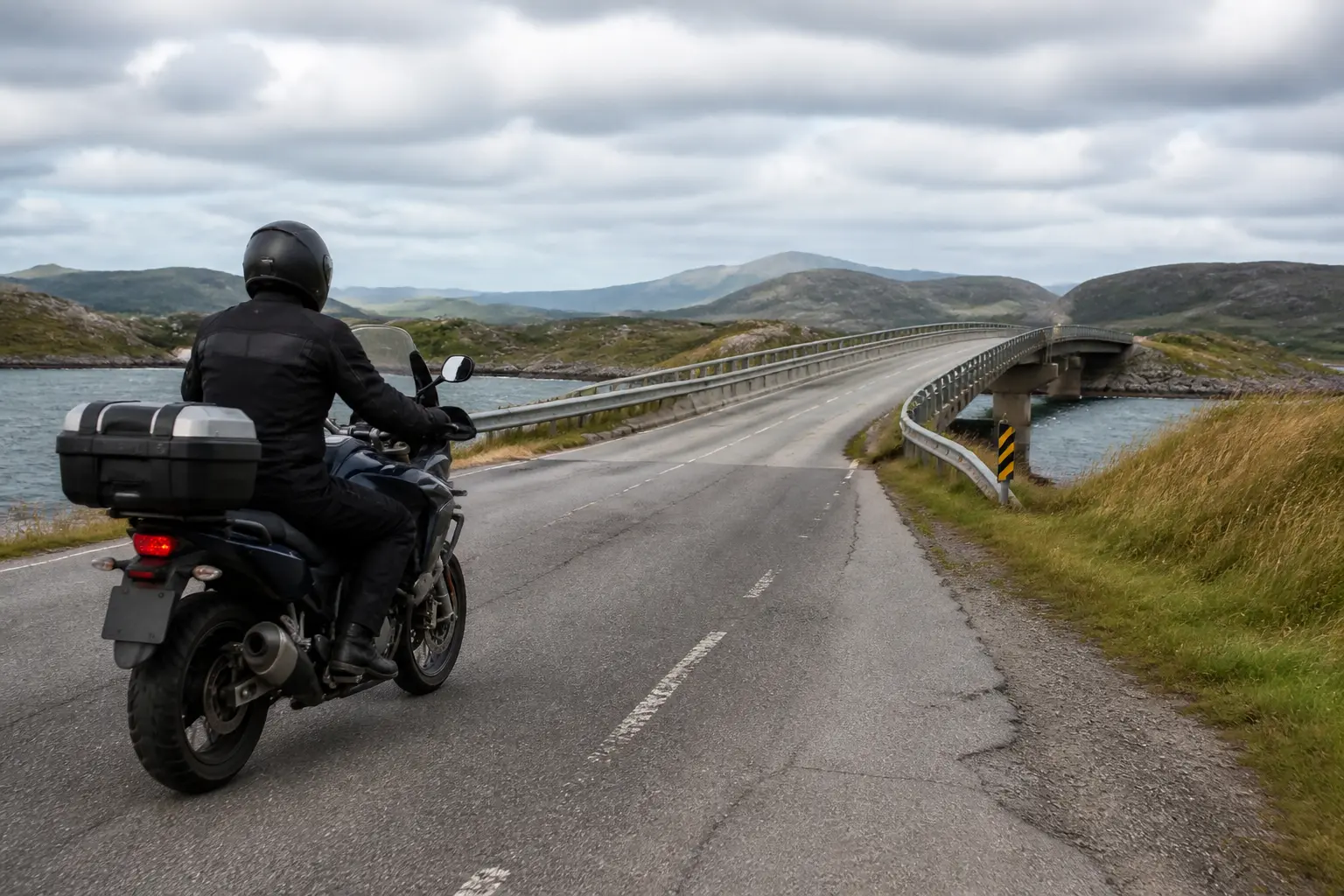
Crosswind planning improves when you identify where airflow may change. Before departure, examine the route for:
- Open fields, coastlines, ridgelines, and wide valleys.
- Bridges, elevated sections, and exposed ramps.
- Gaps between buildings, tree lines, or sound barriers.
- Construction zones with temporary barriers or narrowed lanes.
- Large vehicles, especially where you may travel alongside them.
- Areas where dust, leaves, branches, or other debris could enter the road.
- Safe fuel, rest, or turnaround locations before and after exposed sections.
Approach a transition with more margin rather than waiting for the motorcycle to move. Scan beyond the immediate shelter and observe the likely wind direction. Look for vehicles being nudged within their lanes, not as a precise measurement but as a warning that the airflow is active. Give yourself time to adjust speed and position before the opening.
After leaving shelter, expect the wind to remain different for a while. A tree line may block air in one section and create a sudden exposure at its end. A building may redirect air rather than eliminate it. The absence of visible movement does not prove that the road is calm.
Bridges deserve special attention because they may combine exposure, traffic, limited stopping choices, and changing surface conditions. Enter them with a plan already in mind. Do not make a casual lane change or stop simply because the wind feels different. If conditions are beyond your comfort or skill, continue only to a clearly safe place rather than stopping where other road users cannot see you early.
Reduce Exposure Around Large Vehicles
Large vehicles can create a difficult combination of blocked visibility, turbulence, and wind transition. The safest strategy is not to remain beside one unnecessarily. Avoid lingering in a vehicle’s blind area, and do not assume that a driver has seen you because you can see the vehicle’s mirrors.
If you need to pass, make the decision early and only where legal, visible, and appropriate for the road. Preserve a safe path and avoid turning a pass into a race against a gust. If the conditions make passing feel rushed, increase following space and wait for a better opportunity or leave the roadway when practical.
When a large vehicle approaches in the opposite direction, expect the airflow around both vehicles to change. Keep your lane position predictable and preserve room for movement. Do not move toward traffic to create wind space; your escape margin must account for vehicles in both directions.
Traffic density changes the go-or-wait decision. A windy road with light traffic may offer more choices than the same road surrounded by fast-moving vehicles. If you cannot maintain a comfortable buffer, reconsider the route or stop at a safe location.
Account for the Motorcycle, Load, and Passenger
Before a windy ride, confirm that the motorcycle is prepared according to the manufacturer’s instructions. Check that luggage and accessories are secured, that the load is within the specified limits, and that nothing can move, open, or interfere with controls. Use the model’s guidance for tire condition, pressures, suspension settings, and passenger or cargo limits; do not substitute a generic internet recommendation for the manual.
A passenger should know that wind may make the ride feel different and that communication must remain calm. Agree on the route, planned stops, and what either person will do if the conditions become uncomfortable. A passenger should not make sudden movements, and the rider should not continue merely to avoid disappointing the passenger.
New luggage, a different screen, a top case, or a passenger changes the day’s baseline. If possible, become familiar with that setup in moderate conditions before choosing an exposed, high-wind route. If you discover that the motorcycle feels unfamiliar, lower the demands of the ride or postpone it.
A Practical Crosswind Riding Checklist
Before leaving
- Read the owner’s manual for loading, passenger, tire, and operating guidance.
- Check the forecast for sustained wind, gusts, rain, visibility, and warnings.
- Mark exposed route sections and safe stopping or turnaround points.
- Secure luggage and confirm that the motorcycle is loaded within manufacturer limits.
- Inspect the motorcycle using the manufacturer’s recommended pre-ride checks.
- Choose clothing and eye protection that allow clear vision and comfortable control.
- Tell a passenger the route, stop plan, and no-pressure rule.
- Decide what conditions will cause you to postpone or turn back.
At the first exposed section
- Reduce demands before entering the opening, not after a gust surprises you.
- Identify the wind direction and preserve windward lane space.
- Look beyond nearby shelter for the next transition.
- Keep your path smooth and predictable.
- Reassess traffic, road edge, pavement, and escape space.
During the ride
- Use a speed that leaves time and space for controlled decisions.
- Avoid abrupt steering, braking, or acceleration.
- Do not linger alongside large vehicles.
- Watch for debris, dust, spray, and changing visibility.
- Recheck lane position after bridges, barriers, tree lines, and buildings.
- Treat repeated lane displacement or rising tension as a reason to stop and reassess.
When conditions exceed your margin
- Do not wait for the motorcycle to become difficult to control.
- Continue only to a legal, visible, stable stopping place if needed.
- Choose a safer route, wait for conditions to improve, or end the ride.
- Contact your passenger or group without allowing their schedule to pressure you.
Crosswind Planning at a Glance
| Situation | Main risk | Conservative plan |
|---|---|---|
| Steady side wind on an open road | Continuous drift or fatigue | Preserve windward lane space, use smooth corrections, and reassess often |
| Sudden gust after trees or buildings | Abrupt lateral movement | Slow and stabilize before the transition; keep an escape area visible |
| Exposed bridge or elevated roadway | Few stopping choices and strong exposure | Enter with a plan, avoid unnecessary lane changes, and continue to a safe exit if needed |
| Passing or meeting a large vehicle | Turbulence, blocked sightlines, and wind changes | Do not linger beside it; pass only when legal, visible, and unhurried |
| Motorcycle with new luggage or passenger | Changed feel and larger profile | Follow manufacturer limits and test the setup in easier conditions first |
| Worsening gusts, debris, or poor visibility | Margin disappearing faster than decisions can be made | Postpone, reroute, or stop at a safe location rather than pushing on |
When Postponing Is the Safer Skill
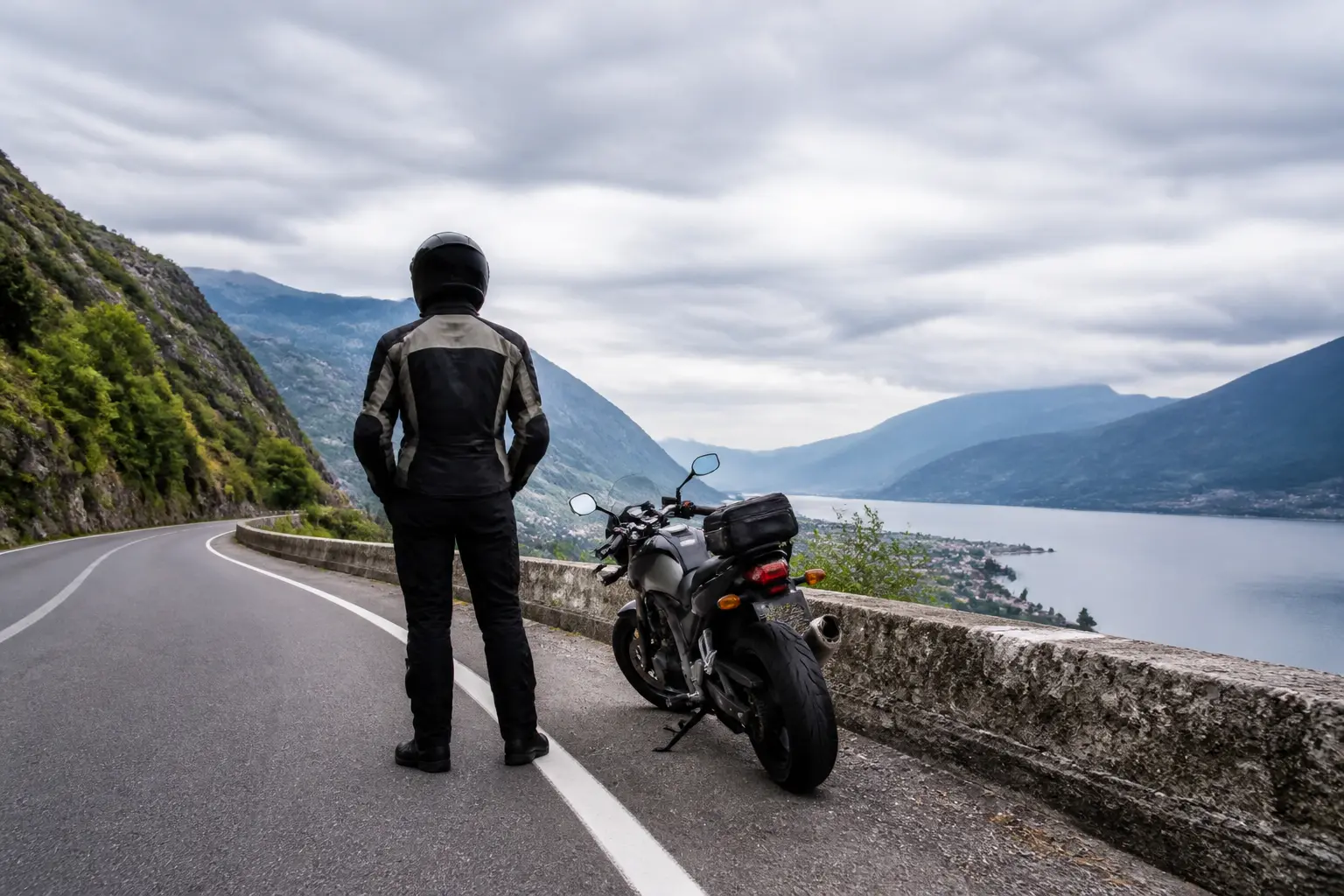
Riders sometimes treat postponement as a failure of confidence. In reality, recognizing an unfavorable combination of wind, traffic, route exposure, motorcycle setup, and personal readiness is a useful riding skill. The strongest plan is the one that preserves choices.
Postpone when you cannot explain how you will handle the most exposed parts of the route. Postpone when the forecast is deteriorating and there are few places to wait. Postpone when you are carrying an unfamiliar load, riding with a passenger who is not comfortable, or starting tired and distracted. Postpone when the route requires a speed or traffic environment that leaves no room for conservative decisions.
You can also change the objective. Take a shorter local ride in milder conditions, choose roads with more shelter and lower traffic, leave later, or use another form of transport. A route plan should serve the rider—not force the rider to defend the route plan.
Crosswinds cannot be controlled, but exposure can often be reduced. The rider can select a different departure time, avoid an exposed section, increase margins, stop earlier, or turn around. Those choices are available only while the rider is still thinking ahead.
For broader preparation, use this Motorcycle Maintenance Guide to keep routine motorcycle checks organized, while relying on the manufacturer’s documentation for model-specific requirements. Maintenance does not remove wind risk, but an unfamiliar or poorly prepared motorcycle leaves less attention available for changing conditions.
How Vojo Helps
A practical Vojo workflow is to create a “windy route” entry before departure, record the planned exposed sections and safe stopping points, then attach a short pre-ride checklist covering the owner’s manual, load, passenger briefing, forecast, and go/no-go decision. After the ride, log what the wind actually did—such as a difficult bridge approach or a safer alternate road—so the next plan is based on your experience rather than memory alone. You can keep that record in the Motorcycle Service History and review it before repeating the route.
Quick answers
Frequently asked questions
Should I lean into a motorcycle crosswind?
A rider may need to lean or make a controlled correction to maintain the intended path, but “lean into it” is not a complete safety plan. Preserve windward lane space, keep inputs smooth, account for traffic and road edges, and follow the motorcycle manufacturer’s guidance. If the correction becomes frequent or large, reduce exposure or stop safely.
What lane position is safest in gusty wind?
There is no single lane position that fits every road. Leave usable space on the windward side, as described in MSF guidance, while also considering traffic, the road edge, pavement, visibility, and an escape route. Reassess after bridges, barriers, tree lines, buildings, and large vehicles.
Is there a maximum wind speed for motorcycle riding?
There is no universal number that can determine safety for every motorcycle and rider. Gust direction, route exposure, traffic, motorcycle loading, experience, and stopping options all matter. Use forecasts as context, follow manufacturer guidance, and postpone when the conditions leave too little margin.
How should I ride near trucks in strong wind?
Avoid lingering beside large vehicles because visibility and airflow can change. Keep your path predictable and pass only when legal, visible, and unhurried. If passing feels rushed or traffic leaves no buffer, wait, increase space, choose another route, or stop safely.
When should I turn around because of wind?
Turn around or end the ride when gusts repeatedly move you toward a lane boundary, debris or visibility becomes a concern, traffic removes your escape space, or your concentration and confidence are declining. Choose a legal, visible, stable place to stop and reassess rather than stopping in a hazardous shoulder.
Does luggage make crosswind riding harder?
Luggage can change the motorcycle’s profile and handling, especially when combined with a passenger or an incorrectly secured load. Follow the owner’s manual for load limits, placement, securement, and any setup requirements. Become familiar with a changed setup in easier conditions before taking it onto an exposed route.