
Returning to Motorcycling After Years Away: A Low-Pressure Skills, Inspection, and Training Reset
Returning to motorcycle riding after years away? Use this low-pressure checklist to refresh your bike, gear, judgment, skills, route planning, and training.
Fact-checked against cited official documentation
Reviewed against MSF guidance on returning-rider drills, owner-manual review, pre-ride checks, refresher training, risk margins, and Honda’s official owner-manual lookup..
Last updated October 12, 2026
Motorcycling can feel deeply familiar and surprisingly unfamiliar at the same time. You may remember the sound of the engine, the sequence of clutch, throttle, and brakes, and the satisfaction of a clean corner. But time away can affect physical comfort, visual scanning, traffic judgment, and how automatically you operate the controls.
That is not a reason to give up riding. It is a reason to return deliberately.
The safest return is not a test of whether you can still ride exactly as you did before. It is a reset: confirm that the motorcycle is fit to ride, make sure your protective equipment still fits and functions, restore control familiarity in a low-pressure setting, and add formal coaching before your confidence starts making decisions for you.
The Motorcycle Safety Foundation (MSF) specifically includes returning motorcyclists in its self-directed practice material and describes its drills as tools for skill refinement. It also recommends reviewing your owner’s manual, conducting a pre-ride check, taking refresher training, and practicing key techniques before relying on them in traffic. MSF Do It Yourself Practice Drills and If You Ride a Motorcycle are good starting points.
This guide is for a previously licensed rider returning after months, years, or decades. It is not a substitute for your motorcycle’s owner’s manual, local licensing requirements, or hands-on instruction. If anything about the motorcycle’s condition, your ability to operate it, or your readiness feels uncertain, pause the plan and use qualified service or formal rider training.
Start With a Reset Mindset, Not a Resume
Past riding experience is valuable, but it is not a current skill check. Treat it as context—not proof that you are ready for a fast road, a passenger, a group ride, unfamiliar terrain, or poor weather.
A productive reset starts by separating three questions:
- Is the motorcycle ready? A bike that has sat unused may need more than fuel and a charged battery. Its exact inspection and maintenance requirements come from its owner’s manual and service history.
- Am I ready to operate this motorcycle today? That includes comfort with weight, seat height, reach to controls, vision, strength, balance, reaction time, and mental focus.
- Is today’s environment appropriate for a first return ride? A sunny weekday route with familiar roads is a very different proposition from dense traffic, rain, darkness, strong wind, passengers, or a fast group.
This framework prevents a common trap: treating a successful engine start as evidence that the whole return-to-riding project is complete. It is only one small piece of the decision.
Give yourself explicit permission to make the first session short, uneventful, and even slightly boring. The goal is not to prove anything. The goal is to finish with useful information: what felt natural, what required concentration, what needs more practice, and whether the machine needs attention before the next session.
| Return-to-riding area | Productive first goal | Avoid at first | Safer next step if uncertain |
|---|---|---|---|
| Motorcycle condition | Confirm the manual-required pre-ride items and service status | Assuming a stored bike is ready because it starts | Arrange an inspection or service based on the model manual |
| Controls and ergonomics | Identify every control without rushing | Learning unfamiliar switches in traffic | Practice while parked, then in a controlled area |
| Low-speed control | Regain smooth starts, stops, and turns | Tight turns with spectators, traffic, or time pressure | Use a large, empty practice space or a coached course |
| Braking and avoidance | Rebuild progressive, deliberate control use | Testing limits on public roads | Follow a formal training plan or MSF practice material |
| Street riding | Complete a short, simple route with exit options | Highways, complicated interchanges, passengers, or group pace | Repeat the route until workload is lower |
| Risk judgment | Notice fatigue, anxiety, and changing conditions early | Riding to “push through” a bad feeling | Stop, reassess, and choose another day or training session |
The table is deliberately conservative. Returning riders often regain basic motion quickly; sound decision-making under traffic pressure takes more deliberate repetition.
Reacquaint Yourself With the Exact Motorcycle
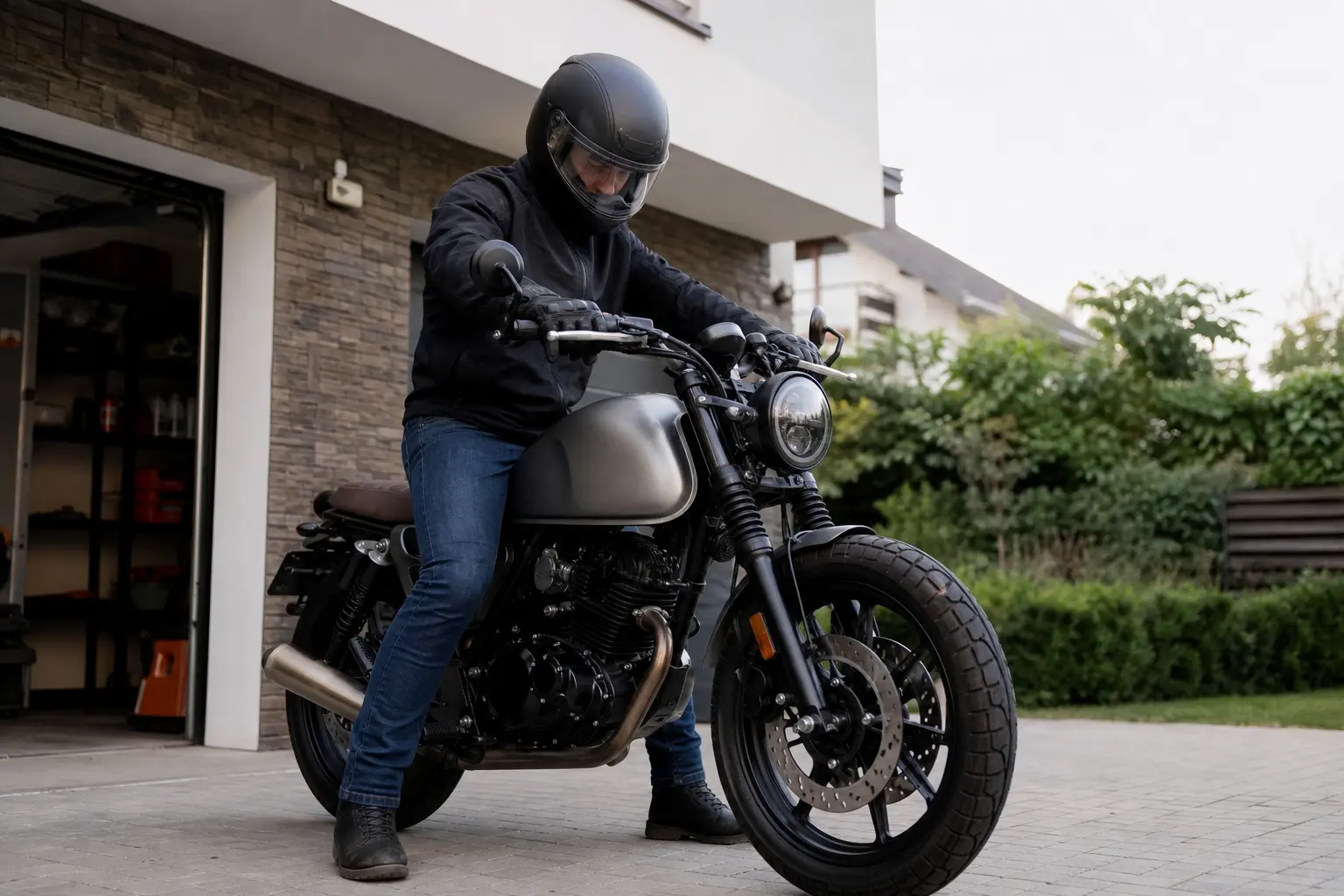
Do not rely only on memory from a previous motorcycle. Even a familiar model can feel different after time away, and any motorcycle may have controls, settings, warning indicators, fuel requirements, load limits, tire specifications, and maintenance intervals that matter for safe use.
Start with the owner’s manual for the exact year and model. If the paper copy is missing, seek an official manufacturer copy. For example, Honda provides an official owner’s-manual lookup for its powersports vehicles at Honda Owners Manuals. Your own manufacturer’s material remains the controlling source for your bike.
Use the manual to refresh yourself on:
- Required tire specifications and the manufacturer’s stated cold-pressure information.
- Control locations, instrument meanings, warning lights, and starting procedure.
- Approved fuel, fluids, and any storage-related instructions.
- The pre-ride inspection list.
- Passenger and cargo limits, if applicable.
- The maintenance schedule and any time-based service items.
- Model-specific warnings concerning brakes, drivetrain, tires, stands, and electronic systems.
Then sit on the motorcycle while it is parked and stable. Without starting it, locate and name each important control: ignition, engine stop switch, turn-signal switch, horn, lights, clutch, throttle, front brake, rear brake, shifter, and any riding-mode or traction-control controls fitted to the bike. Confirm you can reach them while keeping a natural, balanced posture.
This is not trivial rehearsal. A returning rider may understand a control intellectually yet hesitate when a situation develops quickly. Familiarity comes from calm repetition before consequences are attached.
If you changed motorcycles since you last rode, be especially cautious about differences in mass, steering response, braking feel, clutch engagement, seat height, engine response, and technology. A newer motorcycle may add useful systems, but it does not eliminate the need for a calm rider, space, grip, and good judgment. Do not assume a feature works the same way as it did on another machine; read the model-specific manual.
Give the Motorcycle a Manual-First Return-to-Service Check
A bike that was parked for a long time deserves a deeper look than a quick walk-around. Storage duration, storage conditions, prior maintenance, modifications, and the type of motorcycle all change what is appropriate. That is why generic internet intervals and universal “wake it up” recipes are poor substitutes for the manufacturer’s instructions.
Begin with documentation. Find the owner’s manual, service records, recall information where applicable, and notes on what happened before the motorcycle was parked. A lapse in records does not automatically mean the bike is unsafe, but it does mean you should avoid filling gaps with guesses.
Next, follow your exact manual’s pre-ride inspection requirements. MSF recommends studying the owner’s manual and making a pre-ride check a habit; it also advises riders to develop techniques before venturing into traffic. If You Ride a Motorcycle
At a high level, the return-to-service review should cover visible condition and normal operation of items your manual identifies, such as:
- Tires and wheels, including visible damage, unusual wear, and pressure checked according to the manual.
- Brake controls and brake-system condition, including any concerning feel, leaks, damage, or warnings.
- Throttle movement and the general condition of levers, pedals, cables, and controls.
- Headlight, tail/brake light, turn signals, horn, and instrument warnings.
- Fluid levels and any signs of leakage, using the model-specific conditions stated in the manual.
- Drive chain, belt, or shaft-drive related checks required by the manufacturer.
- Stands, fasteners, bodywork, luggage mounts, and other visible components that could affect operation.
- Battery, charging, and starting behavior, without dismissing persistent warnings or abnormal operation.
Do not turn this into an improvised repair project. If you find leaking fluid, damaged tires or wheels, impaired braking, a throttle that does not operate normally, an unresolved warning indicator, loose or damaged components, or any issue you cannot confidently evaluate, do not use the ride as a diagnostic test. Arrange qualified inspection or service.
A good rule for a returning rider is simple: uncertainty is a reason to slow down the process, not to speed it up.
For a broader model-first framework, use the Motorcycle Maintenance Guide alongside the requirements in your own manual. It can help you organize questions and records, but it should never override manufacturer instructions for your specific motorcycle.
Check Your Gear and Physical Comfort Before You Ride
Protective equipment can degrade, fit differently, or become mismatched to your current needs. A helmet that felt acceptable years ago may no longer fit securely. Gloves may have hardened, boots may no longer offer reliable footing, and a visor or shield may be scratched enough to create distracting glare.
Assess your gear before the ride, not after you have committed to it. Confirm that your helmet is undamaged, fits securely, and is appropriate for road use in your jurisdiction. Inspect your eye protection for clarity and secure operation. Put on gloves and boots, then check whether you can comfortably work the clutch, brake lever, shift lever, and rear brake without restricted movement or awkward reach.
Also consider the rider, not just the equipment. Time away can coincide with changes in flexibility, strength, eyesight, medication, injury recovery, sleep patterns, or heat tolerance. These are not character flaws and do not require an all-or-nothing choice about riding. They do mean the bike, route, schedule, and training plan should suit who you are now.
Before your first return session, ask:
- Can I move the motorcycle safely where I plan to practice?
- Can I mount, dismount, and stabilize it without strain or rushing?
- Can I turn my head comfortably enough to scan where needed?
- Can I wear my gear without overheating, distraction, or restricted movement?
- Have I slept well, eaten, hydrated, and avoided alcohol, impairing drugs, or anything else that reduces alertness?
- Am I choosing this ride because conditions are good, rather than because I feel pressure to go?
If the answer to any of these raises concern, adapt the plan. A shorter session, a lighter or more manageable motorcycle, daylight-only riding, better-fitting gear, or training with a RiderCoach can be a sensible part of returning—not a setback.
Use a Controlled Practice Session to Rebuild Feel
Your first moving session should be structured, private, and low-pressure. The ideal setting is lawful, spacious, clean, and free of traffic, pedestrians, obstacles, loose material, and time pressure. Do not practice in a parking area if you do not have permission to be there or if its surface and activity create risks.
Start with the least demanding tasks. The point is to observe your control inputs and attention—not to perform for anyone else. Before moving, set a simple stop condition: if you feel rushed, confused, physically uncomfortable, or unable to operate a control smoothly, stop and reassess.
A calm return session can progress through these broad stages:
- Stationary familiarization. Reconfirm controls, posture, vision, and the path you intend to use.
- Straight, low-speed movement. Regain the coordination of starting, stopping, looking ahead, and keeping the motorcycle balanced in open space.
- Gentle direction changes. Use generous room and low stakes to rebuild visual discipline and smoothness.
- Deliberate stops. Practice stopping with a large margin rather than trying to discover the motorcycle’s or your own limit.
- Pause and evaluate. Notice whether your hands are tense, whether you are staring down, whether you are forgetting a control, or whether fatigue is building.
The MSF describes its DIY practice drills as a resource for returning riders and says advanced training is the best way to learn and develop new skills. Use its material as a structured aid rather than inventing advanced exercises from memory. MSF Do It Yourself Practice Drills
Avoid trying to recreate your old level of performance in a single session. Avoid high-speed braking tests, aggressive cornering, weaving through real traffic, stunt-like maneuvers, or practicing around friends who may create social pressure. The aim is repeatable calm, not dramatic improvement.
Practical benchmark: End the session while you still feel attentive and in control. Leaving with energy and a clear next step is more useful than staying until you are tired, frustrated, or overconfident.
Take Formal Refresher Training Seriously
A formal course is one of the most efficient ways to identify habits that no longer serve you. Riding alone makes it easy to mistake familiarity for technique. A qualified instructor can provide a controlled environment, a curriculum, observation, and feedback that are difficult to duplicate on a public road.
MSF advises riders to get formal hands-on training and take refresher courses. Its materials also emphasize practicing techniques to keep skills sharp, especially before relying on emergency braking and swerving in traffic. If You Ride a Motorcycle
Training is particularly valuable if any of the following apply:
- You have been away from riding long enough that starting, shifting, braking, or slow-speed control feels mentally busy.
- You are returning after a crash, a major injury, or a loss of confidence.
- You have moved to a different type, size, or weight of motorcycle.
- Your previous experience was mostly rural, while your current riding will involve dense traffic or highways.
- You plan to carry a passenger, tow anything approved by your manufacturer, ride off-pavement, or travel long distances.
- You notice a tendency to rush, freeze, target-fixate, or feel overwhelmed when several tasks happen at once.
Do not wait for a scare to justify training. The best time to take a refresher is before you need an emergency maneuver, not after.
When selecting a course, check its current eligibility requirements, equipment policy, licensing expectations, and whether it matches your current experience. A returning rider might benefit from a hands-on refresher even if their endorsement remains valid. Legal permission to ride and current readiness to ride are related, but they are not the same thing.
Plan the First Road Ride Around Escape Options
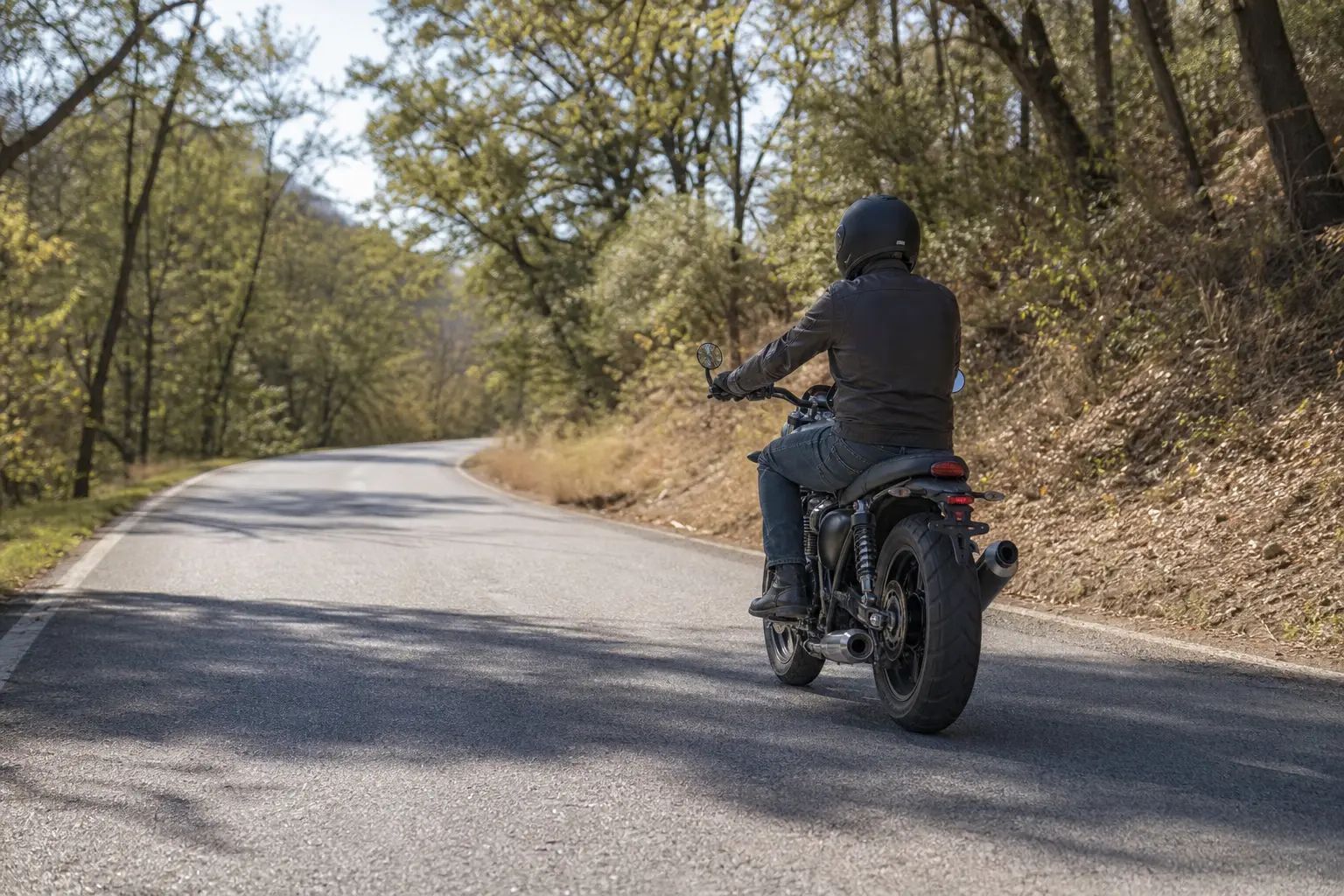
A controlled practice session does not automatically make you ready for every road. Your first street ride should be intentionally modest: daylight, dry conditions, familiar local roads, light traffic, good visibility, and no deadline.
Build a route that can be shortened without disappointment. Think in loops rather than commitments. A short loop near home or near your practice area gives you easy exits if your concentration starts to fade, weather changes, traffic worsens, or the motorcycle behaves unexpectedly.
For the first road ride, consider excluding:
- Passengers.
- Group rides.
- Night riding.
- Rain, icy conditions, strong wind, or poor visibility.
- Major highways and high-speed interchanges.
- Complex urban areas, event traffic, school-release traffic, or unfamiliar construction zones.
- Heavy luggage or any load you have not confirmed is within the motorcycle’s approved limits.
Instead, use the ride to restore street fundamentals: looking well ahead, leaving room around your motorcycle, choosing a lane position that improves your view, watching for developing conflicts, and keeping enough time and distance to respond smoothly. MSF encourages riders to search for hazards and escape paths, allow space and time, and ride within both skill and situational limits. If You Ride a Motorcycle
At each stop, quickly check yourself as well as the machine. Are your shoulders tense? Are you breathing normally? Are you scanning or staring? Are you beginning to hurry because someone is behind you? Are you thinking about the route instead of processing the traffic around you? Any of these can be a cue to shorten the ride.
A successful first road ride does not need to include a destination. It only needs to end safely, calmly, and with a clear sense of what to repeat or improve.
A Returning Rider Checklist
Use this checklist before your first moving session and again before your first short road ride.
Motorcycle and records
- I have the owner’s manual for my exact motorcycle, or access to an official copy.
- I reviewed its pre-ride requirements, maintenance schedule, warnings, and operating controls.
- I reviewed available service history and do not have unanswered concerns about storage or overdue maintenance.
- I completed the manufacturer-required visual and functional checks appropriate to the motorcycle.
- I found no unresolved leaks, damage, warning indicators, abnormal control operation, or other no-ride concerns.
- I will use qualified service rather than guessing if an inspection result is unclear.
Rider and gear
- My helmet, eye protection, gloves, footwear, and clothing fit and allow normal control operation.
- I feel rested, alert, hydrated, and physically able to manage the motorcycle.
- I am not affected by alcohol, drugs, medication, illness, or fatigue that could impair riding.
- I have no audience, appointment, or group pace pushing me to ride beyond my present comfort.
Skills reset
- I can identify the motorcycle’s controls without rushing.
- I have a lawful, low-pressure space for basic familiarization.
- I will begin with simple, spacious tasks and stop if I feel overloaded.
- I have identified formal refresher training or MSF practice resources as my next step.
- I will not test emergency limits or advanced skills on public roads.
First road ride
- Conditions are dry, daylight is available, and visibility is good.
- My route is short, familiar, and easy to leave early.
- I am riding alone, without a passenger or group-pressure dynamic.
- I have avoided adding heavy cargo, unfamiliar accessories, or unnecessary distractions.
- I will end the ride early if traffic, weather, fatigue, anxiety, or motorcycle behavior reduces my margin.
Build Progress With Repetition, Not Bigger Risks
Returning to motorcycle riding after years is not a single event. It is a sequence of small, observable successes. Repeat the controlled session. Repeat the short route. Add one variable at a time only after the prior stage feels calm and consistent.
A sensible progression might be: basic familiarization, repeated local rides, formal training, slightly more varied roads, then carefully chosen longer rides. The order is flexible; the principle is not. Change one meaningful variable at a time so you can tell what affected your comfort and workload.
For example, do not combine a new motorcycle, new gear, a passenger, rain, night, and an unfamiliar route just because each seems manageable alone. Layered changes create workload quickly. You want enough mental capacity left to recognize a problem early and make a conservative choice.
Keep notes after each ride. Record the date, route, conditions, what felt smooth, what felt rushed, questions for a training provider or technician, and any maintenance observations. These notes turn vague confidence into a real record of progress.
How Vojo Helps
After each reset session, create a ride entry in the Vojo motorcycle maintenance tracker and log the route type, weather, time away from riding, comfort level, and any motorcycle observations. Then add a follow-up task for the exact owner-manual item or training goal you identified—for example, “confirm service record,” “book refresher course,” or “repeat quiet neighborhood loop.” Before the next ride, review the prior entry and complete only the next low-pressure step instead of trying to remember every concern at the curb.
Quick answers
Frequently asked questions
How long should my first motorcycle ride be after years away?
There is no universal time or distance. Make it short enough that you can stay calm, attentive, and physically comfortable, with an easy option to end early. A controlled practice session or a brief familiar loop is often a better first target than a destination ride.
Should I take a motorcycle refresher course if I still have a valid endorsement?
Yes, it can be a strong choice. A valid endorsement confirms legal status, not necessarily current comfort or skill. MSF recommends formal hands-on training and refresher courses, particularly as part of developing and maintaining riding techniques.
Can I ride a motorcycle that has been sitting for several years if it starts normally?
Do not treat a normal start as proof that the motorcycle is ready. Review the exact owner’s manual, service history, and required pre-ride checks. If storage-related maintenance is unknown or you find any leak, warning, damage, brake concern, tire concern, or abnormal control operation, arrange qualified inspection before riding.
What should I practice before returning to traffic?
Begin with basic control familiarity in a lawful, low-pressure area: smooth starts and stops, looking where you intend to travel, gentle direction changes, and calm evaluation breaks. Use formal training or MSF practice resources rather than trying to recreate advanced exercises from memory.
Is it safe to return to riding with a passenger?
Not as an initial return step. A passenger changes the motorcycle’s handling, stopping demands, load, and communication needs. First regain consistent solo control, verify the motorcycle’s passenger and load requirements in its manual, and only then consider a separate passenger-readiness plan.