
Motorcycle Tire Plug Kit: A Roadside Mobility Tool, Not Automatic Permission to Ride Home
Can you ride motorcycle with a plugged tire? Use this conservative guide to assess damage, pressure retention, risk signals, and next steps.
Fact-checked against cited official documentation
Reviewed against NHTSA motorcycle pre-ride guidance, NHTSA TireWise stop-use and pressure guidance, and NHTSA-hosted tire-repair material requiring internal inspection before repair..
Last updated September 26, 2026
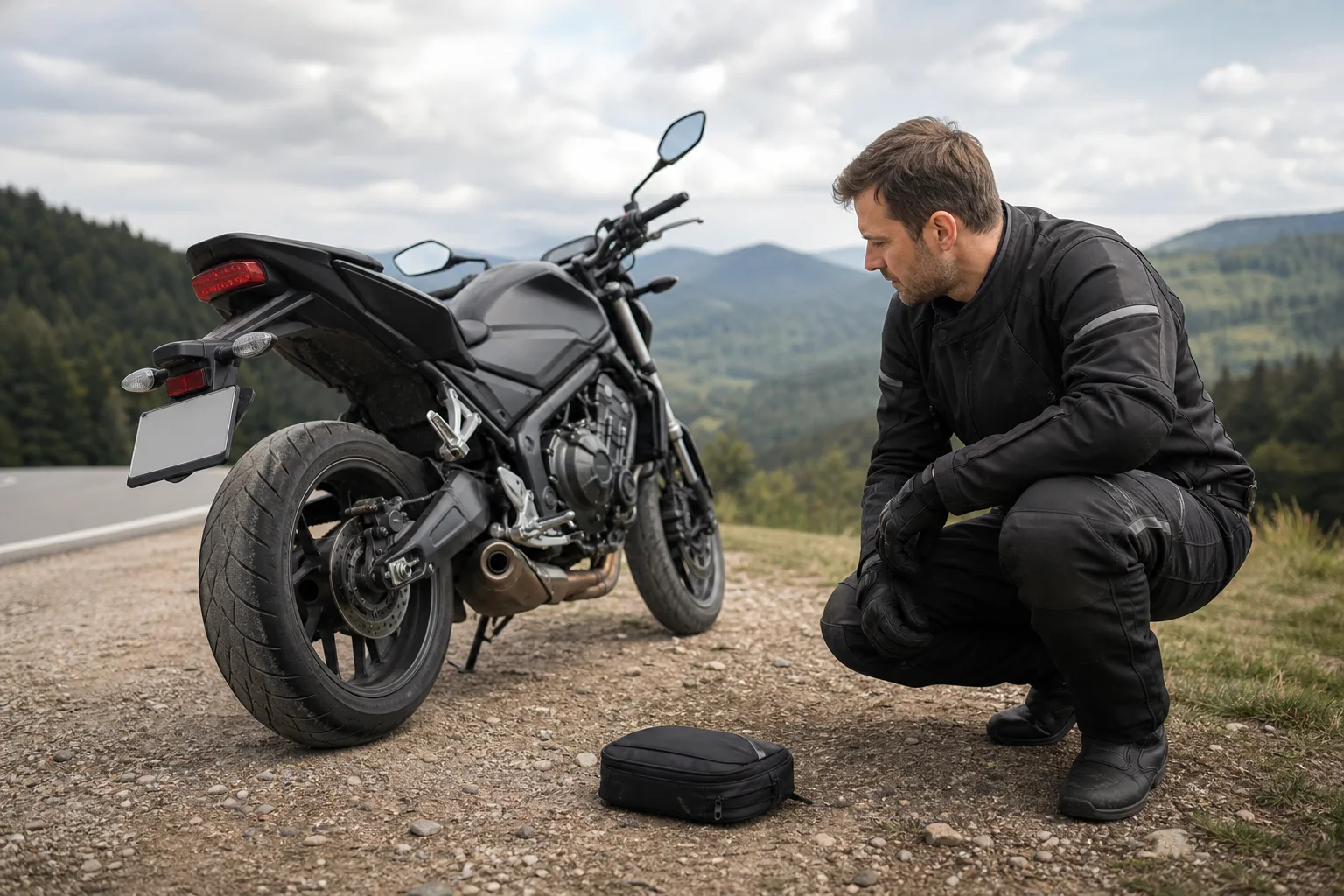
A motorcycle tire plug kit is a roadside mobility tool, not automatic permission to ride home. The conservative answer to can you ride motorcycle with a plugged tire is: only your motorcycle manufacturer’s guidance, tire manufacturer’s guidance, the damage assessment, and a qualified inspection can support that decision. A plug by itself does not reveal what happened inside the tire or confirm that the tire remains suitable for road use.
Start with your owner’s manual and the tire maker’s instructions for your exact motorcycle and tire. If either source prohibits a repair, specifies replacement, or leaves you uncertain, arrange transport rather than treating a temporary roadside result as clearance to continue.
NHTSA tells motorcyclists to check tire pressure and tread depth before every ride. After any puncture, that pre-ride check needs to become a deliberate go/no-go decision—not a quick glance at whether the tire looks inflated. (nhtsa.gov)
Why a Plug Is Not a Ride Authorization
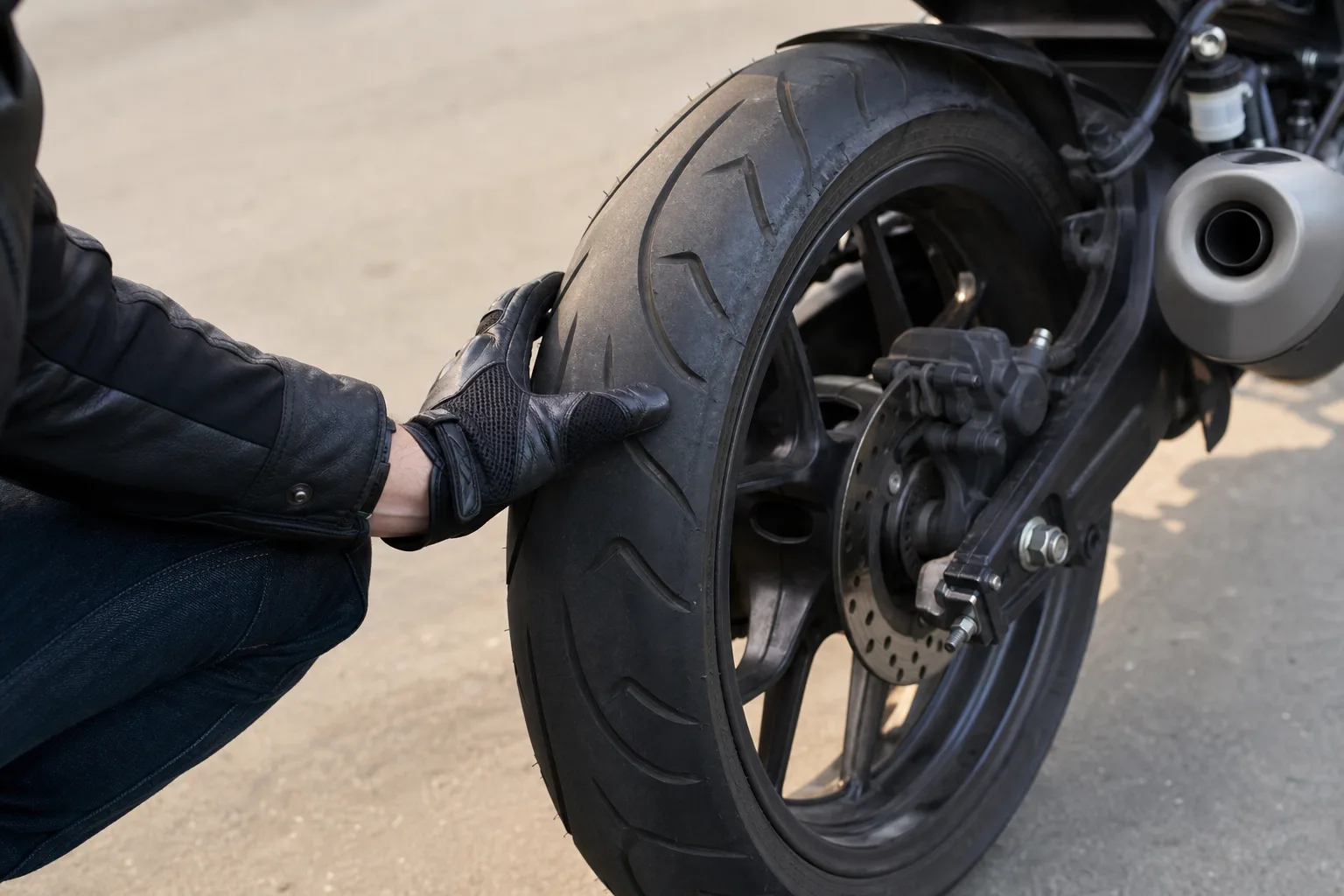
A puncture has more questions behind it than “Is the hole sealed?” The tire may have lost air while you were riding, may have suffered impact damage, or may have damage that cannot be evaluated from the outside. A roadside plug does not answer those questions.
General tire-repair guidance reproduced in an NHTSA-hosted document says a proper puncture repair involves attention from both the outside and inside of the tire, and that the tire must be removed from the rim for inspection before it is plugged and patched. That material is not a motorcycle-specific approval standard, but it supports a cautious principle: an external plug cannot substitute for an internal condition check. (static.nhtsa.gov)
Treat a plug as a reason to slow the decision down—not as evidence that the tire is now normal.
| What you observe | Conservative interpretation | Sensible next step |
|---|---|---|
| Damage is on the sidewall or near the tread edge | Do not assume it is repairable | Do not ride; arrange professional assessment or transport |
| The tire will not hold the specified pressure | The condition is unresolved | Do not ride; seek tire service |
| New vibration, noise, wandering, or an unusual feel | The tire/wheel system may not be behaving normally | Stop using the motorcycle and have it assessed |
| The puncture is in the tread area and pressure appears stable | Location alone is not clearance to ride | Follow manufacturer guidance and obtain a qualified inspection as soon as practical |
| You do not know how long the tire was run low | Internal damage cannot be ruled out from appearance | Treat it as a no-ride situation until inspected |
NHTSA’s general tire guidance says to stop using tires with physical damage and to consult a tire professional when a tire cannot maintain proper inflation pressure or develops noise or vibration. (nhtsa.gov)
Damage Location Changes the Decision
A repair decision is not based only on the object that caused the puncture. Where the damage is matters.
The NHTSA-hosted tire-safety material states that sidewall punctures should not be repaired, while some tread punctures may be repairable after proper assessment. Because a motorcycle depends on two small contact patches for steering, braking, and cornering, take the conservative path: a sidewall or shoulder-area injury is a no-ride signal until a qualified professional says otherwise. (static.nhtsa.gov)
Even a tread-area puncture is not a blanket yes. The unanswered questions include the size and shape of the injury, whether the tire was ridden while low, the tire’s condition and age, and whether the wheel or valve area was also damaged. Do not infer an approval from tread location alone.
A Conservative Roadside Decision Checklist
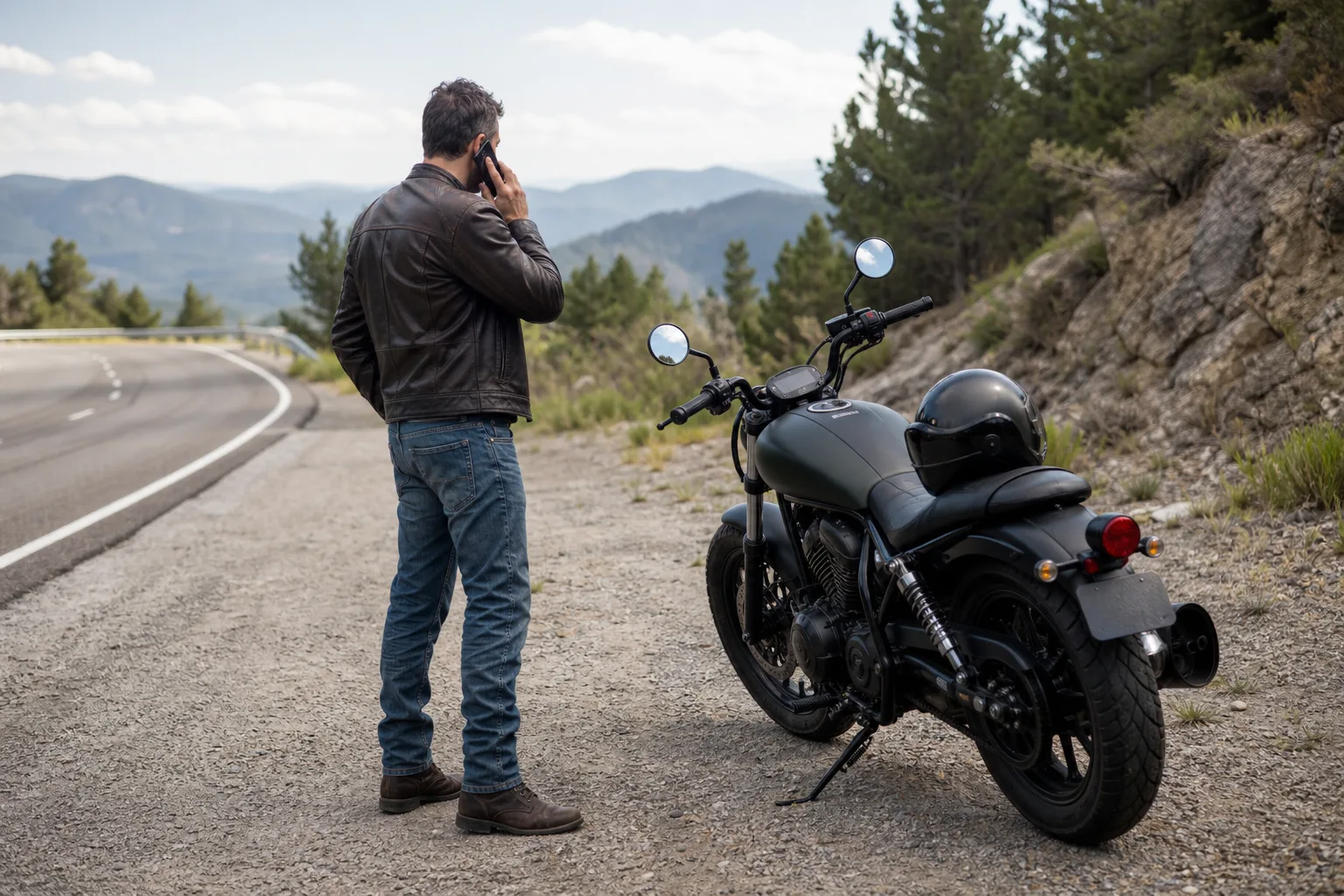
Use this checklist after a puncture or after discovering a plug in a tire. It is a decision aid, not a repair procedure.
- Move to a safe location away from traffic before inspecting anything.
- Check your motorcycle owner’s manual and tire manufacturer guidance for your specific model and tire.
- Identify whether damage appears to be in the tread, shoulder, sidewall, valve area, or wheel.
- Treat sidewall, shoulder, wheel, or valve damage as a no-ride condition pending professional assessment.
- Confirm the tire can maintain the motorcycle manufacturer’s specified pressure; do not rely on how firm it looks.
- Stop riding if pressure falls, or if there is vibration, noise, pull, wobble, or any changed handling.
- Consider whether the tire may have been ridden significantly underinflated; if you cannot rule that out, do not assume the tire is safe.
- Avoid carrying a passenger or extra cargo while the tire’s condition is unresolved.
- Arrange a qualified tire inspection at the earliest practical opportunity—even if the tire appears to be holding air.
For the pressure target, use the motorcycle manufacturer’s specified setting rather than a number molded on the tire. NHTSA’s general tire guidance likewise directs drivers to use the vehicle manufacturer’s recommended inflation information and to investigate pressure loss promptly. (nhtsa.gov)
When the Safer Choice Is Not to Ride
Do not ride the motorcycle if any of the following apply:
- The tire is visibly cut, bulged, cracked, separating, or damaged outside the central tread area.
- The tire does not hold the specified pressure.
- You feel new vibration, instability, pulling, or abnormal noise.
- The wheel, valve stem, or bead area may be damaged.
- You do not know whether the tire was run low before you stopped.
- Your motorcycle or tire manufacturer does not authorize the intended action.
This is not overreaction. Tires are safety-critical components, and a motorcycle has no redundant pair of tires on the same axle. A recovery plan, roadside assistance, trailer, or tow can be the more practical choice when uncertainty remains.
For broader inspection habits before a ride, see the Motorcycle Maintenance Guide.
How Vojo Helps
After a puncture, create a tire event in your motorcycle service history: record the date, which tire was affected, the observed puncture location, pressure readings, symptoms, roadside action, and the inspection or replacement outcome. Then set a follow-up reminder for the service appointment and keep the invoice with the tire record. That gives you a clear history for future pre-ride checks and avoids relying on memory when deciding whether the issue was fully resolved.
Quick answers
Frequently asked questions
Can you ride a motorcycle with a plugged tire?
Do not treat the plug alone as permission to ride. Start with your motorcycle and tire manufacturer guidance, confirm the tire holds the specified pressure, and arrange a qualified inspection. If the damage is outside the central tread area, pressure drops, or the bike feels abnormal, do not ride.
Is a tire plug a permanent motorcycle tire repair?
A roadside plug should not be presumed permanent. General tire-repair guidance says proper assessment requires inspection of the tire after removal from the rim, so an external result does not establish the tire’s internal condition.
Can a sidewall puncture be plugged on a motorcycle?
No. Treat sidewall damage as a no-ride condition. NHTSA-hosted tire-safety material states that sidewall punctures should not be repaired; arrange professional assessment or tire replacement rather than riding on it.
What if the plugged tire holds air overnight?
Holding air is useful information, but it is not a complete safety verdict. You still need to consider damage location, whether the tire was ridden underinflated, the tire’s overall condition, and the guidance for your specific motorcycle and tire.
Should I ride slowly to a tire shop after a puncture?
Do not assume reduced speed makes an unresolved tire safe. If pressure cannot be maintained, the damage is in the sidewall or shoulder, the wheel may be damaged, or handling has changed, do not ride. Use recovery or transport instead.