
Motorcycle Swerving Practice: Build an Escape Move Before You Need It
Use a conservative motorcycle swerving practice checklist to build obstacle-avoidance judgment, separate braking from steering, and train away from traffic.
Fact-checked against cited official documentation
Reviewed against Fact-checked against MSF rider guidance on Search-Evaluate-Execute, escape routes, braking and avoidance preparation, plus the Basic RiderCourse description of progressive RiderCoach-led skills..
Last updated October 25, 2026
Motorcycle swerving practice and obstacle avoidance
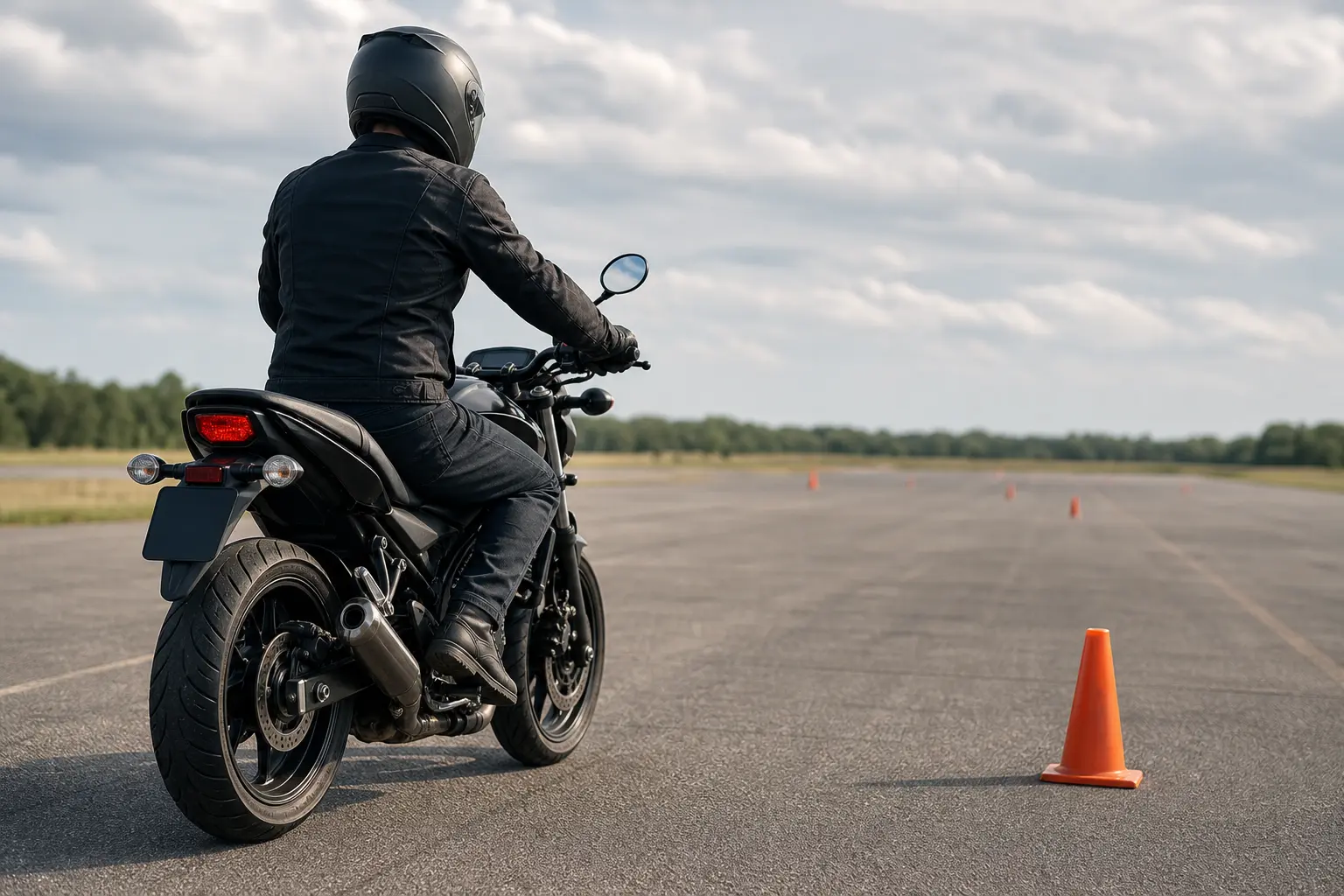
Motorcycle swerving practice is not about producing a spectacular direction change. It is about building a calm, usable response before an object, stopped vehicle, animal, or changing traffic situation forces a decision. The rider’s first advantage is usually not a dramatic maneuver. It is earlier recognition, more space, a slower approach, and an available route that has already been considered.
Obstacle avoidance therefore begins well before the motorcycle reaches the obstacle. A rider needs to notice the developing problem, assess whether stopping is realistic, identify whether another route is truly open, and choose one response without making the situation worse. A practice session should develop that chain of judgment in a controlled place—not attempt to recreate a road emergency.
The Motorcycle Safety Foundation (MSF) encourages riders to build braking and avoidance capability before relying on it in traffic. Its rider guidance also presents the Search, Evaluate, Execute approach and emphasizes retaining possible escape routes while riding. Those ideas make a useful framework for conservative practice: look early, assess the whole scene, then make a purposeful choice. If You Ride A Motorcycle
This article is a planning guide, not a substitute for an owner’s manual, local law, or supervised rider training. It intentionally does not set universal speeds, distances, marker layouts, lean angles, or control inputs. Those details depend on the motorcycle, its condition and load, the available area, the surface, and the rider. When manufacturer instructions and qualified coaching are available, they come first.
The decision is more important than the swerve
A swerve is one possible response, not the automatic answer to every hazard. Sometimes a rider has enough time and room to slow or stop in a straight, predictable line. Sometimes a clear route around the problem is the only workable option. Often, the safest outcome comes from seeing the situation soon enough that neither response needs to be abrupt.
Think of the MSF Search, Evaluate, Execute model as an ongoing riding habit rather than three spoken commands during a crisis:
- Search: Look well ahead and keep updating your picture of the lane, traffic, surface, and roadside. Notice potential problems before they become immediate.
- Evaluate: Consider what the object is doing, how much room remains, what is behind and beside you, whether the pavement is usable, and where any alternate path leads.
- Execute: Select one response suited to the available margin. That could be controlled slowing, a stop, a change of path, or simply reducing speed until the scene becomes clearer.
The purpose of this sequence is not to make a rider overthink. It is to replace panic with a familiar order of attention. In practice, a rider can pause after each pass and ask: What did I see? What route did I identify? What made my chosen response appropriate? That review turns a simple range exercise into decision training.
Choose braking when it preserves the larger margin
If there is adequate room to reduce speed or stop in the available lane, that may be the lower-risk choice. A predictable line can preserve separation from adjacent traffic and avoid sending the motorcycle onto an unknown surface. But the rider should not assume that every visible stretch of pavement offers the same stopping opportunity. Road condition, slope, weather, load, tires, traffic, and motorcycle condition all influence the available margin.
A moving hazard requires particular caution. An animal, pedestrian, vehicle door, or turning vehicle may change position as you respond. The space that looked open a moment earlier may no longer be available. Keep assessing the full scene instead of committing mentally to an early impression.
Braking practice is valuable, but it should not become a reason to test limits alone. Follow the motorcycle manufacturer’s guidance for the motorcycle’s tires, braking system, rider aids, loading, and operating condition. If something about the motorcycle is uncertain, resolve that issue before asking it to perform in a skills session.
Consider avoidance only when the route is genuinely usable
When the remaining distance does not support a stop and there is a clear alternative path, avoidance may be necessary. “Clear” means more than seeing empty pavement beside the obstacle. The rider needs to consider where the route starts, what it crosses, whether another road user can enter it, and where the motorcycle can settle afterward.
A tempting gap may contain loose material, a drain cover, a curb, an edge drop, a parked-car door zone, opposing traffic, or an unseen vehicle. Even an open adjacent lane is not an escape path until it has been evaluated for traffic and a safe continuation. Avoidance is never a justification for crossing a centerline, using a shoulder, or entering space that has not been checked.
The most useful practice outcome is not “I can turn sharply.” It is “I can recognize when a path is not good enough and preserve room for another choice.”
What controlled obstacle avoidance practice should teach
A controlled obstacle-avoidance exercise is a brief change from one intended path to another, followed by a return to a stable, predictable course when space allows. It should teach observation, route selection, visual discipline, smooth decision-making, and recovery after the simulated hazard.
It should not be treated as a contest for maximum speed, minimum clearance, or most aggressive movement. Those goals can push a rider to outrun the learning purpose and conceal rising tension until an error occurs.
A conservative session can focus on these learning objectives:
| Skill focus | Rider question | Useful sign of progress |
|---|---|---|
| Early recognition | Did I notice the marker and available space soon enough? | The rider has time to identify options rather than react at the last moment. |
| Route selection | Is the intended path clear through its exit? | The chosen line includes space beyond the simulated hazard. |
| Visual attention | Am I looking toward the useful open area? | Attention moves away from fixation on the marker without ignoring the wider scene. |
| Single decision | Did I make one calm path choice? | The pass does not become a chain of rushed corrections. |
| Stabilization | Can I regain a settled path afterward? | The motorcycle remains within the planned area with room to slow or stop. |
| Honest review | Should I repeat, simplify, or seek coaching? | The next step is based on consistency, not excitement. |
The table is not a performance standard. A recognized course may use its own progression, terminology, and assessment criteria. Follow the training provider’s directions rather than trying to convert a generic article into a prescribed drill.
Visual attention deserves special care. Seeing the obstacle is necessary; staring at it is not helpful once a safe route has been selected. Practice noticing the marker, finding the open space, and directing attention toward the path you intend to use. If you repeatedly lock your gaze on the marker, become tense, or lose awareness of the surrounding area, simplify the task and ask a qualified instructor to observe.
Set up a safer practice environment
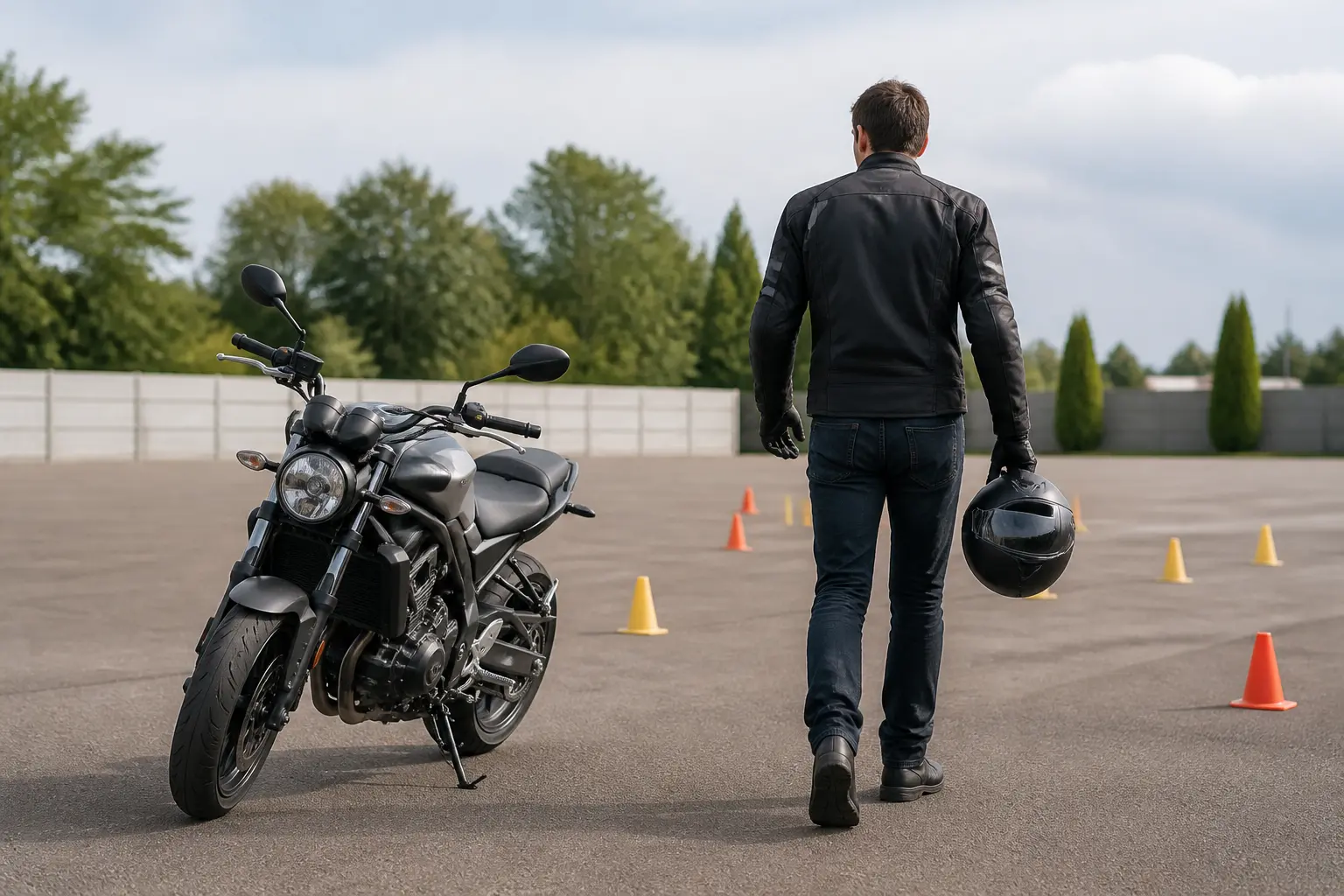
A public road is not an appropriate place to manufacture obstacle-avoidance drills. Even a quiet road can have traffic, pedestrians, cyclists, hidden surface changes, driveways, animals, and legal restrictions. A rider practicing near other people may also create a hazard for them.
Use a permitted, controlled location with broad unobstructed space, or choose formal training. The MSF describes its Basic RiderCourse as progressive instruction that includes skills such as straight-line control, stopping-distance work, tight turns, and maneuvering in limited space under RiderCoach supervision. That structured environment is especially valuable for a new rider, someone returning after time away, or anyone unsure how to assess a practice attempt. Basic RiderCourse
Before a session, walk the area. Look for contamination, loose material, poor drainage, broken pavement, parked vehicles, hidden boundaries, and routes that could bring someone into the riding area. Decide where each pass begins, where it ends, and where you can stop without relying on space you have not examined.
Use a soft, conspicuous visual reference suited to the location rather than a hard object that could injure someone or damage a motorcycle if struck. Keep observers entirely outside the riding area. Do not place items in a public lane, use roadside debris as a target, or turn a parking lot open to other users into a course.
Start with observation and margin
The first passes need not include avoidance at all. Ride through the planned area at a modest, manageable pace, identify the visual reference, identify the open route, and finish with a controlled stop in the planned space. This establishes the habit of recognizing the issue early rather than reacting after it feels urgent.
Then introduce a simple, generous change of line around a clearly visible marker. Keep the task narrow: one direction, a large buffer, plenty of runout, and time to reset afterward. Pause after each pass. Ask whether you saw the route soon enough, stayed within your intended boundaries, and remained relaxed enough to make a deliberate decision.
Do not increase difficulty simply because a pass felt easy or thrilling. Progress only when the prior task is repeatable and calm, the surface remains suitable, and the rider can explain what made the route safe. Tight shoulders, hurried breathing, missed boundaries, fixation, or frustration are reasons to reduce the demand or finish the session.
Put motorcycle readiness before skills practice
Start with the manufacturer’s pre-ride and operating guidance for your motorcycle. Confirm that the motorcycle is in a condition appropriate for use, that tires and controls have been checked as directed, and that luggage or accessories are not introducing an unfamiliar issue. If you have questions after a drop, impact, warning indication, or handling change, do not use a practice session to diagnose the motorcycle. Seek manufacturer-authorized or qualified assistance.
Rider readiness matters as much as motorcycle readiness. Postpone practice when you are fatigued, impaired, ill, overheated, distracted, or pressured to “prove” something. Wear protective equipment appropriate to the ride and ensure it does not interfere with vision or movement. A short session undertaken with full attention is more valuable than a longer session performed while depleted.
Separate braking from swerving practice
Riders often want to combine every emergency skill immediately: scan, brake, steer, recover, and repeat. That approach can make it difficult to identify why an attempt became untidy. Was the problem late recognition, insufficient space, poor route selection, rising speed, fixation, or a rushed transition? Separating skill blocks helps reveal the answer.
Start with observation and planned slowing or stopping. In a separate part of the session, practice a conservative line change around the visual reference. Then use a decision exercise in which you identify, before each pass, whether the imagined situation calls for planned slowing or a route change. There is no need to turn that decision exercise into a high-intensity maneuver.
This separation also reinforces an important road-riding principle: braking and avoidance are choices shaped by conditions, not a fixed sequence that applies everywhere. A rider benefits from being able to recognize a usable stop, a usable path, and a situation where the correct action is to slow earlier and avoid creating the emergency in the first place.
If you are unsure how the skills should be combined, take a course rather than improvising. The MSF’s course description supports a gradual learning model with supervised coaching; it does not suggest that riders need to develop advanced responses by escalating solo drills. Basic RiderCourse
Build escape awareness into ordinary rides
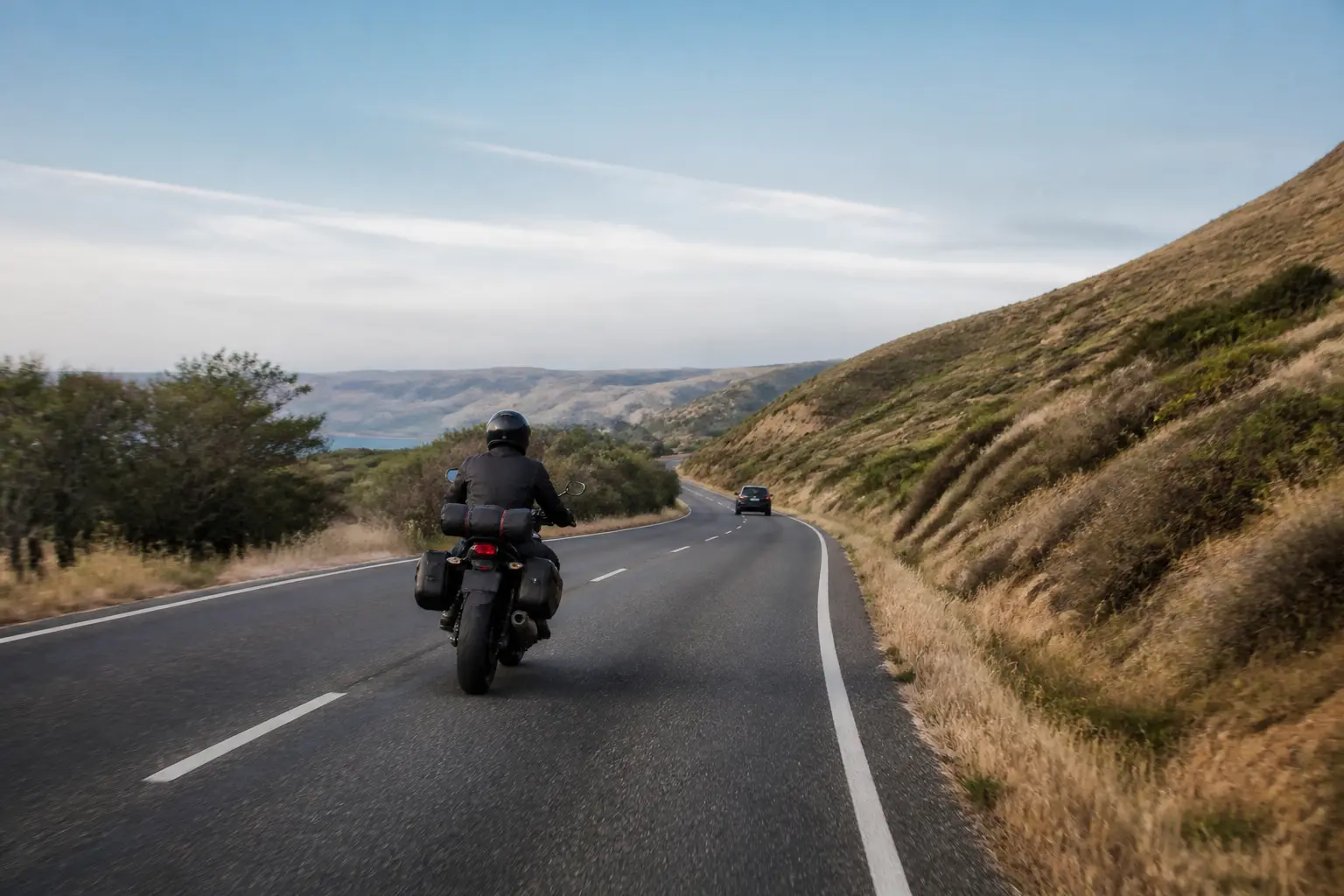
Formal practice has a limited role if ordinary riding repeatedly uses up all available space. Escape awareness is the day-to-day habit of preserving choices before a hazard appears.
While riding, scan far enough ahead to notice queues, changing signals, turning vehicles, road work, debris, animals, and areas where sightlines disappear. Consider where space exists around the motorcycle, but keep updating that answer. A route beside a vehicle can close. A clear-looking shoulder can become unusable. A space visible at one moment may disappear before you reach it.
Leave following distance that gives you time to see, think, and respond. Avoid spending longer than necessary boxed beside another vehicle. Where conditions permit, position yourself to improve your view while retaining room around the motorcycle. These are not guarantees of safety; they are ways to maintain more options.
At curves, crests, intersections, and around large vehicles, reduce assumptions. You cannot evaluate what you cannot see. In rain, darkness, congestion, unfamiliar places, or poor surface conditions, give yourself a larger margin rather than relying on a favorite route or past success.
An escape plan should never become a license to follow closely, pass aggressively, or ride faster because you believe you have an exit. The goal is to protect margin, not consume it.
Motorcycle swerving practice checklist
Before the session
- Read the owner’s manual and put manufacturer instructions ahead of generic advice.
- Select a legal, controlled location or enroll in supervised rider training.
- Walk the area and cancel if the surface, boundaries, or access are uncertain.
- Check the motorcycle according to manufacturer guidance before riding.
- Confirm that any luggage, accessories, and protective equipment are secure and familiar.
- Choose a soft, visible marker that will not create a hard impact hazard.
- Establish a start area, a generous riding area, a stopping area, and boundaries not to cross.
- Keep every observer outside the path of travel.
- Set a low starting challenge and identify the conditions that will end the session.
During the session
- Begin by scanning, identifying space, and stopping under control before adding a route change.
- Use only a pace that allows a calm reset within the planned area.
- Identify the complete usable route, including space after the marker.
- Direct visual attention toward the open path rather than fixating on the simulated hazard.
- Make one purposeful choice instead of a chain of hurried corrections.
- Keep broad clearance from markers and boundaries.
- Stop between attempts to review what happened.
- Reduce the task if you become stiff, rushed, frustrated, or inconsistent.
- End immediately if weather, surface condition, motorcycle condition, or concentration changes.
- Seek coaching rather than adding speed when a problem repeats.
On normal rides
- Search ahead for changing traffic, stopped vehicles, surface changes, animals, and debris.
- Evaluate whether a stop, slower approach, or alternate route offers the best margin.
- Preserve following distance and lateral room whenever conditions allow.
- Treat gaps, shoulders, and adjacent lanes as unconfirmed until checked.
- Continue looking through the intended route while accounting for secondary hazards.
- Slow down when visibility, pavement, weather, or traffic complexity reduces your options.
Common mistakes that make practice less useful
Turning a road into a practice range
An empty-looking street is still shared space with unpredictable users and changing conditions. Deliberate avoidance drills belong in a permitted controlled area, not in traffic or around roadside objects.
Beginning with too much pace or complexity
Speed, smaller margins, and repeated direction changes can create the feeling of realism while removing the time needed to learn. Start with a task you can assess honestly. Complexity should be earned through calm consistency, not added to make the session exciting.
Treating the first visible gap as safe
A nearby opening is not necessarily a route. It may lead toward traffic, a poor surface, a curb, a barrier, or another hazard. Evaluate the entry, the path, and the exit.
Forgetting the recovery area
Passing the marker is not the end of the maneuver. The motorcycle still needs space to settle, slow, and continue safely. Include that requirement when considering every possible escape route.
Practicing when attention is compromised
Fatigue, heat, stress, medication effects, and frustration can narrow attention and delay decisions. Stop early rather than trying to force a productive outcome from an unproductive state.
Copying unqualified demonstrations
Online demonstrations may occur on a different motorcycle, surface, and training site. They cannot account for your machine, conditions, or experience. Use formal instruction and manufacturer guidance as the foundation for safety-critical learning.
When to choose professional coaching
Professional training is the better next step if you are new to riding, returning after a long gap, moving to a motorcycle with substantially different behavior or weight, or unable to practice without anxiety or repeated errors. A RiderCoach can observe vision, timing, route choice, and body tension in ways that are hard to diagnose alone.
Choose coaching rather than escalation if you repeatedly miss your intended path, cross a boundary, freeze on the marker, or feel tempted to use public traffic for a more “realistic” challenge. Those are signs that the exercise should become simpler and more supervised, not faster.
A structured refresher can also be worthwhile after a near miss. Do not try to reproduce the event. Instead, review what was visible earlier, identify the margin that disappeared, and work with a qualified instructor on the relevant foundational skill in a controlled environment.
For broader pre-ride condition planning and service organization, pair your rider preparation with the Motorcycle Maintenance Guide. A well-planned practice session needs both a ready rider and a motorcycle maintained according to its manufacturer’s schedule.
How Vojo Helps
Create a repeatable safety-preparation workflow in Vojo: before a planned refresher, open your motorcycle record and confirm that current inspection and service notes have been reviewed; add a ride note naming the approved practice location, surface conditions, protective gear, and your stop conditions; after the session, record the skills covered, any confidence concern, and any machine-related issue that needs follow-up. Use the Motorcycle Service History to keep maintenance observations traceable separately from skill notes, so a successful practice pass never substitutes for required maintenance.
Quick answers
Frequently asked questions
Should I practice motorcycle swerving or emergency braking first?
Begin with observation, planned slowing, and controlled stopping, then work on avoidance as a separate skill. The goal is to understand when each response is appropriate. Supervised instruction is the best option when you are ready to connect the decisions in a structured environment.
What speed is appropriate for motorcycle obstacle-avoidance practice?
There is no universal practice speed that is safe for every motorcycle, site, and rider. Start at a manageable pace that allows a calm stop within your planned area, then follow the progression set by a qualified training provider or instructor.
Can I practice swerving on an empty public road?
No. Deliberate obstacle-avoidance practice is better done in a legal, controlled location or through an approved course. Public roads can introduce traffic, pedestrians, changing surfaces, and other hazards that make a planned drill unsafe.
Is swerving always safer than braking for a motorcycle hazard?
No. If a controlled stop is available, it may preserve the larger margin. If stopping is not realistic and a fully evaluated route is open, avoidance may be necessary. The correct response depends on space, traffic, surface, visibility, and the changing situation.
What if I keep looking at the marker instead of the open path?
Slow the exercise down. Acknowledge the marker, identify the available route, and move your attention toward that route while remaining aware of the surrounding area. If fixation continues, seek help from a qualified instructor rather than increasing difficulty.