
Motorcycle Coolant Checks: Cold Reservoir, Leaks, and the Manual’s Interval
Learn how to check motorcycle coolant from a cold reservoir, distinguish a low level from a leak, and find the correct replacement interval in your manual.
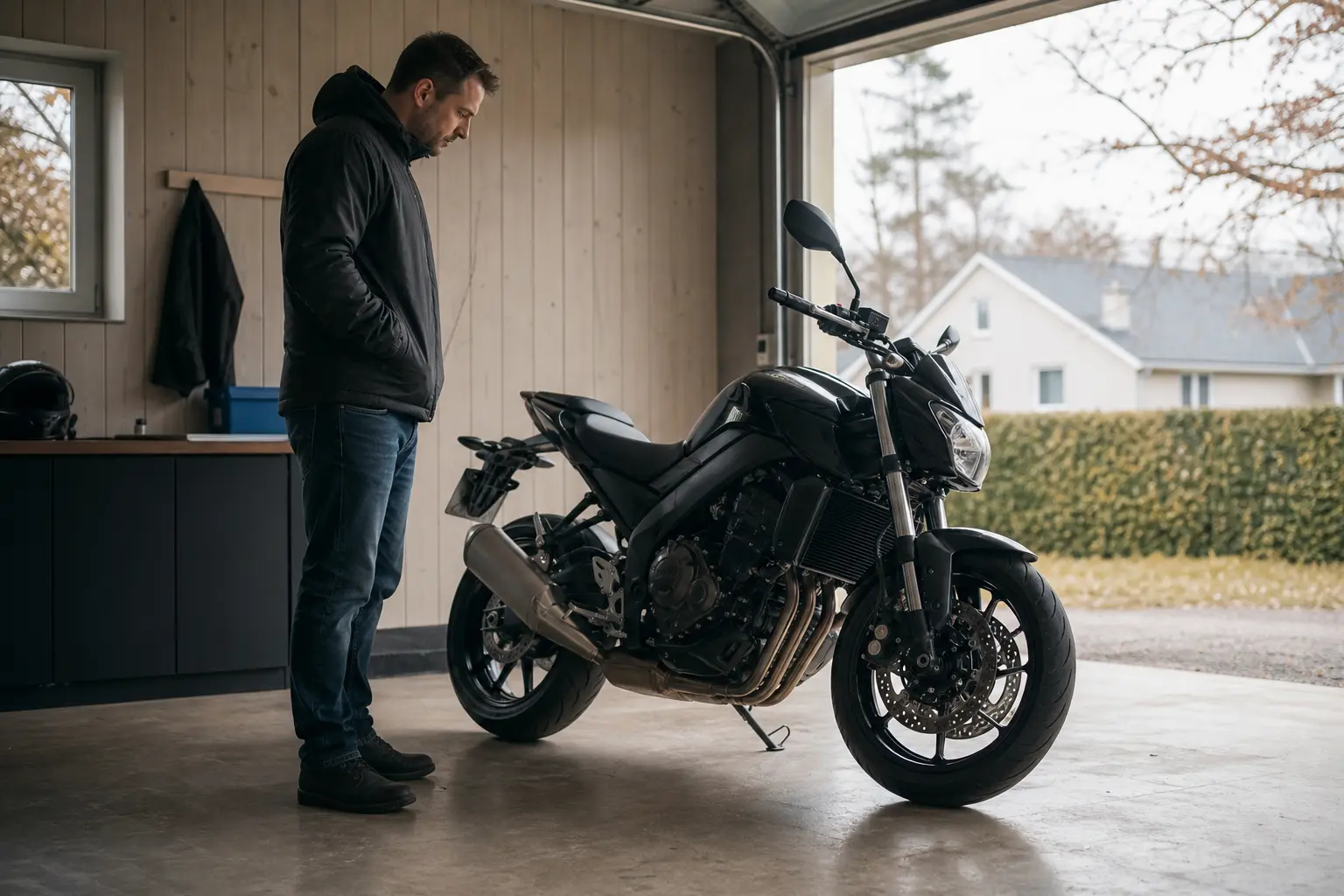
Fact-checked against cited official documentation
Reviewed against Fact-checked against MSF T-CLOCS guidance for cool reservoir checks and leak inspection, plus MSF riding guidance on pre-ride checks and regular maintenance..
Last updated November 11, 2026
A motorcycle coolant check is not the same thing as a coolant diagnosis. Looking at a cold recovery tank can show whether the level appears unusually low. Looking around the cooling system can reveal visible wetness or residue. Neither observation, by itself, proves why the level changed or confirms that the coolant is still suitable for use.
The safest approach is manufacturer-first: use the owner’s manual for the coolant specification, checking conditions, service interval, and any model-specific warnings. Use a cold visual inspection as an early screening step, not as permission to open a hot system, ignore a leak, or guess at a replacement date.
The Motorcycle Safety Foundation’s T-CLOCS checklist specifically separates checking the coolant reservoir or recovery tank when cool from inspecting radiators, hoses, tanks, fittings, and pipes for leaks (MSF T-CLOCS Pre-Ride Inspection Checklist). Its riding guidance also emphasizes pre-ride checks and regular maintenance to reduce the likelihood of equipment failures and unsafe roadside problems (MSF You and Your Motorcycle: Riding Tips).
What a Cold Coolant Check Can Establish
A cold check is useful because it gives you a repeatable visual reference without asking you to handle a hot cooling system. “Cold” should mean the motorcycle has been sitting long enough for the engine and cooling components to cool, rather than merely being switched off after a short ride. If your motorcycle’s manual gives a more specific condition, follow that instruction.
A cold inspection can help you establish four practical facts:
- Whether the visible reservoir level is within the marks. Many liquid-cooled motorcycles use a translucent recovery tank with upper and lower markings. Read the level using the orientation and conditions described in the manual.
- Whether the level is noticeably different from your recorded baseline. A dated photo or maintenance note can be more useful than memory, especially when the tank markings are difficult to read.
- Whether there are obvious signs of external leakage. Wetness, drops, staining, or dried deposits near cooling-system components deserve attention.
- Whether the motorcycle is presenting other warning signs. An overheating indication, unusual smell, visible steam, or an engine that is not behaving normally changes the decision from routine checking to stopping and arranging qualified inspection.
A cold reservoir check does not establish that the radiator or internal passages are full, that the coolant mixture is correct, that the water pump is working, or that a suspected leak has stopped. It also cannot tell you the correct replacement interval. Those questions require the motorcycle’s service information and, where appropriate, professional testing.
This is why a reservoir reading should be treated as one data point. A level that is slightly lower than expected may reflect a previous service, a reading taken under different conditions, or coolant loss. A level at the mark does not rule out every cooling-system problem.
How to Check the Motorcycle Coolant Reservoir Cold
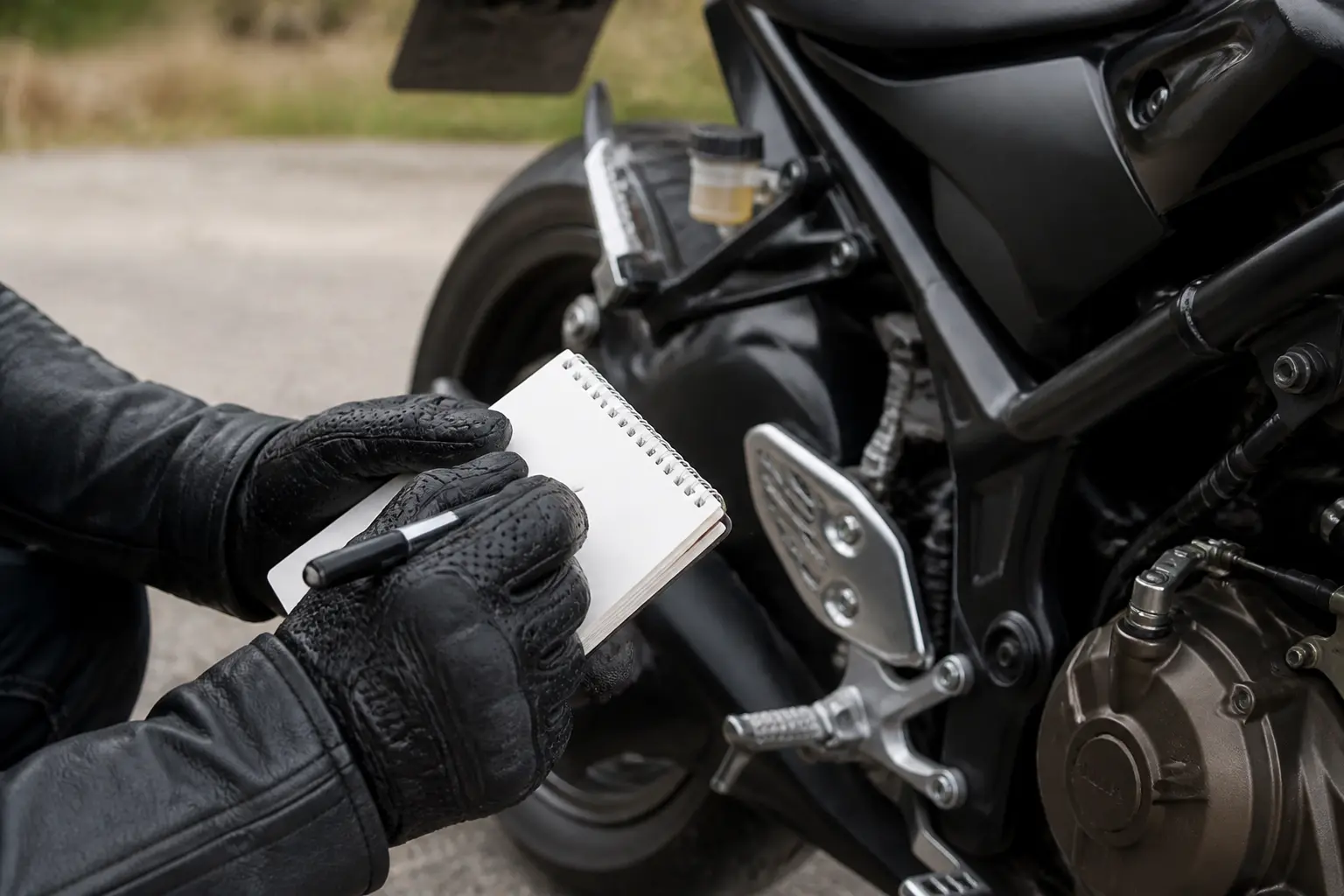
Begin with the motorcycle parked securely and the engine fully cool. If the machine is leaning on its side stand, the angle may alter what you can see in the tank. Do not invent a position if the manual specifies one; instead, use the manufacturer’s stated checking position.
Locate the reservoir or recovery tank using the owner’s manual. Avoid assuming that a visible plastic container belongs to the cooling system. Motorcycles can have several reservoirs and containers, and model layouts vary. Confirm the component before interpreting its level.
Read the marks without removing a cap. Compare the coolant level with the applicable lower and upper references. If the tank is dirty, dark, or difficult to read, record that limitation rather than treating an uncertain view as a reliable result.
Look around the tank and nearby cooling-system parts. The MSF checklist calls attention not only to the reservoir but also to radiators, hoses, tanks, fittings, and pipes. You are looking for clues such as:
- Fresh wetness or a small pool beneath the motorcycle
- Dried or crusty residue around a joint, hose end, or tank
- A hose that appears damaged, displaced, or unusually wet
- Staining that has grown since the last inspection
- A coolant smell after a ride, especially when combined with a falling level
Do not remove a radiator or pressure-system cap merely to satisfy curiosity. A system may retain pressure and heat after the motorcycle is switched off. The owner’s manual should determine whether any cap-level check is appropriate, and under what conditions.
Finally, compare what you found with your recent records. Note the date, cold level, visible condition, and any warning signs. A single observation can be ambiguous; a trend is more informative. If the level repeatedly moves downward, treat that as a reason to investigate rather than repeatedly topping up without finding the cause.
For a broader, manual-first routine covering other pre-ride checks, see the Motorcycle Maintenance Guide.
Low Reservoir, Visible Leak, or Replacement Due?
These are three different maintenance situations, and they should not be handled as though they were interchangeable.
| Finding | What it may tell you | What it does not prove | Safer next step |
|---|---|---|---|
| Level appears below the manual’s reference | The reservoir level is not where the manufacturer expects it under the stated checking conditions | It does not identify the cause or confirm that the rest of the system is full | Do not guess; consult the manual and assess for leak or overheating clues |
| Wetness, drops, or residue near cooling parts | Coolant may be escaping externally, or an old spill may remain | It does not identify the failed component or show whether riding is safe | Avoid treating it as routine; arrange inspection, especially if the level is falling |
| No visible leak and level appears normal | No obvious problem was found during this visual check | It does not prove internal condition, correct coolant specification, or future reliability | Continue the manual’s inspection and service schedule |
| Replacement interval is reached | Scheduled coolant maintenance may be due under the manufacturer’s plan | It does not mean any coolant is interchangeable | Use the exact manual or manufacturer service information |
| Overheating warning, steam, or abnormal temperature behavior | The cooling system or operating condition may require immediate attention | It does not identify the fault | Stop riding when safe and seek qualified assistance |
A Low Level Is Not a Diagnosis
A low reservoir can have several possible explanations, including a previous service that left the level incorrect, a leak, or a condition that requires further diagnosis. The important point is not to turn a visible level into a confident mechanical conclusion.
If the level is below the stated range, first verify that you checked the correct container, in the correct motorcycle position, while cold. Then inspect for visible clues and consult the manual’s warnings. If the manual provides an approved coolant and topping-up instruction, follow it exactly. If it does not, do not substitute a product based only on color, advertising, or a friend’s recommendation.
Repeated topping-up is especially poor evidence of a successful repair. It may make the level look normal temporarily while the underlying loss continues. Record the amount and timing of any approved addition, and arrange an inspection if the level falls again or if other symptoms appear.
A Visible Leak Changes the Decision
A visible leak deserves more caution than a reservoir that simply looks a little low. Cooling-system leaks can occur at different locations, and a visual check cannot establish whether a component is secure under operating temperature and pressure. A dry mark can be old; fresh wetness or a growing stain is more concerning.
Do not rely on a short ride to “see whether it gets worse.” If coolant is reaching a tire, brake component, or the rider, the risk is not limited to engine temperature. If the motorcycle is overheating, steaming, losing coolant quickly, or leaving a significant trail, stop riding and arrange recovery or qualified inspection.
Even when the motorcycle appears to run normally, a suspected leak should be documented and assessed. The absence of an immediate warning does not turn visible coolant loss into a harmless condition.
An Interval Is a Schedule, Not a Guess
Coolant replacement timing is model-specific. The correct interval may be expressed by time, distance, a service milestone, or a combination of conditions. It may also differ according to the coolant specified by the manufacturer and the motorcycle’s maintenance schedule.
Use the exact owner’s manual and, where applicable, the manufacturer’s official service schedule for your year and model. Do not infer an interval from another motorcycle, a generic online chart, or the appearance of the fluid. Do not assume that a coolant marketed for one type of engine is approved for yours.
If you bought the motorcycle used and cannot establish when the coolant was last changed, treat the history as unknown. The sensible answer is to consult manufacturer service information or a qualified technician, not to create a universal replacement date. Keep the invoice, product information, and date once the work is completed.
Choosing Coolant: Let the Manual Decide
Coolant selection is a compatibility question, not a color-matching exercise. Different motorcycles can have different requirements for coolant formulation, additives, concentration, and materials compatibility. The manual may specify a product standard, a premixed fluid, or a mixture that must be prepared according to manufacturer instructions.
Avoid choosing coolant solely because:
- It is the same color as the fluid in the tank
- It is labeled for cars rather than motorcycles
- Another rider used it successfully
- It is described as universal without confirming the motorcycle’s requirements
- It is convenient at a nearby store
The owner’s manual is the starting point for both the fluid and the replacement process. If the manual is missing, obtain the correct documentation for the exact motorcycle rather than relying on a broad model family or an internet comment.
Contamination is another reason not to improvise. If an incorrect fluid may have been added, or if the coolant looks oily, heavily contaminated, or otherwise abnormal, record what happened and seek qualified advice. A visual inspection cannot validate chemical compatibility.
This article intentionally does not prescribe a refill quantity, mixture ratio, brand, or replacement procedure. Those details vary by motorcycle and must be verified against accessible manufacturer documentation.
Coolant Check Before a Ride: A Practical Checklist
Cold Motorcycle Coolant Checklist
Use this checklist before a ride when the motorcycle is cool. It is a screening routine, not a substitute for the service schedule or a diagnosis.
- Confirm the motorcycle is fully cool before inspecting the reservoir.
- Park it in the position specified by the owner’s manual.
- Identify the correct coolant reservoir or recovery tank.
- Compare the visible level with the manual’s reference marks.
- Look for fresh wetness, drops, staining, or dried residue.
- Inspect visible hoses, fittings, radiator areas, tanks, and pipes for leak clues.
- Check for coolant smell, steam, overheating indications, or unusual temperature behavior.
- Review the last recorded coolant check and any recent top-up.
- Confirm whether the manual’s replacement interval is due or unknown.
- Use only the coolant and checking conditions specified for the motorcycle.
- Do not open a hot or pressurized system.
- Do not ride normally if a significant leak, overheating warning, steam, or rapidly falling level is present.
A checklist is most useful when it produces a decision. If everything looks normal, record it and continue the manufacturer’s schedule. If the level is low, investigate the reason. If there is a leak or overheating symptom, stop treating the inspection as routine and arrange qualified help.
What a Coolant Check Cannot Diagnose
It is tempting to use a reservoir check as a complete cooling-system test because it is quick and visible. That creates several traps.
First, the reservoir does not necessarily tell you the condition of every part of the cooling circuit. A normal-looking tank cannot prove that there is no restriction, pressure problem, circulation issue, sensor fault, or internal loss. Those possibilities require appropriate model-specific diagnosis.
Second, the fluid’s appearance is limited evidence. Clean-looking coolant may still be overdue according to the service schedule. Discolored or contaminated coolant may need attention, but the appearance alone does not identify the correct remedy.
Third, a temperature warning is not something to dismiss because the tank is full. The warning and the level are separate observations. A full reservoir can coexist with another cooling-system problem.
Fourth, the absence of a puddle does not prove that coolant is not escaping. Small losses may be difficult to see, and some symptoms may appear only when the motorcycle is hot or operating. That is a reason for qualified inspection, not a reason to conduct an improvised hot-system test.
Finally, do not confuse normal fluid movement with a fault without consulting the manual. Some systems are designed around a recovery tank, while others have model-specific checking instructions. The exact architecture matters.
When Not to Ride
A coolant concern becomes a riding-safety concern when there is evidence that the motorcycle may not remain reliable or that fluid could affect control. Stop and seek assistance when you observe significant or active leakage, steam, an overheating warning, rapidly worsening temperature behavior, a strong coolant smell accompanied by loss, or a reservoir that repeatedly drops.
Also pause if coolant appears near a tire, brake component, or another area where contamination could affect control. Do not assume that wiping the area makes the motorcycle ready for the road; the source still needs to be identified.
If the motorcycle has already overheated, allow it to cool without opening a hot pressurized system. Consult the manual for the manufacturer’s warnings and arrange qualified inspection before normal riding. A restart that appears successful is not proof that the underlying issue has cleared.
When there is no immediate danger but the service history is unknown, the decision can be less urgent yet still important. Schedule the appropriate maintenance, preserve the records, and avoid extending an unknown interval based on guesswork.
Building a Better Coolant Maintenance Record
A useful record does more than say “coolant checked.” Include the date, odometer reading if relevant to your manual, motorcycle position, cold level, visible leak observations, warning signs, and the source of the interval you are following.
For a coolant replacement, keep the invoice and record the exact product or specification shown on the service documentation. If a technician identifies a leak, note the finding and the recommended follow-up. If you add an approved fluid, record what was used and why.
These details help separate three questions later:
- Was the level checked under comparable conditions?
- Has the level changed since the previous check?
- Is the scheduled replacement actually documented?
Good records also help when ownership changes or when a technician needs to understand a pattern. They reduce the temptation to reset the maintenance history from memory.
How Vojo Helps
A practical Vojo workflow is to create a recurring coolant-check task tied to your motorcycle, then complete it only when the engine is cold. In the task note, record the date, odometer reading, reservoir position relative to the manual’s marks, and whether you saw wetness, residue, or warning signs. If the level is low or the interval is unknown, mark the task for follow-up rather than closing it as complete. Attach the service invoice after qualified maintenance so the next reminder reflects documented history.
You can organize that workflow in the Motorcycle Maintenance Tracker, while the Motorcycle Maintenance Guide provides a broader place to review related inspection habits. The goal is not to replace the owner’s manual; it is to make the manual’s instructions easier to apply consistently and easier to prove later.
Quick answers
Frequently asked questions
How often should I check motorcycle coolant?
Check it as part of your pre-ride or regular inspection routine when the motorcycle is cold, and follow the owner’s manual for any specified schedule. A repeated level change or visible leak calls for investigation rather than simply checking more often.
Can I check motorcycle coolant when the engine is warm?
Use the manufacturer’s stated conditions, but do not open a hot or pressurized cooling system. The MSF T-CLOCS guidance specifies checking the coolant reservoir or recovery tank when cool, making a cold visual check the safer baseline.
Does a low coolant reservoir always mean there is a leak?
No. It may reflect a previous service, an incorrect level, or coolant loss. Confirm the correct container and checking conditions, inspect for leak clues, and consult the manual or a qualified technician if the level is below the specified range or falls again.
Can I choose coolant by matching its color?
No. Color is not a reliable compatibility test. Use the exact coolant specification and instructions in the owner’s manual or manufacturer service information for your motorcycle.
What is the motorcycle coolant replacement interval?
There is no safe universal interval for every motorcycle. Use the exact year-and-model owner’s manual or official service schedule, which may specify time, distance, a service milestone, or combined conditions.
Can I ride with a motorcycle coolant leak?
A visible or active leak, rapidly falling level, overheating indication, steam, or coolant near a tire or brake component is a reason not to continue normal riding. Stop safely and arrange qualified inspection or recovery.